
(You must register and have a linked account first)
View Privacy Policy


OR

Show


Forgot your password?

Error message here!

Error message here!

Error message here!

Error message here!

Show Error message here!

Show Error message here!


Lost your password? Please enter your email address. You will receive a link to create a new password.

Error message here!

Back to log-in

Close

For Sale

The following items are listed by for sale by users of the site and dealers. They are in no way endorsed or guaranteed by www.oldswords.com

Add a Classified Item
to

Clicking on the sword will take you through to the relevant classified item or dealer site.
Don't miss out! - Do you want to be kept informed weekly of new aditions? Just join our weekly update list.

You can also receive regular email notifcations when items match your keywords. To recieve them just register or logon at the top right of this page.

Page 11 of 40
  • Nation : French
  • Local Price : £1,650.00
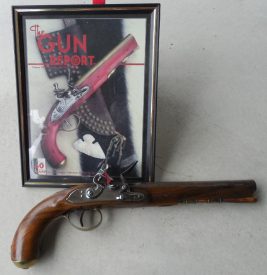
French Military Flintlock Pistol Model 1816 Gardes du Corps de Roi. A scarce Military French 14 bore Model 1816 flintlock pistol of Garde du Corps de Roi. The lock engraved Mre Royale De Versaille, steel barrel stamped with D walnut stock with regulation brass mounts including plain domed butt cap and with original steel ramrod. Please Note UK shipping free the rest of the world at cost. Dimensions: Bore – 14 Bore Overall Length: 13.75 inch / 35 cm Barrel Length: 7.75 Inches /20 cm
  • Nation : British
  • Local Price : $2295.00
English Flintlock Trade Pistol by Sharpe, First Quarter 19th C. Flat lockplate with line border and feather cluster design behind cock; with a crown over “NR” and marked “SHARPE” (1800-1840). Flat cock with beveled edges and line border. 8″ round .58 cal. barrel with Birmingham proofs, a series of stars, and marked “EXTRA/SHARPE/PROOF at breech; tang with line border and broad arrow stamp. Brass furniture includes butt cap, ramrod thimbles, and sideplate and trigger guard with engraved snowflake design. Silver wrist escutcheon crudely engraved with letters “CF”. Walnut stock with small crack on fore end; wood ramrod. Metal parts cleaned. These early trade pistols were highly prized by the Indian tribes. This exact gun is pictured in Lar Hothem’s “Rare and Unusual Indian Artifacts”, page 386. Tom Richards Collection.
  • Nation : ?
  • Local Price : 1,695.00
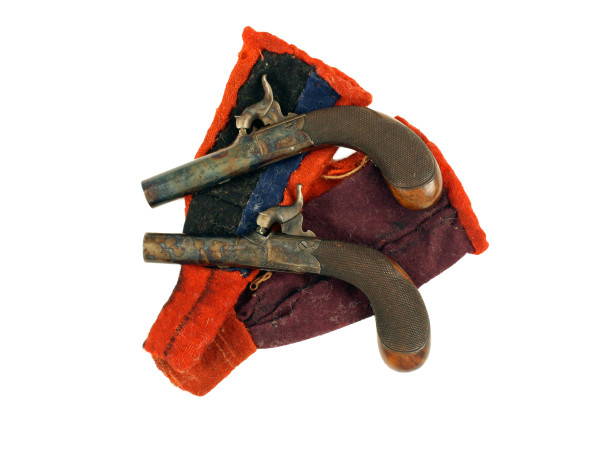
. A Stunning Pair of Rifled Percussion Pocket Pistols. With round turn-off barrels, foliate engraved box-lock actions, micro-chequered butts with oval escutcheons, in original shoddy bags, retaining virtually all of their colour. Dimensions: Bore: 50 Bore Barrel Length: 2 Inches (5 cm) Overall Length: 6.5 Inches (16.50 cm)
  • Nation : Turkish
  • Local Price : 2,250.00 USD
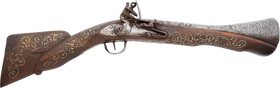
OTTOMAN TURKISH FLINTLOCK BLUNDERBUSS, C.1800. 21 ½” length. Mediterranean walnut full stock with dropped comb and circular section wrist terminating in a scroll. Stock inlaid throughout in scrolling brass inlay, complete. Iron butt plate, trigger guard, lock and side plate. The barrel is of particularly exaggerated form, 2 3/4” diameter at the muzzle, with lapped seam to the underside. Breech boldly chiseled in stylized foliage. The center and muzzle in silver calligraphy, probably Thuluth (some wear). Good uniform character. A type now rarely seen on the market.
  • Nation : British
  • Local Price : £1,595.00
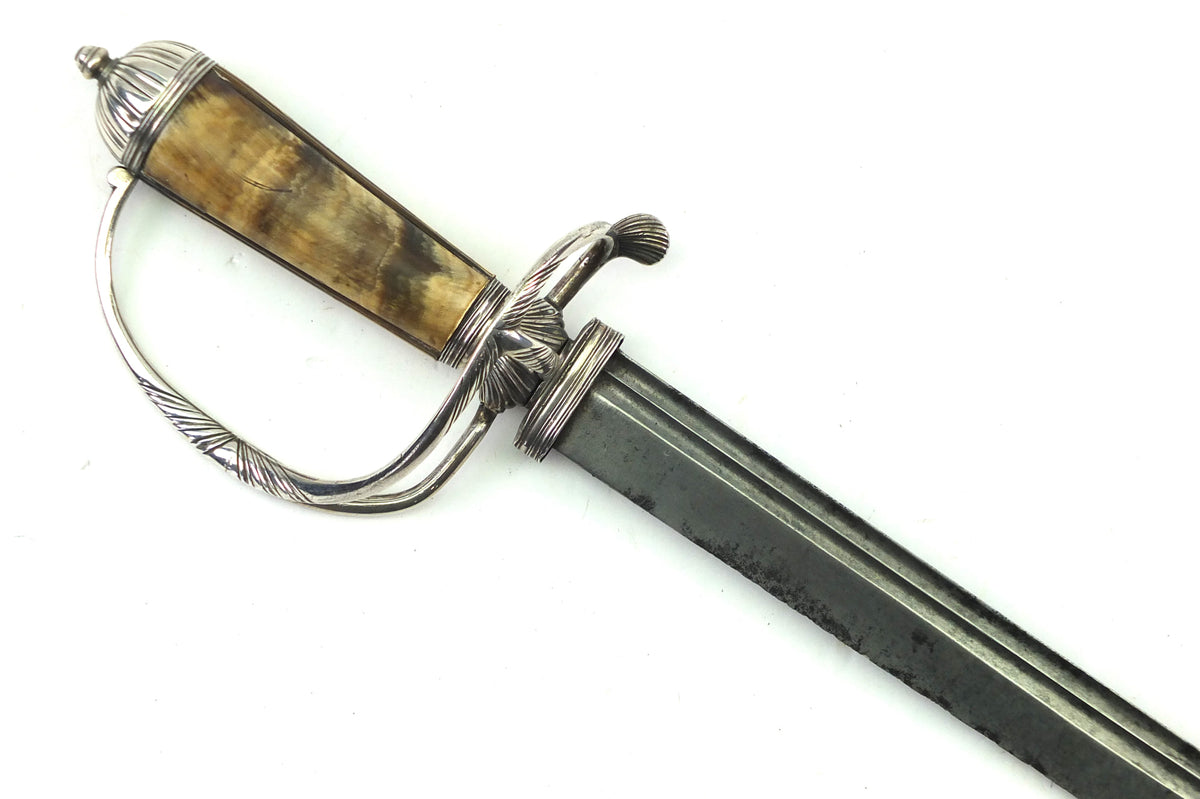
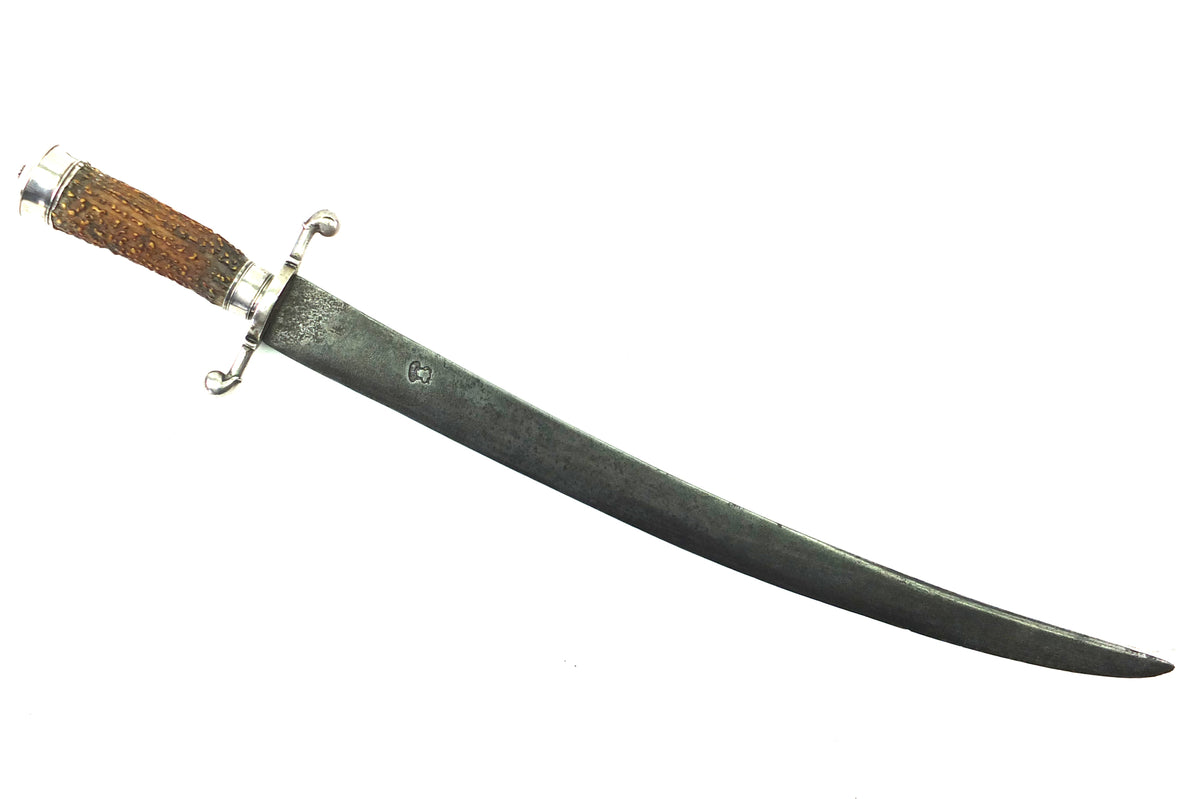
Fine English Hunting Hanger. SN X3056. A Fine English Hunting Hanger, 30 1/2&157; overall, 24 1/2&157; slightly curved twin fullered blade double edged towards the point. Silver hilt comprising fluted quillon block with recurved lobed quillon slender knucklebow with side bar en suite, domed fluted pommel cap with button, reeded horn grip of tapering oval section. Knucklebow with London Hall mark and [I.S] with a pellet maker´s mark, date letter indistinct. Circa 1740 &194;&160; &194;&160; &194;&160; &194;&160; &194;&160; &194;&160; &194;&160; &194;&160; &194;&160;&194;&160; &194;&160; &194;&160; &194;&160; &194;&160; &194;&160; &194;&160; &194;&160; &194;&160; &194;&160; &194;&160; &194;&160; &194;&160; &194;&160; &194;&160; &194;&160; &194;&160; &194;&160; &194;&160; &194;&160; &194;&160; &194;&160; &194;&160; &194;&160; &194;&160; &194;&160; In good condition, hilt very good, blade has minor staining.&194;&160; &194;&160; &194;&160; &194;&160; &194;&160; &194;&160; &194;&160; &194;&160; &194;&160; &194;&160; &194;&160; &194;&160; &194;&160; &194;&160; &194;&160; &194;&160; &194;&160; &194;&160; &194;&160; &194;&160; &194;&160; &194;&160; &194;&160; &194;&160; &194;&160; &194;&160;&194;&160; The maker´s mark &156;I S&157;, almost certainly for John Fessier Savigny, who was a cutler of Huguenot descent working in London in the mid-18th&194;&160;century. Images courtesy of West Street Antiques (https://antiquearmsandarmour.com/)
  • Nation : British
  • Local Price : £1,595.00
Fine English Silver Mounted Hanger. SN X3057. A Fine English Silver Mounted Hanger. 23&157; overall, 17 &194;&190;&157; slightly curved blade double edged over nearly half its length to the point, the forte on both sides deeply struck with a King’s head mark. Hilt comprising recurved quillons each with lobed terminals, plain collar, pommel-cap & natural buckhorn grip, Silversmiths hallmark ´HH´ conjoined stamped on quillion pommel cap & ferrule. Late 17th Century.&194;&160; &194;&160; &194;&160; &194;&160; &194;&160; &194;&160; &194;&160; &194;&160; &194;&160; &194;&160; &194;&160; &194;&160; &194;&160; &194;&160; &194;&160; &194;&160; &194;&160; &194;&160; &194;&160; &194;&160; &194;&160; &194;&160; &194;&160; &194;&160; &194;&160; &194;&160; &194;&160; &194;&160; &194;&160; &194;&160; &194;&160; &194;&160; &194;&160; &194;&160; &194;&160; &194;&160; &194;&160; &194;&160; &194;&160; &194;&160; &194;&160; &194;&160; &194;&160; &194;&160; &194;&160; &194;&160; &194;&160; &194;&160; &194;&160; &194;&160; &194;&160; &194;&160; &194;&160; &194;&160; &194;&160; &194;&160; &194;&160; &194;&160; &194;&160; Very attractive sword in good condition.&194;&160; Leslie Southwick has almost certainly identified the owner of the mark HH conjoined; see: L. Southwick, ´The Hertford Civic Sword of State, 1680, struck with the rare silver-hilt maker´s mark of Hugh Humphries´,&194;&160;Journal of the Arms & Armour Society, Vol. 22, No. 6 (September 2018), pp. 304-331. For further information on English silver hilted swords and hangers see Leslie Southwick, &156;London Silver "e; Hilted Swords, Their makers, suppliers & allied traders, with directory&157;,&194;&160; 2001, Royal Armouries. Images courtesy of West Street Antiques (https://antiquearmsandarmour.com/)
  • Nation : British
  • Local Price : £1,595.00
**RARE**ATTRIBUTED RNAS PILOT OFFICER’S**MINT**WW1 Era British Kings Crown Henry Wilkinson Sword With Blued & Etched Panels Blade Presented To Captain (Later RAF) William Hallett-Carpenter, Bullion Cord, Portepee & Matching Maker Scabbard. Sn 22088 -. The Royal Naval Air Service (RNAS) was the air arm of the Royal Navy, under the direction of the Admiralty’s Air Department, and existed formally from 1 July 1914 to 1 April 1918, when it was merged with the British Army’s Royal Flying Corps to form the Royal Air Force (RAF), the world’s first independent air force. This is an excellent WW1 era British Royal Navy Officer’s Sword presented to Captain (Later RAF) William Hallett-Carpenter on being commissioned into the Royal Naval Air Service (Captain William Hallett-Carpenter was commissioned into the RNVR RNAS in 1915 and served as an Armourer and Gunnery Instructor. He transferred to the RAF in April 1918 and was promoted to Captain). The sword in near mint condition has a clean single edged straight blade which is 31¾” in length with central fuller (37 ¾” overall). The blade is crisply etched with Naval fouled anchor & foliate panels on both sides together with King’s crown and heraldic arms. The riccaso is marked on one side by the manufacturer Henry Wilkinson Pall Mall London together with Royal Warrant and the reverse has the ordnance acceptance proof star with inlaid roundel. One side of the blade has a nice presentation panel ‘PRESENTED TO LIEUTENANT W. HALLETT CARPENTER BY THE DIRECTORS OF THE PYRENE Co Ltd UPON HIS JOINING THE ROYAL NAVAL AIR SERVICE AS A MARK OF THEIR APPRECIATION OF HIS VALUABLE SERVICE’. It has a gilt brass lions head with mane pommel and grip strap & full knuckle guard with the Royal Navy Kings Crown and fouled anchor motif. The spine of the blade is number 50993 (1914/17 Period) and has ‘London Made’ cartouche. The sword’s fish skin grip with bullion wire binding is undamaged. Attached to the guard is its bullion cord and portepee all in excellent condition. The sword is complete with its black leather scabbard which has gilt brass mounts and 2 hanging rings. The throat mount has an embossed shield with matching Henry Wilkinson manufacturer detail. The scabbard has a retaining clip which functions as it should, holding the sword securely in the scabbard. The price for this near mint attributed RNAS Officer’s presentation sword set includes UK delivery. Sn 22088
  • Nation : British
  • Local Price : £1595
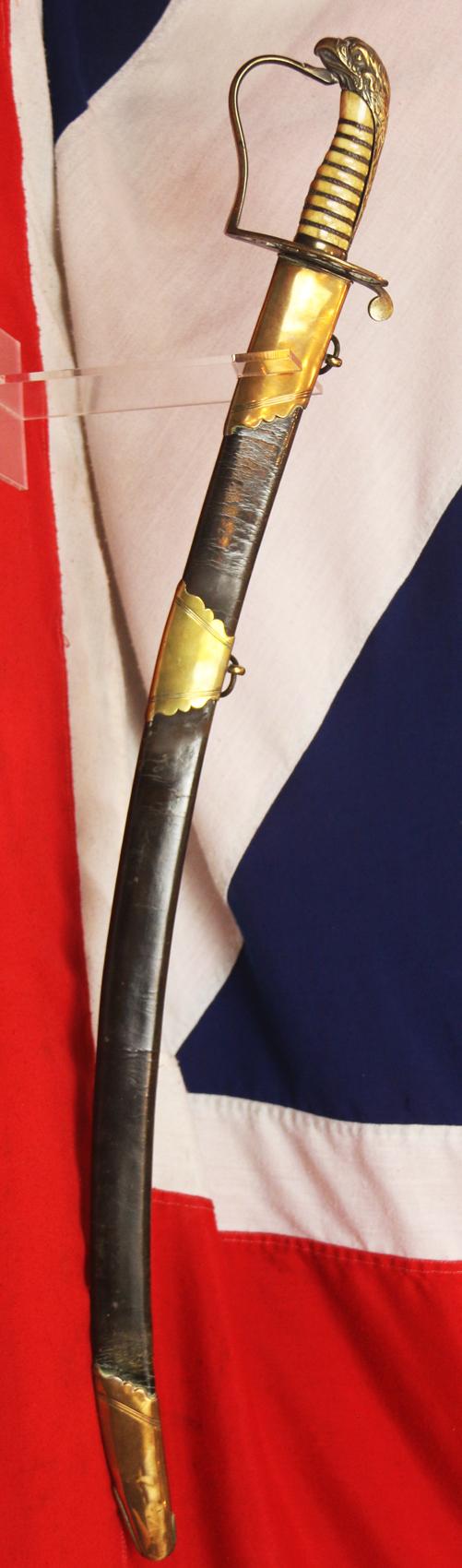
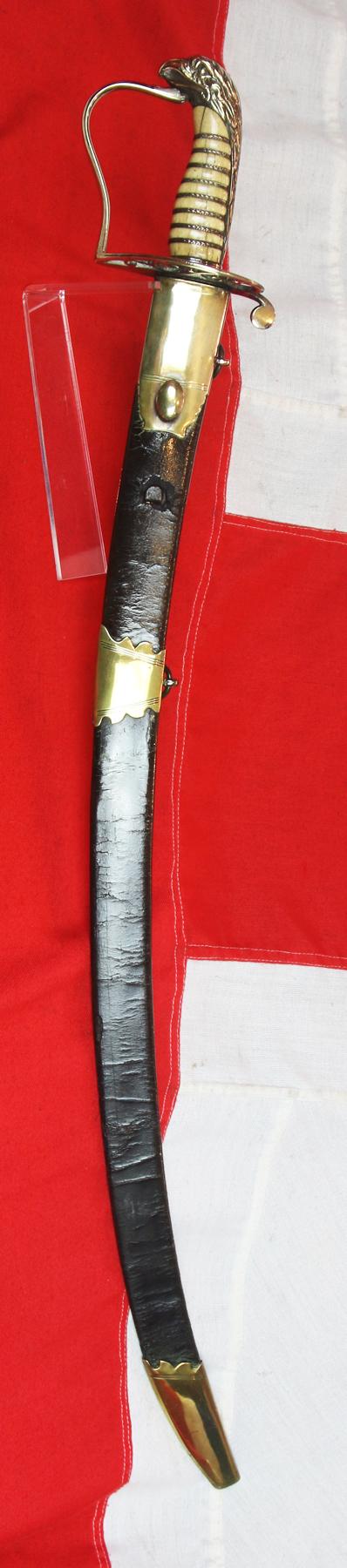
Click and use the code >25449 to search for this item on the dealer website Very Fine & Rare, Signally Beautiful, Anglo-American War of 1812, ´Eagle Head´ & Scroll Fretted Hilt, American Officer´s Sabre. In Great Condition.
  • Nation : British
  • Local Price : £1595
Click and use the code >25299 to search for this item on the dealer website Very Fine & Rare, Signally Beautiful, Anglo-American War of 1812, ´Eagle Head´ & Scroll Fretted Hilt, American Officer´s Sabre. In Great Condition.
  • Nation : French
  • Local Price : £1,595.00
French Napoleonic AN XI Light Cavalry Troopers Sword. Ref X3416. A French Napoleonic AN XI&194;&160;&194;&160;Light Cavalry Troopers Sword. 40&157; overall, 34 1/2&157; curved fullered blade with inspector´s poincon of ´J. Krantz´, back edge engraved ´M-F´ture Imp du Klingenthal Septembre 1812´. Three bar brass hilt, brass pommel with V stamp, original leather grip with large brass rivet, stamped ´Versailles´ with other unidentified stamps. In its original heavy steel scabbard with two suspension rings. Dated 1812.&194;&160; Sword in good condition, some old worm holes in grip.&194;&160; Images courtesy of West Street Antiques (https://antiquearmsandarmour.com/)
  • Nation : British
  • Local Price : £1575
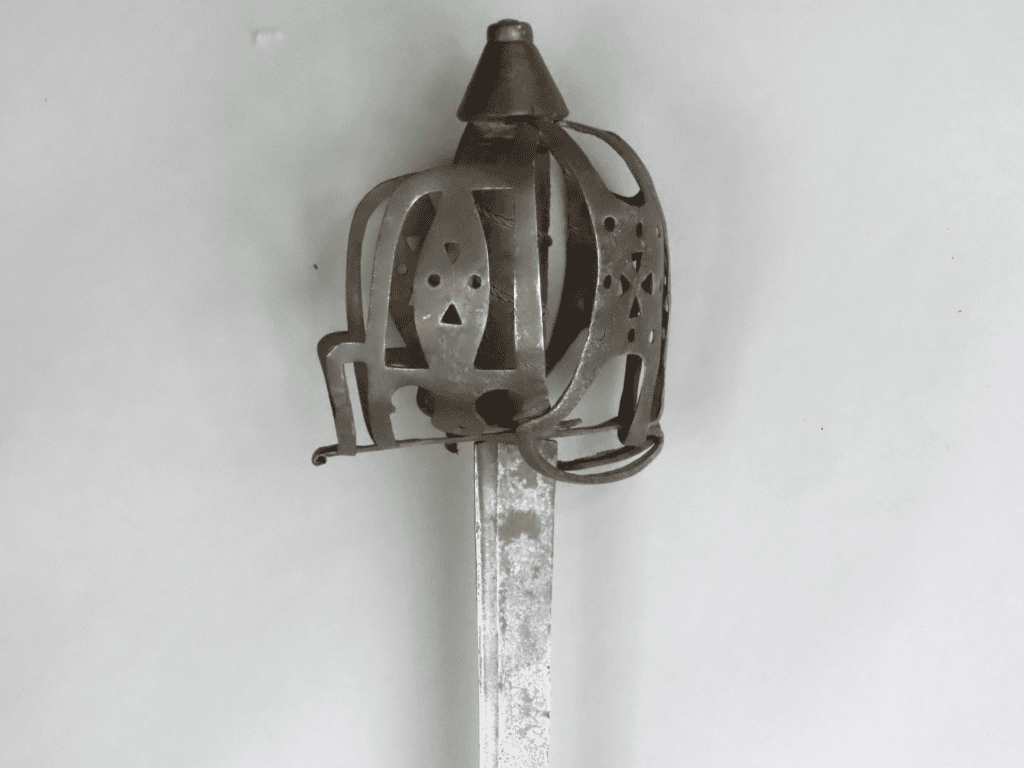
Scottish Basket Hilted Sword made for a Highland Regiment by Dru Drury of London circa 1775. A representative example of a distinctive type of Scottish munitions grade military basket hilted sword dating to the middle to third quarter of the 18th century. These swords were issued to soldiers serving in Scottish Highland infantry regiments such as the 42nd (Black Watch), and are often associated with their service in the French / Indian and Revolutionary Wars in North America. Some swords bear store or rack numbers marked into the pommels and guards, and occasionally amongst these marks the specific regiment can be identified. Most are unmarked. The swords were funded by regimental colonels from their allowances. Anthony D Darling in his “Weapons of the Highland Regiments 1740 to 80” (Historical Arms Series No 33) devotes a section to the background of this sword type. This hilt type evolved in Scotland towards the mid 18th century as a simplified version of the earlier more usual Scottish basket hilted sword, intended to be cheaper to produce for government troops recruited from the Highlands. The 43rd, later to become the 42nd , the Black Watch, was first formed for this purpose. Around 1757 production of these swords transferred to England as demand grew due to the increasing numbers of Highlanders being recruited into the newly raised Highland regiments. England was industrially better placed to fulfill bigger contracts in a more cost-effective and timely manner. Production fell mainly into the hands of one firm first owned by Nathaniel Jeffreys then taken over by Dru Drury in 1771. Little is known of the exact process of manufacture, but it is thought that the hilts, blades, scabbards, and grips were sourced from Birmingham, Sheffield and London, then the swords were assembled in workshops in London. Drury and Jeffreys commissioned similar single edged blades, usually between circa 29 inches and 32 inches long, as witnessed on surviving swords, with single fullers. Generally they stamped their blades both sides in a similar manner and size with a crown, “G R” beneath, and the business name below. The hilts are made from thin flattened ribbon-like iron bars mainly cut from plate which are forged together. Between these, primary and secondary guard plates are fixed and pierced with circles and triangles. The pommel is a pronounced cone shape with an integral button on top from which three shallow incised lines radiate downwards to the pommel edge. The tops of the three guard arms are secured under a lip which extends around the pommel base. The grip is a cylindrical piece of spirally grooved wood bound with twisted brass rope. The hilt retains pieces of its original leather lining top and bottom of the grip.  The Highland Regiments gave up their swords in 1784 when production of this sword type had ceased. The single edged blade has a fuller running underneath the blunt back edge for 80% of its length and is 29.75 inches (75.5 cm) long. The blade is stamped with “GR” beneath a crown on both sides and beneath this “DRURY” on one side of which only the first three letters “DRU” are discernible. The overall length of the sword is 35.75 inches (91 cm). The sword is in russet condition consistently pitted all over. There is a riveted repair to one of the guard arm terminals near the pommel. For a full discussion of this sword type see Anthony D Darling, Swords for the Highland Regiments 1757 – 1784, Mowbray Incorporated, 1988. For other examples see Cyril Mazansky, British Basket-Hilted Swords, Boydell Press / Royal Armouries, 2005, pages 129 to 130. And John Wallace, Scottish Swords and Dirks, Arms and Armour Press, 1970, fig 42, for a sword now in the National Museums of Scotland, collection reference LA 27.
  • Nation : British
  • Local Price : £1550
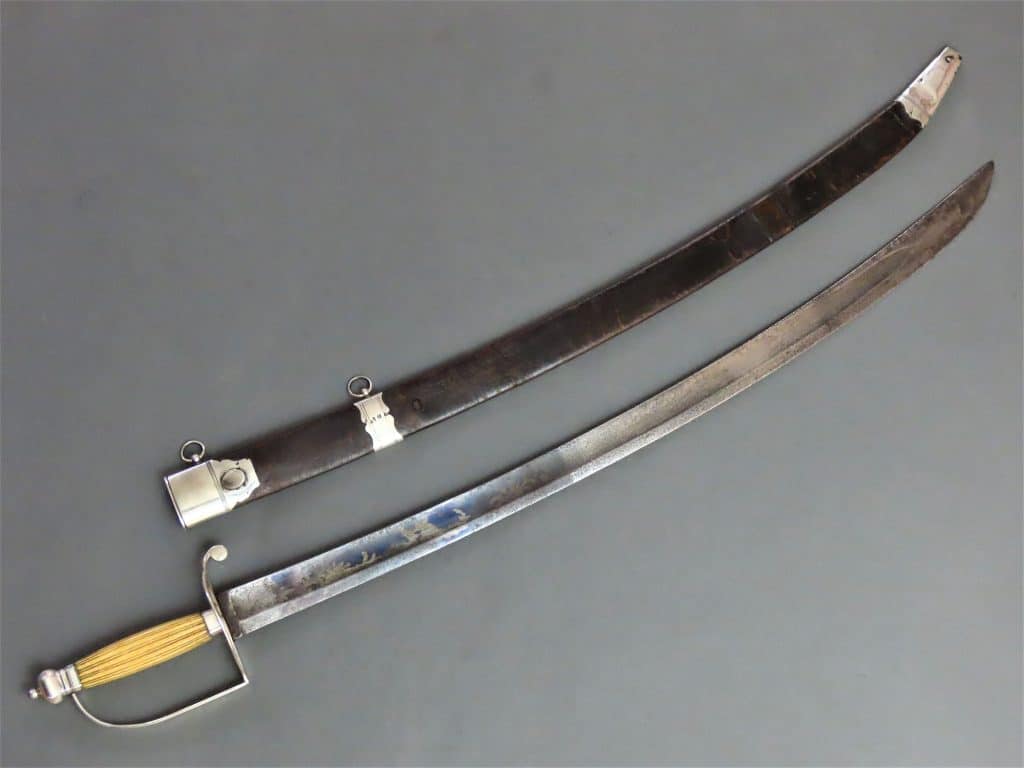
Georgian Officer’s Silver Hilted Hanger by Charles Freeth of Birmingham with hallmarks for 1801 / 1802. An interesting Officer’s Hanger by Charles Freeth of Birmingham dating to the period at the end of the French Revolutionary Wars and the beginning of the Napoleonic Wars. Freeth was an accomplished silversmith working from the end of the third quarter of the 18th century until the beginning of the 19th. He is best known for the exquisite silver mounts he produced for some of the most high profile English gunmakers in the early part of this period. Swords by Freeth are rare. The hanger has a plain hilt with a “D” shaped knuckle guard with a looped side guard inset with a hollow diamond. The square section cushion ribbed pommel sits on top of a vertically reeded ivory grip. The hilt is mounted with a curved blade decorated with scrolling foliage and a crowned “G R” cypher, highlighted in gilt, on a blued background. The hanger retains its scabbard. The silver hilt parts and the scabbard mounts are profusely marked with Charles Freeth's stamp of “C F” in raised relief inside a panel, plus the date and Birmingham hallmarks.  The blade length is just over 27 inches (69 cm). Overall the hanger is in good condition although the blue and gilt application to the blade is somewhat faded. The scabbard has survived generally well but at some time during its working life it has snapped near the chape and been stitched together with a short leather sleeve. The ivory grip has some small areas of flaking.
  • Nation : Japanese
  • Local Price : £1,545.00
1885 Period Into WW1 & WW2 Japanese Officer’s Army Kyu Gunto Parade Sword With Gendaito Hand Forged Blade, Scabbard With Leather Field Combat Cover & Expert Assessment. Sn 16923 -. This is an original Japanese Officer’s Army Officer’s Parade sword. The sword has been assessed by UK Japanese sword expert Bill Tagg. A copy of his hand written notes accompany the sword. In extracts from his notes he states “An 1885 period Kyu Gunto sword with traditional Gendaito hand forged blade. Looks like Hizen school work from tang shape & forging which is Suguha (straight) with Nie crystals on the Ha-Buchi. Blade has a cutting edge of 27”. Hada is very fine wood grain. The tang is un signed. Hilt is missing a family mon badge, can see small hole in fuchi where it would have been. The whole sword is of 19th century manufacture, a sword carried in both world wars”. The hilt has a push button scabbard retaining clip which is complete but does not lock into the throat mount of the scabbard. The Ray skin covered handle has small areas of wear to be expected and its original wire binding is intact. All the fittings are original. The sword is complete with wood scabbard which has a single hanging ring. The scabbard is fitted with a replacement field combat cover. All leather and stitching of the cover are intact. The price includes UK delivery. Sn 16923
  • Nation : Japanese
  • Local Price : £1,545.00
**MINT BLADE**C1850’s – 1920’s Japanese Civilian Samurai Katana Long Sword With Perfect Red Bark Effect Lacquered Scabbard, Cord & Expert Assessment. ED 3040 -. This sword has been assessed by a UK based Japanese sword expert Bill Tagg. His assessment accompanies this piece. In the assessment he states “A civilian katana long sword, blade is unsigned and is just under 28 inches long. Difficult to judge the age, the black patination makes it look older than it is. In my opinion dates late 19th into 20th century (1850s to 1920s) from the shape. This whole sword has been restored in recent times and is in near mint condition. Polish is hadori which the Japanese like. Perfect length for a quality martial arts training sword. Saya re-lacquered in bark-effect red colour (perfect) with buffalo horn kuri kata and old re patinated bottom mount (kojiri) in iron. Tsuba (hand guard) tsukashi (pierced) iron depicting lotus leaves? 2 hitsu anna been used on other swords. Looks 1750 to 1800 period in Samurai taste, even black patinated. Tsuka (hilt) rebound in black cotton ito, good fish skin, no breaks. Mismatched copper fuchi & old iron kashira. menuki (under binding) shows old Japanese oblong coins? A very attractive looking sword”. In his drawings of the blade he describes the cutting edge as 71 cms length and overall length 90.5 cms, he also identifies a polisher’s mark & describes other blade measurements & characteristics (illustrated in image 2). The price includes UK delivery. ED 3040
  • Nation : American
  • Local Price : 2,100.00 USD
AMERICAN REVOLUTIONARY WAR HANGER C.1770-80. Provincially made example. Brass hilt comprising stirrup form guard with loop side guard, lighter throughout than commercially produced examples. Raised edge pommel with integral mounded button. Wood grip, perhaps walnut, expanding awkwardly toward the pommel and originally mounted with four brass capped bosses each side. The brass dark with aged patina. The wood dry with age crack and small loss at the guard terminal.  24 ¼” curved blade, very slightly concave each side and blacksmith made.
  • Nation : British
  • Local Price : £1500
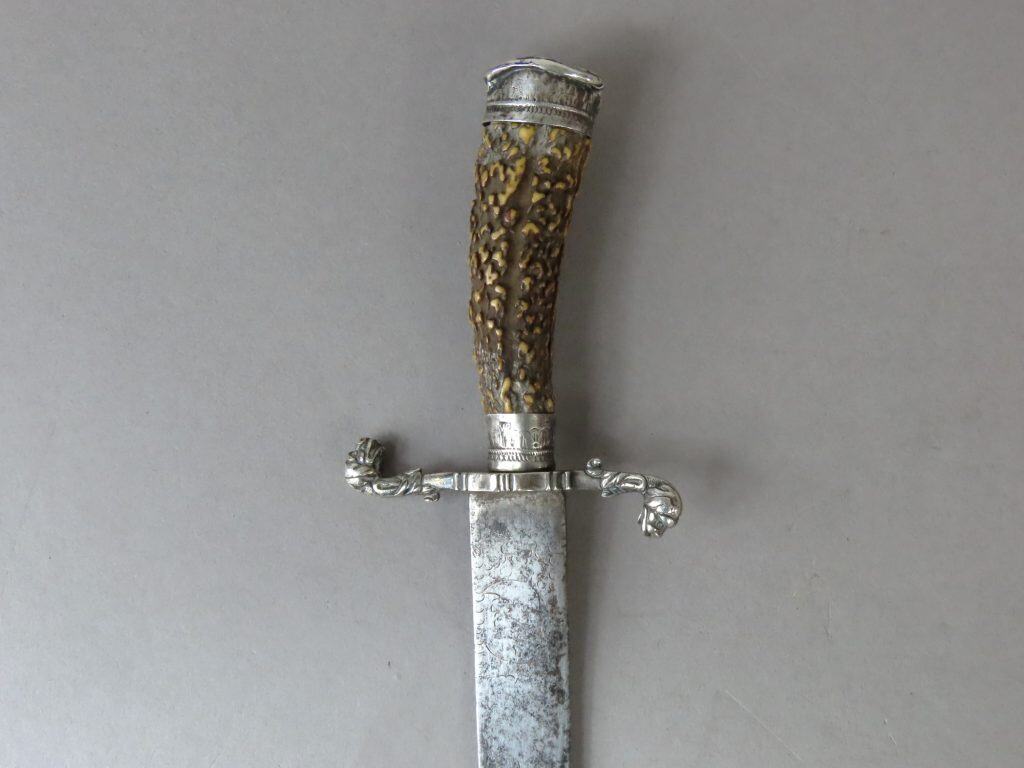
Silver Hilted Hunting Hanger made by William Knight of London circa 1685 to 1697. A scarce late 17th century Silver Hilted Hunting Hanger mounted with a roe buck antler grip and slender curved single edged blade. The cross hilt is formed with an oval quillon block from which two horizontal quillons emerge with vertically counter curved terminals shaped as busts of dogs. A ferrule is mounted at the base of the grip  with a bossed circular ridge towards the base beneath which a further ring of dots is present. The pommel cap rim is  decorated in the same manner on the sides. On top the pommel cap features  two cherub heads between busts of Roman emperors against a finely punched background surrounding an integral raised pommel button in the middle. The tapering blade is single edged until it becomes double edged 5 inches from the tip. It has a short ricasso and a queens’ head armourers stamp on both sides a quarter of the way along from the hilt. This is probably the mark of a Solingen smith. The forte on both sides has a panel of foliage with remnants of gilt inlay. The ferrule at the base of the grip and the pommel cap have the maker’s stamp “WK” conjoined within a shield. This is the mark of the London based silversmith and silver hilt maker William Knight. He was born in circa 1664 and is recorded as active in his trade from 1685 to circa 1713. He was an apprentice of Hugh Humphries with the Weavers’ Company of London. Knight was dead by 1720. “WK” are the initials of Knight’s first and surnames. In 1697 the marks required of London silversmiths changed to the Britannia Standard which required the two letters of a maker’s stamp to be of the smith’s surname which in Knight’s case was “KN” which is not the case here. Hence we can date the hilt to before 1697. Using the initials of both names reemerged in 1720 with the arrival of the Sterling Standard which for a time was in operation alongside the Britannia Standard but Knight was no longer active by then. The pommel cap shows some compression damage around the rim. The blade shows wear and light rust patination along both sides and a chip to the cutting edge towards the tip. The blade is 17.5 inches long (44.5 cm) and overall the hanger is 21.75 inches (just over 55 cm) long.
  • Nation : British
  • Local Price : £1,500.00
British 1827 Pattern Naval Flag Officer&#acute;s Sword with &#acute;Andrea Ferrara&#acute; Broadsword Blade. Description Triple-fullered broadsword blade 29 inches in length, 35 inches overall. Gilt brass half-basket hilt cast with a crown and fouled anchor within a cartouche, hinged inner guard, brass backstrap with lion head pommel cap, white shagreen grip, brass ferrule with sword knot ring. Black leather scabbard with gilt brass fittings at the throat, chape and middle, the throat with two opposed hanging rings and the middle piece with one hanging ring. The blade is engraved on both sides with &#acute;ANDREA FARARA&#acute; [sic], and also features the royal crown and coat of arms with motto &#acute;HONI SOIT QUI MAL Y PENSE&#acute;, a quatrefoil design, a sunburst at the ricasso and feathers (possibly the three feathers heraldrically associated with the Prince of Wales). The top piece of the scabbard is engraved with the maker&#acute;s mark &#acute;PROSSER Maker to the King and Royal Family LONDON&#acute;. The level of decoration of the scabbard signifies that this was the sword of a flag officer “ that is, an officer with a rank higher than Captain. It conforms to regulations laid down in 1832 for flag officer&#acute;s scabbards, with one modification “ a third hanging ring was added later on the opposite side of the chape piece to the original. This was a change introduced in 1847, showing that this sword was still being carried by that date. Higher-ranking naval officers could get away with significant variations in their uniform swords “ some are even recorded as having carried foreign swords or British models that had been declared obsolete. This scabbard may have been produced at a later date than the sword, either after the 1832 regulations or upon the officer&#acute;s promotion to flag rank, since the ring fixed to the ferrule typically indicates an early example of the 1827 Pattern sword hilt. The use of a broadsword blade in a British naval sword is not unheard of: the National Maritime Museum at Greenwich holds seven examples of such blades. However, these all date from 1870-1882 and result from the use of standard-pattern broadsword blades, which were produced for Scottish infantry regiments from 1866. With such blades readily available some officers may simply have chosen them for looks or personal preference. This sword is an example of an earlier practice, one more often seen in the Army, of officers reusing broadsword blades of the 17th or early 18th century, fitting them into the regulation pattern hilt and accoutrements to make them fit for service in a new era “ or fit enough not to stand out too much on parade, at least. It is quite likely that these were inherited &#acute;family&#acute; blades, since it was a common practice (particularly in Scotland) to rehilt swords and keep them in use over generations. I have found no reference to this being done to produce a naval sword before, this example may be rare or unique in that respect. For an excellent pair of examples, see The British Cavalry Sword (Companion Volume) by Richard Dellar, page 25, depicting the 1796 Pattern dress and undress swords of Lieutenant-Colonel David Home of the 2nd Dragoons. Both of Home&#acute;s swords have &#acute;Ferara&#acute; [sic] marked broadsword blades, fitted by the London cutler Johnston into regulation hilts at some point between 1798 and 1802, with custom scabbards to match. Andrea Ferrara is a name that appears quite often (with a number of spelling variations) on English and Scottish blades of the 17th century, leading to much speculation as to who this celebrated swordsmith was. Giovan Cigogna, describing Venetian swordsmiths in his book Trattato Militare (1583) writes that &156;in the town of Bellune are the ingenious master Giouan Donato and master Andrea dei Ferari, both brothers.&157; The town is today called Belluno, and a contract exists in the State Archives of Belluno from December 1578 in which these same brothers agree to supply 600 swords &#acute;of the kind used in England&#acute; per month for ten years to a London-based importer, a huge quantity which suggests that their operation was at a significant scale for its time, although whether the contract was filled entirely or cancelled at some point is unknown. There is no evidence that either brother ever visited Britain and despite the quantity mentioned in the contract no more than a fraction of the blades found today can possibly have been made in Belluno, especially as many are clearly more recent. Rather it would seem that the imported blades were of such impressive quality that the Ferrara mark was counterfeited by others and/or used as a general mark for a blade of superior quality rather than specific manufacture. The fact that &#acute;Andrew Ferrara&#acute; or simply &#acute;Ferrara&#acute; became a slang term for the Scottish broadsword and sometimes for swords in general supports this interpretation, and it is unlikely that many people at the time believed their blade was forged by the man himself. John Prosser was a prominent London sword cutler who took over the business of his employer Thomas Cullum in 1795 and traded on Charing Cross Road until 1860, specializing in high-quality blades including custom officer&#acute;s swords and presentation swords. He was creative with his commissions and invented the &#acute;quill-point&#acute; blade in 1818. In his early years of business he developed a close relationship with the Prince of Wales, whose infatuation with military pomp led him to commission several swords from Prosser, including a set awarded to the officers of the 10th Hussars, his pet cavalry regiment, in 1808. This connection was rewarded with titles: Prosser was appointed Sword Cutler and Beltmaker to King George III and in 1820 was made Sword Cutler in ordinary to King George IV (the former Prince). Prosser&#acute;s firm proudly displayed these royal connections on every sword sold, in this case a custom version of the naval officer&#acute;s hilt and scabbard to accommodate a pre-existing blade. It is possible that Prosser did not do the rehilting, since Prosser-made naval swords typically do not feature a folding guard, but this cannot be proven either way without a maker&#acute;s mark on the sword itself. The blade has some areas of pitting and what look like repairs in places to fill in old damage. This has sadly obscured some of the engraving, which is unusually extensive for a Ferrara blade and might have been added to over time. The scabbard leather has shrunk and hardened with age, which has burst its stitching along the seam. Its fittings are all sound and retain a good deal of gilding, while the sword&#acute;s hilt retains almost all of its gilding even in areas that would be handled more. The hinged flap of the hilt works well and fits onto a pin at the scabbard&#acute;s throat to lock the sword into the scabbard. The shagreen grip was almost certainly originally bound with wire, but this has been lost. The white shagreen itself is in good condition, with no damage and little handling wear.
  • Nation : Japanese
  • Local Price : £1,495.00
**ANCIENT 1500-1580 MUROMACHI AGE OF WAR PERIOD**Japanese Samurai Uchi Gatana Single Hand Sword Blade Smith Signed ‘KANE NAGA’ In Protective Honoki Wood Shira Saya Resting Mounts, Later Cloth Cover Carry Bag & Expert Assessment. Sn 22591 -. This is an ancient Japanese Katana blade which has been assessed by UK Japanese sword expert Bill Tagg. A copy of his hand written assessment notes accompany this blade. Extracts from the assessment and notes include “Uchi Gatana Single Hand Sword Blade in Shia saya resting mounts. Ancient blade. This is LATER PERIOD Muromachi blade, ran from 1392-1573 Age of War. There were several smiths using this two kanji during 1500 to 1580. Because its only a short inscription hard to determine which one. In good Hadori polish showing an uneven midareba hamon getting thin in parts dure to lots of repolishing and re-sharpening (no Ha-Machi left). Lost couple of millimetres of edge with several small grain kizu openings. Reasonable condition for its great age. See Malcolm Cox book of mino den swordsmiths page 82 lists a Kane Naga working in sueseki style Tensho era 1573. Signed with small Kanji like this blade (possible man?). rated chusaka medium / average swords. Mounted in late 19th into 20th century Honoki wood shira saya. Good quality silver habaki with raindrop decoration in very good condition. A Genuine Samurai sword”. In his illustrations of the blade he adds “cutting edge is 58 cms, total length is 73 cms. He also translates the describes other blade and tang characteristics and dimensions which can be seen in the images. The price for this ancient blade with original expert assessment includes UK delivery. Sn 22591
  • Nation : French
  • Local Price : £1,495.00
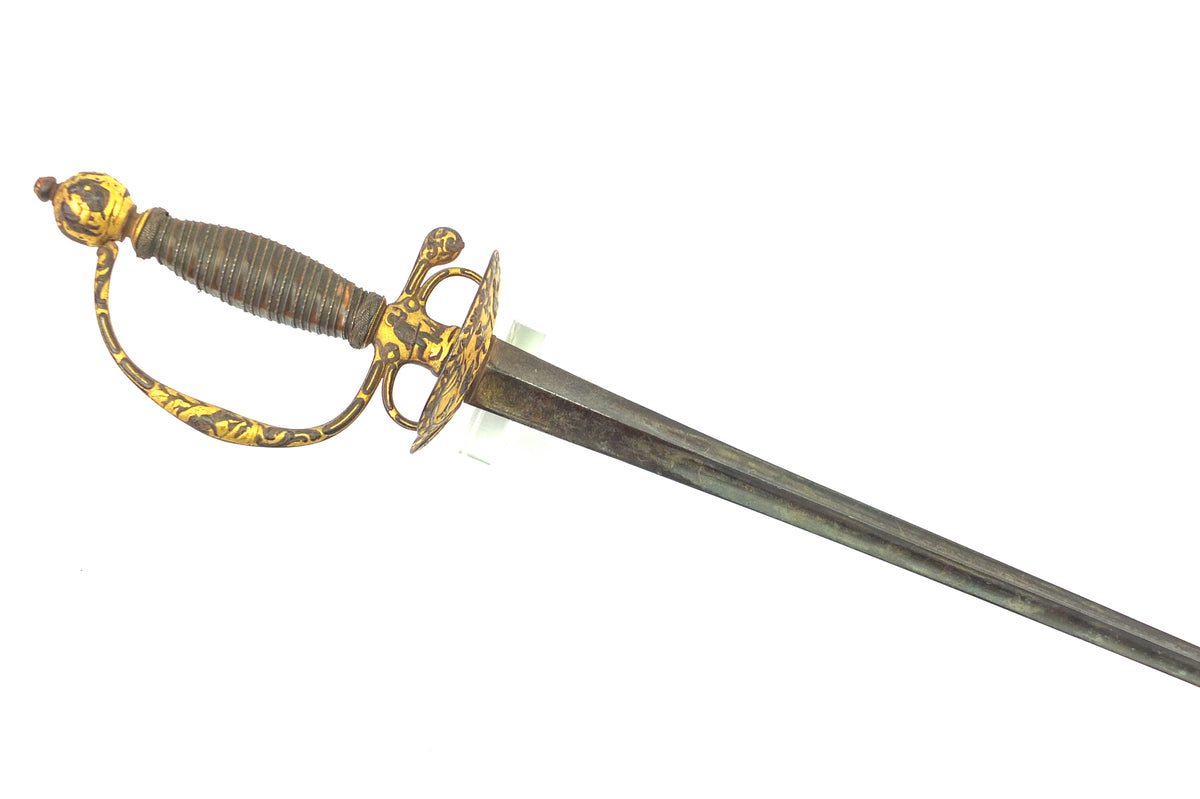
French Small Sword, Very Fine. SN 9123. A Very Fine French Small Sword with Chiselled Iron Hilt with Gold Inlay. 37 1/2&157; overall, 31&157; hollow ground colichermarde blade with etched panel blade. Russet iron hilt chiselled in low relief against a finely matted gilt ground, including shell guard decorated with differing pastoral scenes, quillon block with a hunter on one face and a warrior on the other, knuckle guard and ovoid pommel en suite with the guard, and the grip bound with plaited wire and ribband between Turks heads. Circa 1740&194;&160;&194;&160;&194;&160;&194;&160;&194;&160;&194;&160;&194;&160;&194;&160;&194;&160;&194;&160;&194;&160;&194;&160;&194;&160;&194;&160;&194;&160;&194;&160;&194;&160;&194;&160;&194;&160;&194;&160;&194;&160;&194;&160;&194;&160;&194;&160;&194;&160;&194;&160;&194;&160;&194;&160;&194;&160;&194;&160;&194;&160;&194;&160;&194;&160;&194;&160;&194;&160;&194;&160;&194;&160;&194;&160;&194;&160;&194;&160;&194;&160;&194;&160;&194;&160;&194;&160;&194;&160;&194;&160;&194;&160;&194;&160;&194;&160;&194;&160;&194;&160;&194;&160;&194;&160;&194;&160;&194;&160;&194;&160;&194;&160;&194;&160;&194;&160;&194;&160;&194;&160;&194;&160;&194;&160;&194;&160;&194;&160;&194;&160;&194;&160;&194;&160;&194;&160;&194;&160;&194;&160;&194;&160;&194;&160;&194;&160;&194;&160;&194;&160;&194;&160;&194;&160;&194;&160;&194;&160;&194;&160;&194;&160;&194;&160; Very attractive sword in good condition.&194;&160; Ex the David Jeffcoat Collection (1945-2020) Images courtesy of West Street Antiques (https://antiquearmsandarmour.com/)
  • Nation : British
  • Local Price : $1495.00
English Plug Bayonet by John Hathaway, ca. 1690. Featuring tapering 11 ½” single-edged wedge-section blade, double-edged for the last 5 1/4″. The forte is deeply stamped on one side with the Blazing Star mark assigned to John Hathaway by the Worshipful Company of Cutlers of London on September 26, 1689 and also an unidentified King's Head mark (KH18 in R.D.C. Evans' “The Plug Bayonet”). While the King's Head was a mark used by Solingen makers Weyersberg and Wundes, this mark is clearly different, as all the German Kings Head marks are left facing profiles, whereas this one is right facing. The brass hilt is of the type known as the Winged Figure Series in Evans' book and the slightly upturned quillons and pommel both feature this three-dimensional figure. The grip is of turned walnut with a brass ferrule at the base and tapering crimped pommel cap with integral winged figure finial. Overall length 17 5/8″. Blade with light pitting, hilt and grip near excellent. A very fine example of a classic English plug bayonet of the period of James II and the ascension of William of Orange. Another example by this maker, formerly in the 2003 catalog of Peter Finer, Ltd. is currently being offered by a UK dealer for 2825 British Pounds (nearly $4000 USD).
  • Nation : Chinese
  • Local Price : £1495
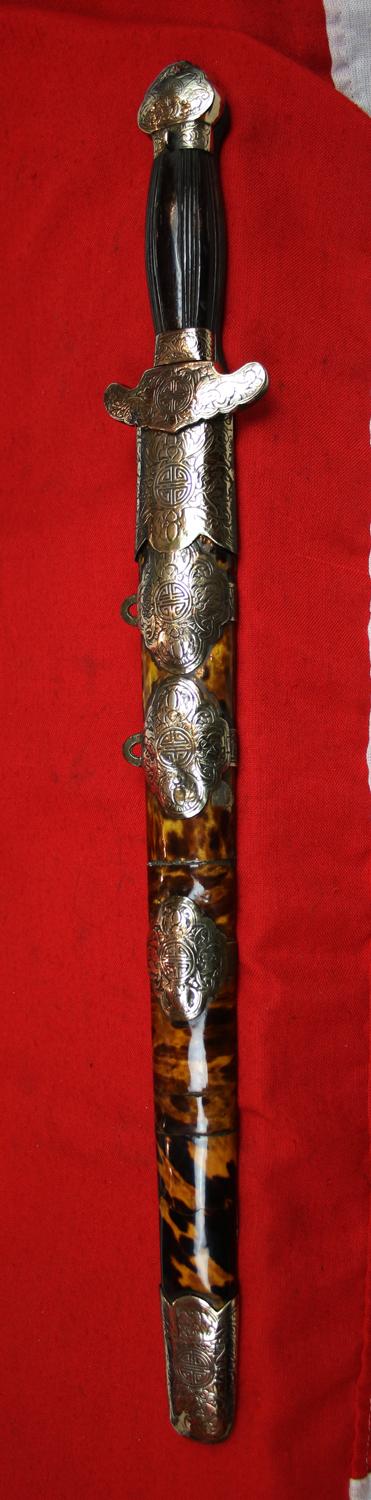
Click and use the code >26100 to search for this item on the dealer website Most Scarce Antique Ching Dynasty Chinese ShuÄ
  • Nation : Iberian
  • Local Price : £1495
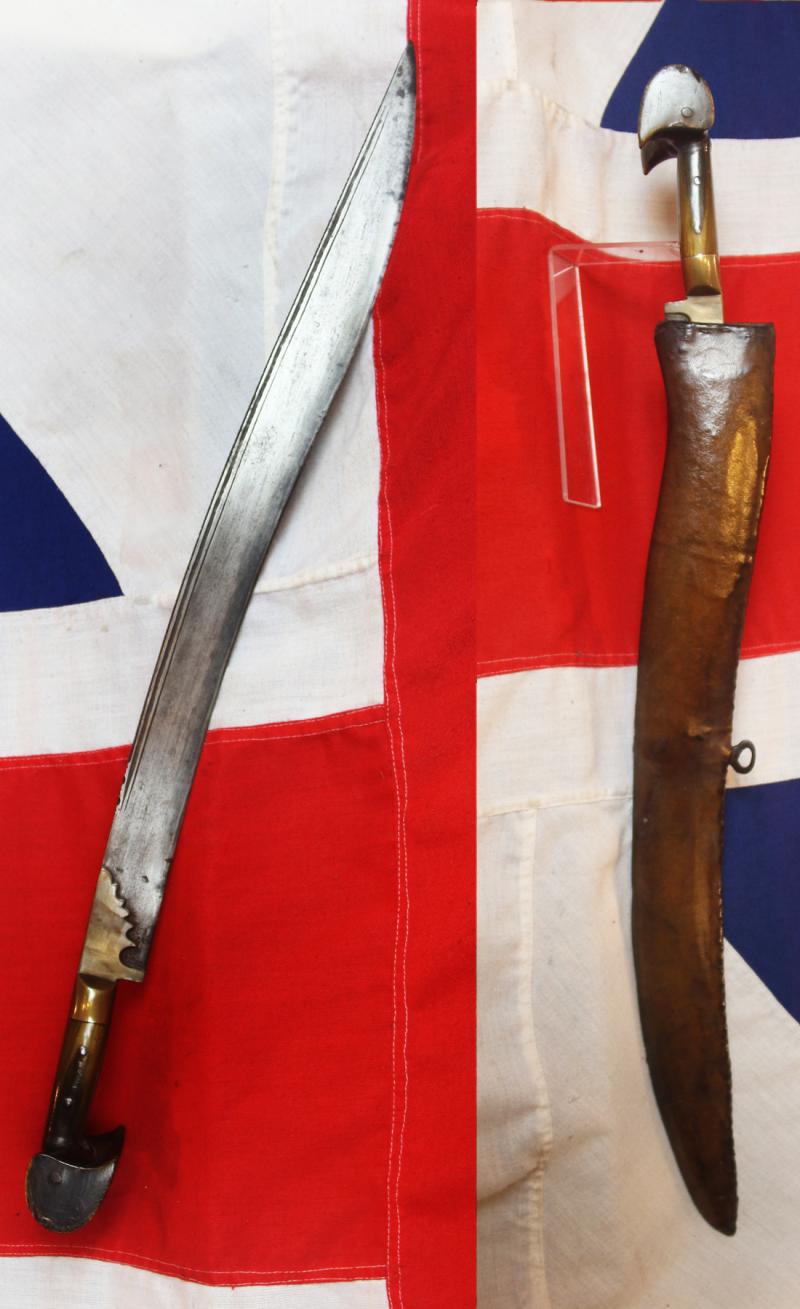
Click and use the code >25041 to search for this item on the dealer website Most Fine 18th to Early 19th Century Ottoman Empire Jannisaries YataÄ&159;an Sword, Carved Horn ´Eared´ Hilt & Original Hide Covered Wooden Combat Scabbard
  • Nation : British
  • Local Price : £1495
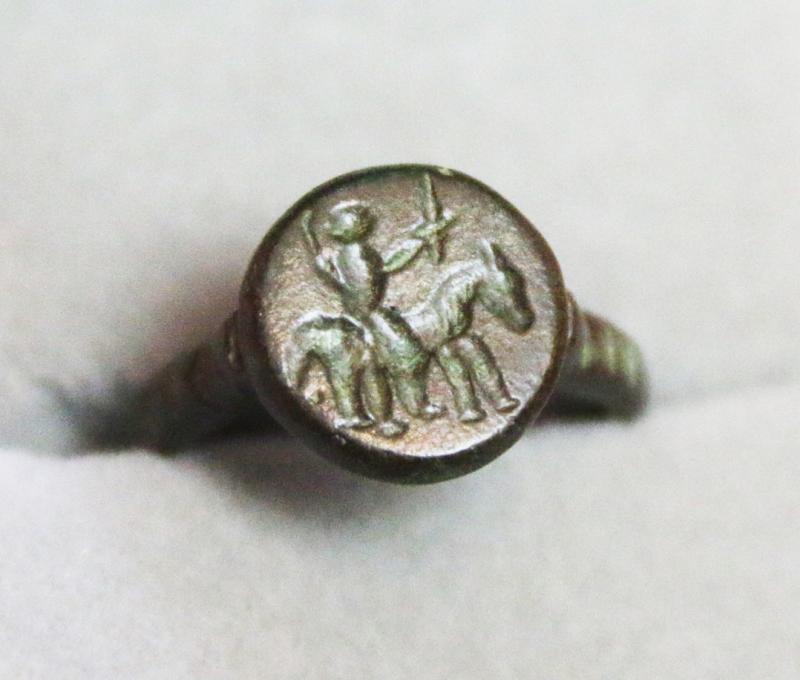
Click and use the code >25457 to search for this item on the dealer website Fabulous Knight&#acute;s Seal Ring, From Agincourt to the Wars of the Roses Period. A 15th Century Ring with an Intaglio Stylized Engraving of An Armoured Knight on Horseback Holding Aloft His Knightly Sword, a Fabulous and Beautiful Piece.
  • Nation : Chinese
  • Local Price : £1495
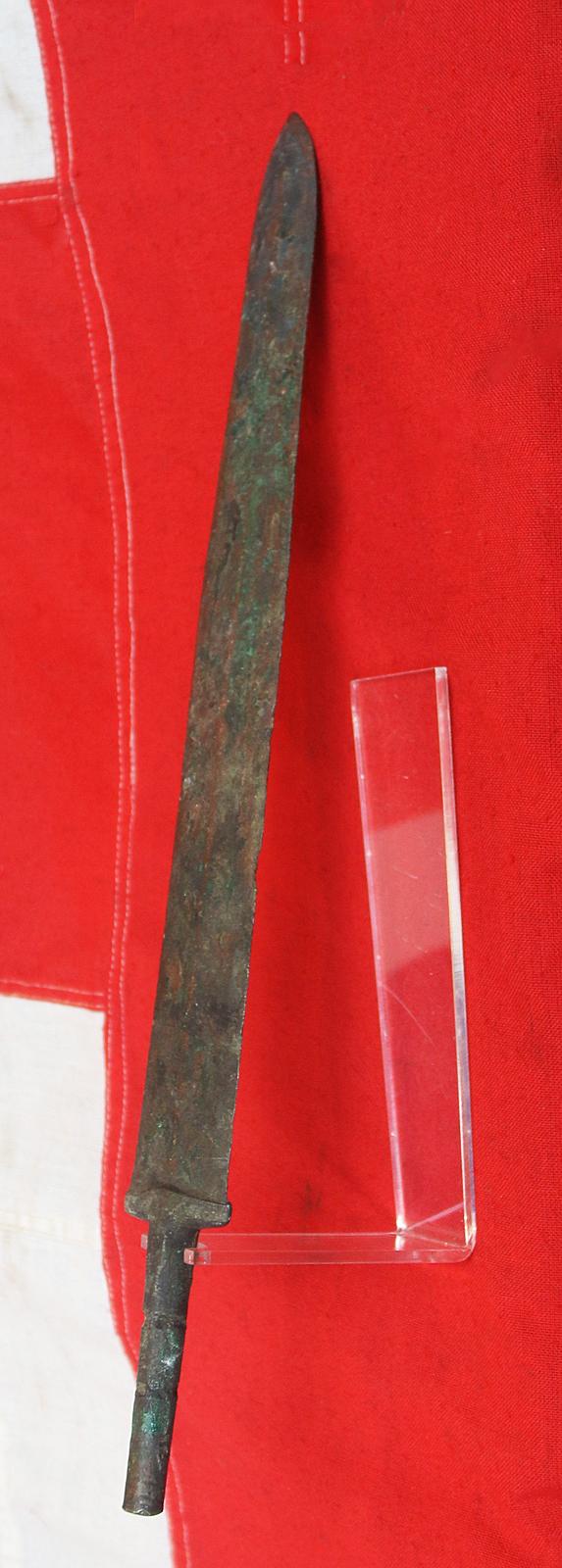
Click and use the code >24876 to search for this item on the dealer website Archaic Chinese Warrior´s Bronze Sword, Around 2500 Years Old, From the Zhou Dynasty to the Qin Dynasty, Including the Period of the Great Military Doctrine ´The Art of War´ by General Sun-Tzu
  • Nation : Turkish
  • Local Price : £1495
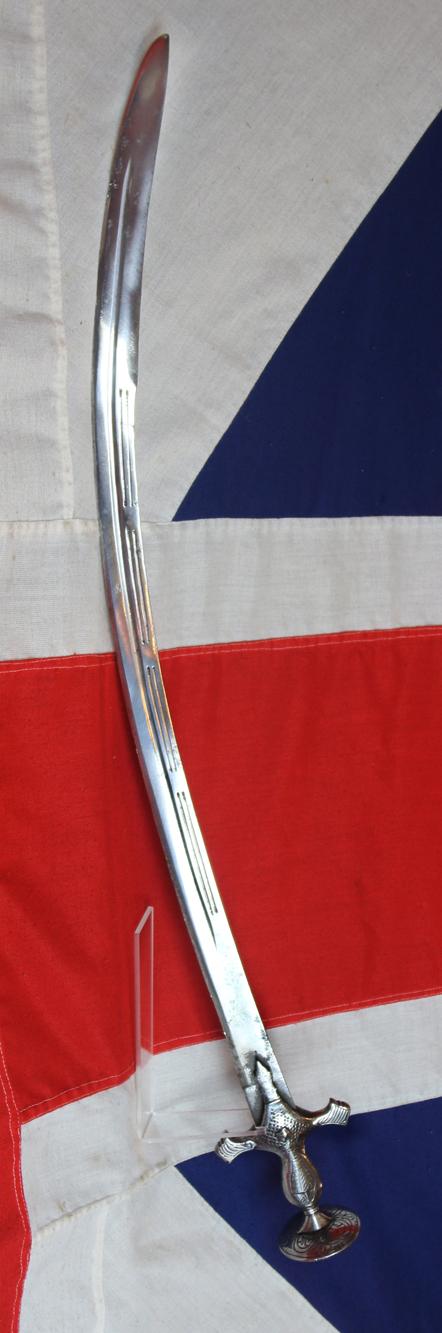
Click and use the code >24262 to search for this item on the dealer website Beautiful Mughul High Ranking Warrior´s Sword Talwar 17th-18th Century, Likely Wootz or Damascus Kilij Form Blade
  • Nation : British
  • Local Price : £1480
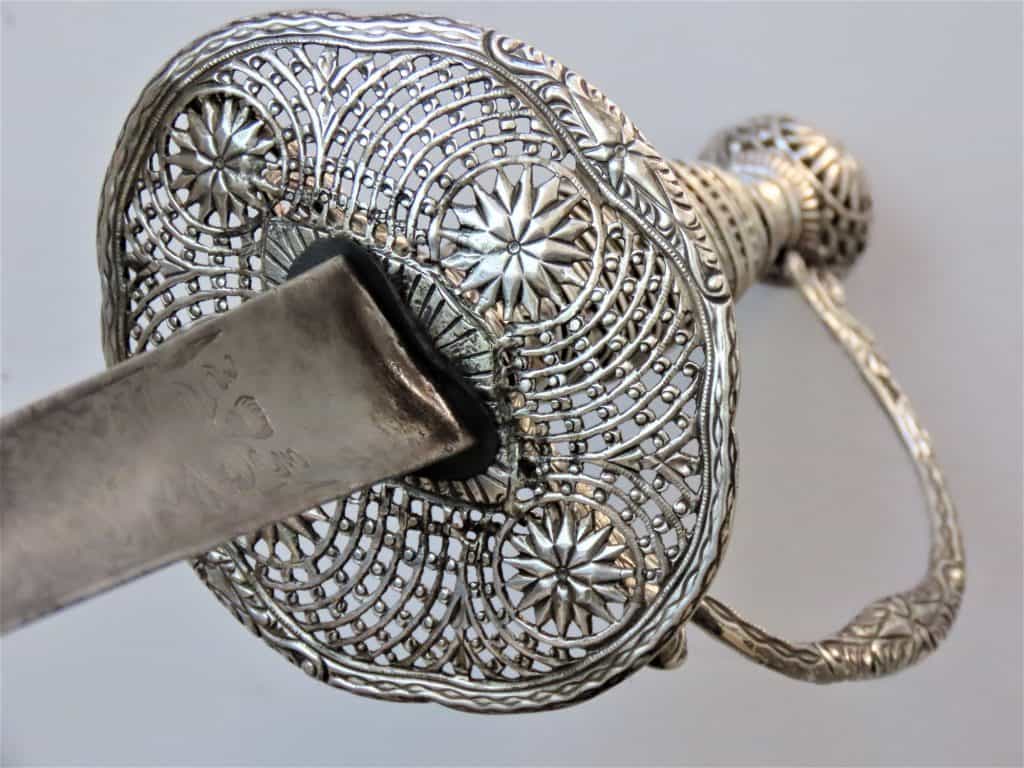
English Silver Hilted Small Sword by Joseph Clare (II) Hallmarked for 1769 / 1770. An English silver hilted small sword by Joseph Clare (II) of London with hallmarks for 1769 / 1770.  The hilt is mounted with an oval shaped dish guard which is exquisitely pierced and engraved with  bold star shaped florets surrounded by  scrolls  and sprays which form the main design theme.  This design pattern is common to the pommel,  ricasso and knucklebow, which attests to the originality and homogeneity of the parts. The sword is well-balanced and mounted with a hollow ground triangular section blade which retains its original decorative engraving on its three sides near the hilt. The baluster shaped grip is covered with spirally wrapped silver crimped strip, the strip separated by triple length twisted wire. Silver cap terminals are present top and bottom of the grip engraved with scallops. The cross guard is mounted with forward and rear drooping tear drop shaped quillons and shallow pas d’ane rings. Joseph Clare was a talented silversmith and silver-hilted sword maker. From 1732 he was apprenticed to Jeremiah Marlow of the Goldsmiths’ Company. After being made free he practiced at a few addresses within the City of London and died in 1771. Clare registered at least four marks with Goldsmiths’ Hall, most being simple representations of his initials in panels which was most usual for silversmiths at the time. The mark on this sword is distinctive in its complexity in that it contains the four letters of his name “C L A R E” inside a panel (see Grimwade Number 358), the first two letters above and the following three below. This mark was registered on 1st  October 1767 and replaced an earlier simpler mark, but was in turn replaced by his last registered mark 16th September 1768. This distinctive mark, therefore, was used for less than a year and is a rare survivor. For examples of Clare’s work see “London Silver-Hilted Swords”, their makers, suppliers and allied traders, with directory, by Leslie Southwick, 2001, Royal Armouries, plates 5, 53 and 61 (the latter two are in the Royal Armouries collection references: ix.798 and ix.1861) respectively, and for Clare’s biography page 72 The hilt is an example of the high standards of design and execution required of the 18th century London silversmith as well as an example of one of the most effective weapons of the 17th and 18th centuries. The hilt retains its original pleasing contours and the blade is in fine clean condition. The engraved designs on the dish guard are clear and exhibit delicate working life repairs in two small areas on each side of the hilt either side of the blade. It appears that an opponent’s blade may have punctured the delicate guard in these places which has led to the repair. The grip maintains its pleasing profile but the wire wrapping is distressed. The blade is discoloured with age related blemishes but is in fair condition. For a further reference see Arthur G Grimwade, 1990, “London Goldsmiths 1697 – 1837 Their Marks and Lives” for a precis of the known records for Clare,  and a summary of his marks. The blade is just over 32 inches (81.5 cm) long and the overall the sword is 38.5 inches (97.75 cm) long.
  • Nation : Japanese
  • Local Price : £1,475.00
WWII Japanese Army Officer’s Type 98 Shin Gunto Seki Arsenal Sword with Smith Signature ‘NOSHU SEKI JU HATTORI MASA HIRO SAKU’, Scabbard with Leather War Service Cover & Expert Assessment. Sn 20599. -. This sword has been assessed by a UK based Japanese sword expert Bill Tagg. His assessment accompanies this piece. In exerts from the assessment he states “A Type 98 Shin Gunto . This is a medium grade showa-To oil tempered blade made Seki arsenal using Yaki Ire process to produce its temperline (Hamon) not visible with rust. It is signed Kazu Uchi Mei, I think this means another man actually signed the Nakago, probably his job to sign for a lot of other arsenal smiths ‘‘NOSHU (province) SEKI (city) JU (living in) HATTORI (family name) MASA HIRO (art name) SAKU (made this)’. He is rated as making either low to medium grade Showa-To (nontraditional forged) or medium grade Gendaito (hand forged). This is a good example of his work but needs a polish to see what is in it. Saya is Honoki wood, leather covered for war service, used condition with a period reinforcing brass collar put on mouth of Saya. Tsuba good quality Gunto pattern with lots of gilt on it, also good quality Gunto mounts, some gilt and colour remaining. Ito wrap & fish skin good but skin shrunk revealing small gaps. Needing a sarute (knot loop) to complete it”. In his illustrations of the blade he describes the cutting edge of blade as 66 cms. Total length 86 cms. He also translates the tang signature & describes other blade characteristics and dimensions (illustrated). The price for this sword with expert assessment includes UK delivery. Sn 20599
  • Nation : Japanese
  • Local Price : £1,475.00
WW2 Japanese Army Gunzoku (Military Civilian Employee) Officer’s Gendaito Hand Forged Katana Long Sword Smith Signed Tang ‘Kane Tsune’ Scabbard With Campaign Leather Cover & Expert Assessment. ED 2414 -. An original late WW2 Japanese Officer’s Sword and Scabbard. The sword has been assessed by UK Japanese sword expert Bill Tagg. A copy of his hand written notes and illustrations accompany the sword. In extracts from his notes he states “Civilian sword for military use by Gunzoku (civilians employed by the army). They wore uniform and were entitled to carry swords. 65cm Gendaito hand forged blade (says forged in Mei in inscription). Signed by its maker ‘Kane Tsune’, born in 1910 real name Nishimura Kazufumi. He worked as a gunto smith in Giffu. This is the only mention I can find of him cannot find any other Oshigata of him. The blade is in good old polish with only one chip in edge. A very unusual hamon which does not conform to standard types. Appears a bit wild and uncontrolled in places. Hada is also a bit wild with large patches of vivid O Itame. It does not appear to have had yakote line in point. Possible war time polish. Saya is wood withthin layer of lacquer covered in campaign leather cover worn in places. Tsuba soft metal showa period made . Lost its original seppa, leather put in place. Tsuka hilt very good quality han dachi mounts looks Meiji & good menuki. Very dirty brown binding intact. Missing a sarute loop for rank tassel. An interesting example of a civilian sword carried to war (see Markus Sesko books on Japanese Smiths page 294 re smith. Only man using these kanji in Showa period (war time) born 1910 worked as a gunto smith)”. In his illustrations Bill translates the signature on the tang. He describes the tang end as Kuri Jiri (rounded) cutting edge 65cms total length 85cms. He describes the hamon as based on suguha medium Nioi crystals of Martensite, grain mixed masame goes into O (large) Itame in patches. He also identifies paint Arsenal assembly marks on the tang and other blade characteristics that can be seen in the images. The price includes UK delivery. ED 2414
  • Nation : Spanish
  • Local Price : $2,800.00 CAD
SPANISH CAVALRY SWORD: Circa 1770-1780.. SPANISH CAVALRY SWORD: Circa 1770-1780. 36” plain blade, 1 1/2” wide of classic Spanish style for military swords. Dark patina overall. Traditional style hilt and copper wire grip. The crossguard bears the maker’s stamp of a Crown over “Z” and a Crown over an “E”. This is probably Eusebio de Zuloggo of Madrid. An example virtually identical is illustrated on Plate 150 of “Spanish Military Weapons in Colonial America 1700-1821”. A very fine example. $2,800.00
  • Nation : German
  • Local Price : $2800.00 CAD
GERMAN HUNTING SWORD:. GERMAN HUNTING SWORD: Circa 1670. The long 32 ¾ “ slender blade is very fine. The left fuller is engraved “ME FECIT” (made by) and the right fuller is engraved “…CHINI” (maker unknown). Iron Crusader style hilt with clamshell guard and wire-wrapped grip. A classic example of an early German Hunting Sword. $2800.00
  • Nation : British
  • Local Price : £1,450.00
Argyll and Sutherland Highlanders Presentation Sword. Victorian Argyll and Sutherland Highlanders Presentation Sword. Basket hilt broads sword with regulation hilt including liner and fringe. The blade is super condition marked Henderson of Glasgow with regimental badge and details plus V R  crown and following presentation inscription: PRESENTED BY THE SERGEANTS OF THE PAISLEY COMPANIES TO QUARTER MASTER ERSKINE ON THE OCCASION OF HIS PROMOTION 1898 It is complete with steel scabbard Information: Reference: Swords of the British Army Revised Edition Page 190 Blade Length: 82cm Overall Length: 101cm
  • Nation : French
  • Local Price : £1,450.00
French Hussar – Light Cavalry Flintlock Carbine c 1830. French Hussar – Light Cavalry Flintlock Carbine c 1830 “ unsure of the exact model as no visible markings to barrel. The lock plate engraved Mre Rle de Chatellerault and the stock with cheek piece stamped CHATELL . Brass furniture with inspection stamps and the butt cap marked H8 possibly 8th Hussars. The side of the stock has been professionally infilled where the saddle bar would have been fitted and there is no fitting on the front brass mount to secure the bar in place. The stock has also been altered to accommodate the fitting and securing of a steel ramrod. Barrel length 50cm overall 87cm. UK shipping Free, internationally at cost
Page 11 of 40

The following items match your search but are currently listed on Ebay. We take no responsibility for any aspect of the listings or their accuracy.


Sorry, there is not any matching items.