
(You must register and have a linked account first)
View Privacy Policy


OR

Show


Forgot your password?

Error message here!

Error message here!

Error message here!

Error message here!

Show Error message here!

Show Error message here!


Lost your password? Please enter your email address. You will receive a link to create a new password.

Error message here!

Back to log-in

Close

For Sale

The following items are listed by for sale by users of the site and dealers. They are in no way endorsed or guaranteed by www.oldswords.com

Add a Classified Item
to

Clicking on the sword will take you through to the relevant classified item or dealer site.
Don't miss out! - Do you want to be kept informed weekly of new aditions? Just join our weekly update list.

You can also receive regular email notifcations when items match your keywords. To recieve them just register or logon at the top right of this page.
Page 18 of 40
  • Nation : American
  • Local Price : £750
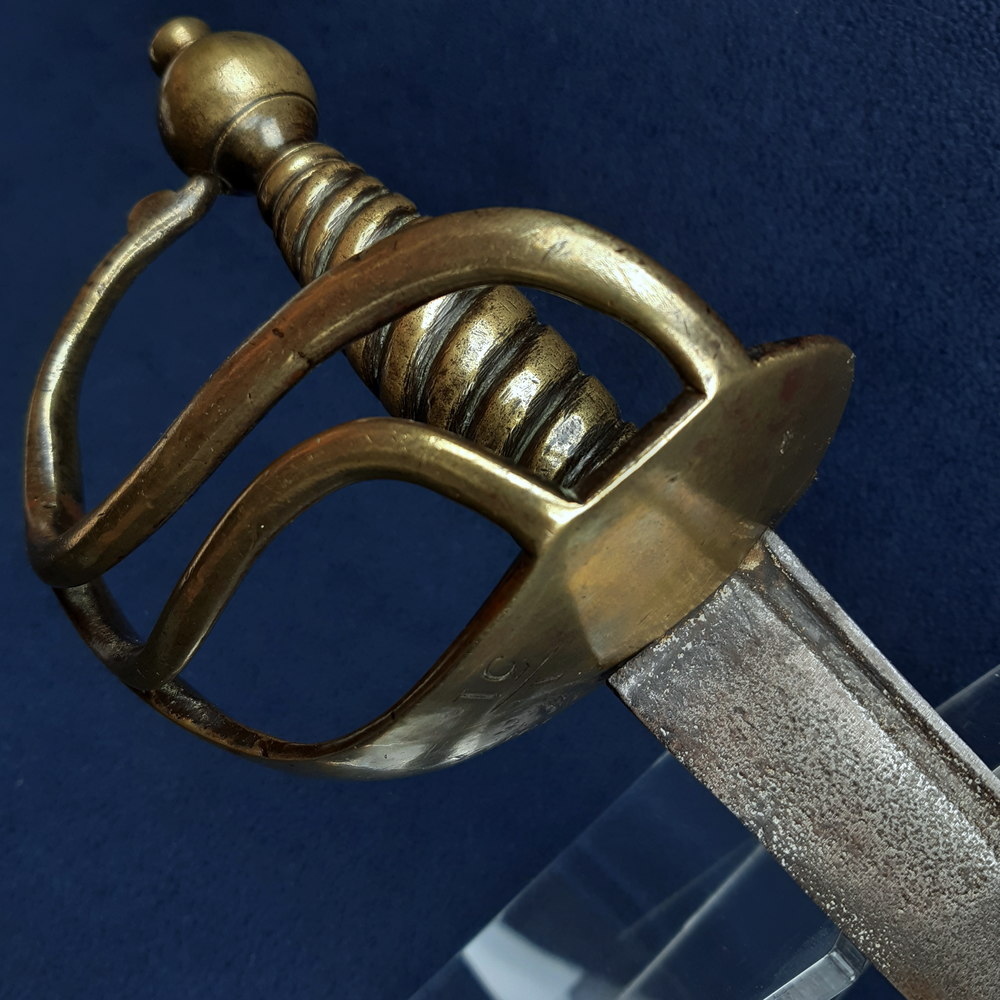
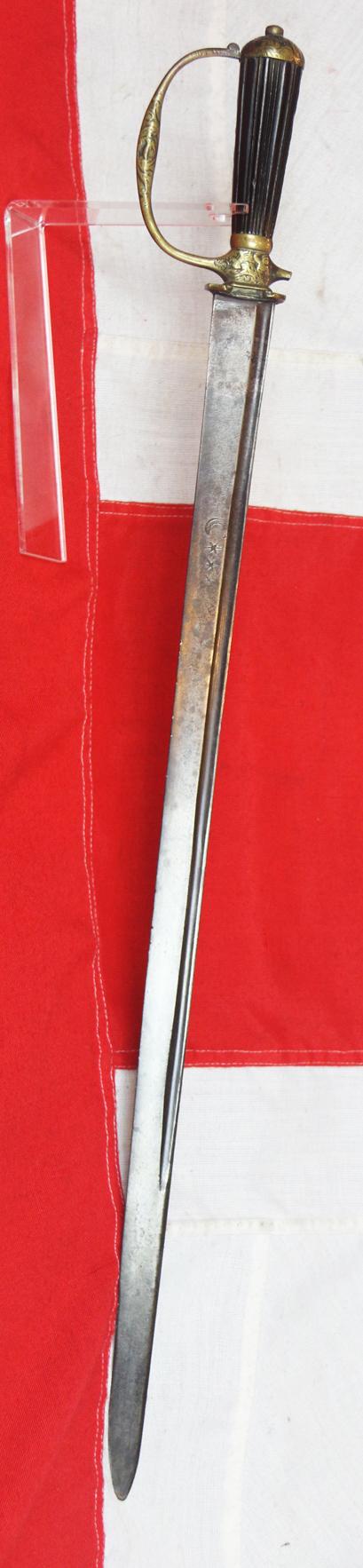
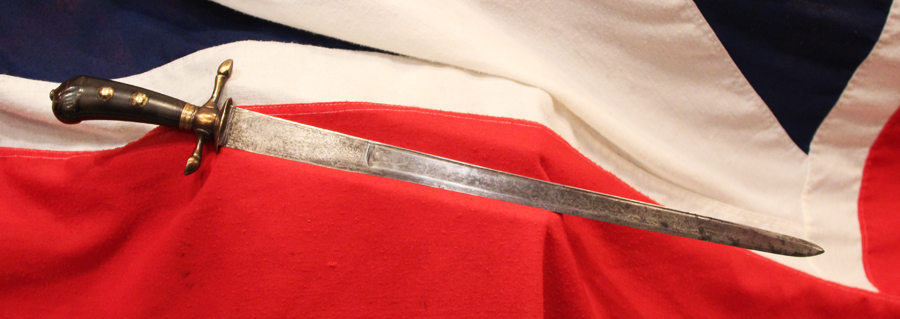
Click and use the code >21684 to search for this item on the dealer website Fine and Beautiful Carved Horn Hilted 18th Century Royal Naval Officer´s Hanger Sword, Cutlass or Cuttoe
  • Nation : Japanese
  • Local Price : £750
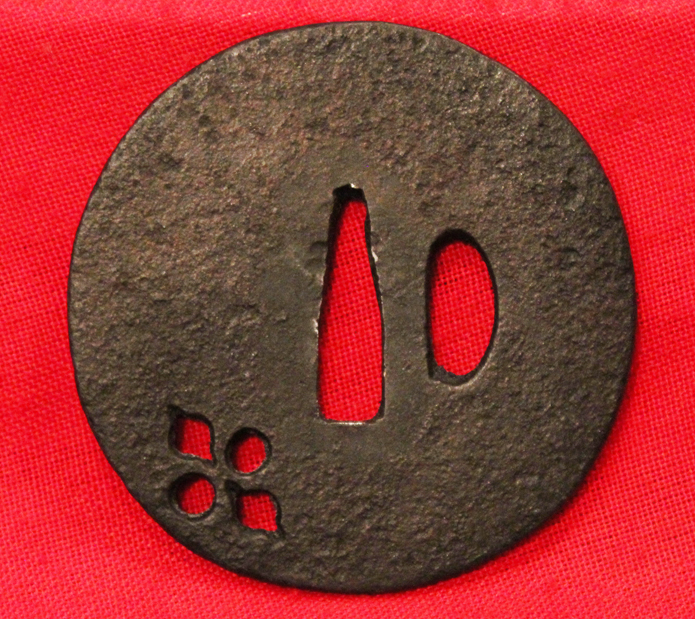
Click and use the code >19741 to search for this item on the dealer website Ko Tosho School Swordsmith Made Koto Katana Tsuba Circa 1400
  • Nation : American
  • Local Price : £750
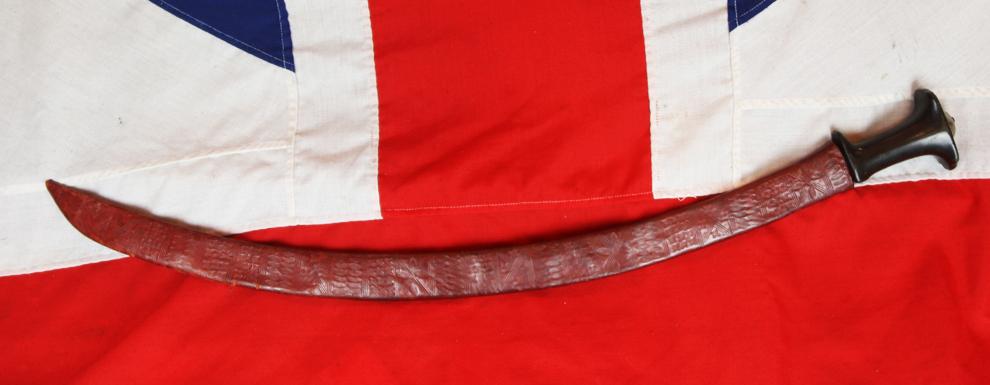
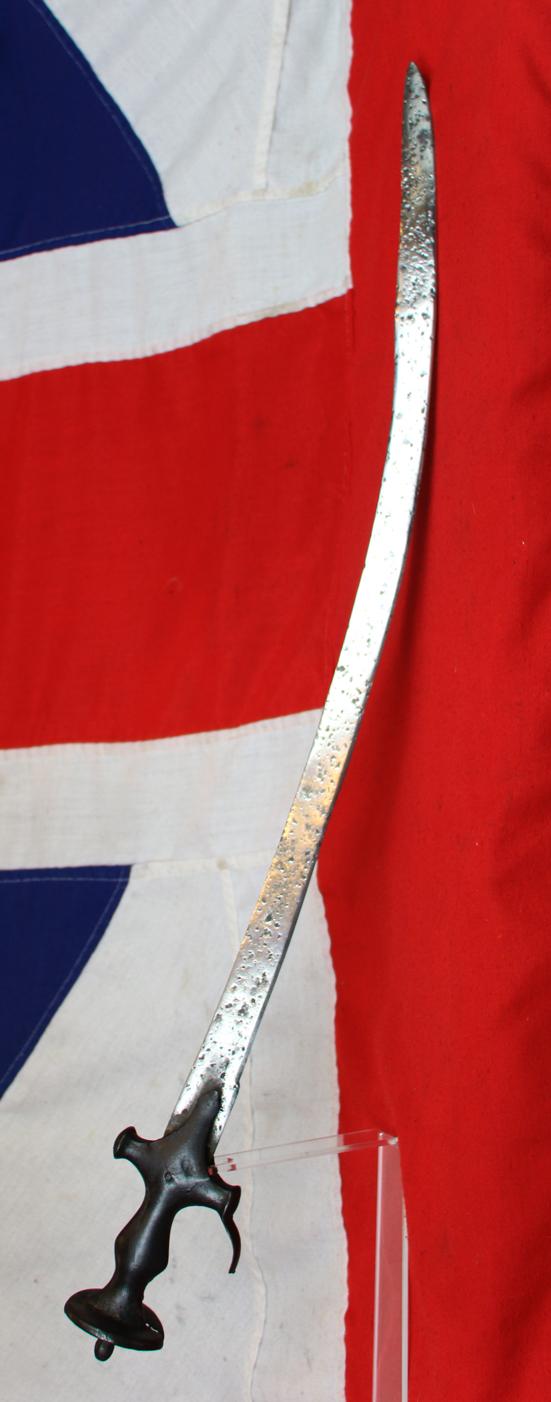
Click and use the code >23573 to search for this item on the dealer website Antique Ethiopian Shotel - Gorode Officer´s Sword Of Emperor Menelik IInd´s Reign, & Then Into Emperor Halie Selassie´s Reign, the Last Ethiopian Emperor
  • Nation : British
  • Local Price : £750
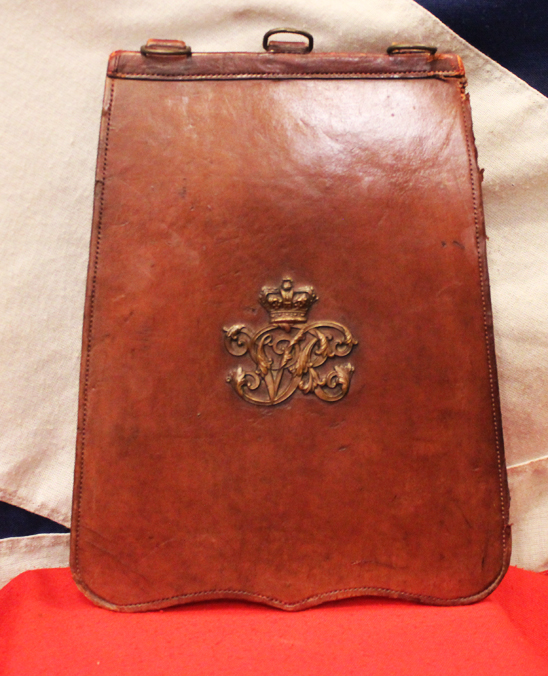
Click and use the code >21275 to search for this item on the dealer website Very Good & Most Rare Victorian &#acute;Colonel-of-Staff&#acute; Hussars Regiments 19th Century, British Army Colonel&#acute;s {Undress} Combat Service Sabretache, in ´Russia Leather´, With Royal Cypher
  • Nation : German
  • Local Price : £750.00
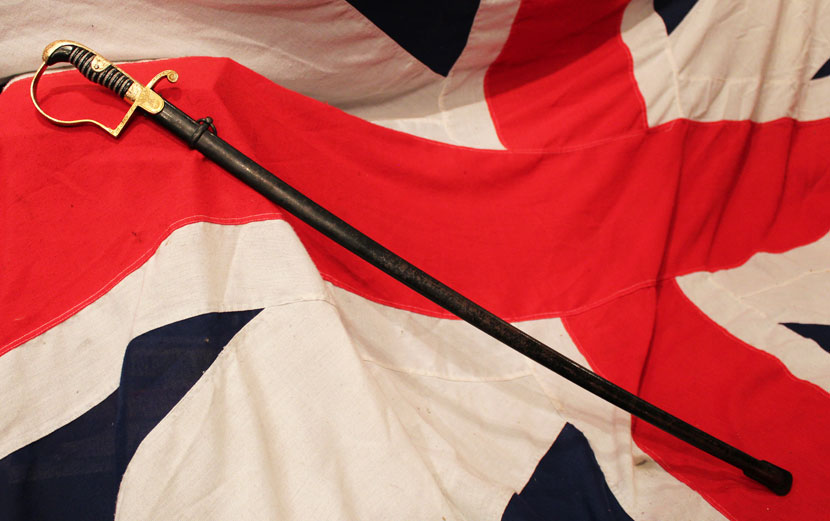
Saxon Model 1867 Cavalry Trooper&#acute;s Sabre, Garde-Reiter Regiment, 1867-73. Description Curved single fullered sabre blade with spear point. Brass hilt with side bars. Brass backstrap, integral pommel with tang button and riveted ears. Ribbed grip of black leather over wood. Steel scabbard with two fixed hanging rings. Blade 34 3/8 inches in length, the sword 40 inches overall. The ricasso of the blade is stamped on one side with the manufacturer&#acute;s mark &#acute;P. D. Lüneschloss, Solingen&#acute;. It is stamped on the other side with the crown and &#acute;JR&#acute; cypher of King Johann, who reigned from 1854 to 1873. The outside of the hilt is stamped &#acute;GR&#acute;, for Garde Reiter. The quillon is stamped on one side with a crown proof mark. The Garde-Reiter-Regiment (1. Schweres Regiment) (1st Royal Saxon Guards Heavy Cavalry) was established in 1680 as a regiment of cuirassiers. It was the senior and premier heavy cavalry regiment of the Kingdom of Saxony, fighting in its wars from the Battle of Vienna through to WW1. The Saxon M1867 cavalry sword used by the enlisted men of the Garde Reiter borrowed much of its design from the Prussian M1852 cavalry officer&#acute;s sword, but with a brass hilt. Other Saxon cavalry of the period used the M1867 with a steel hilt. The Garde Reiter Regiment was disbanded in 1919. The outside of the hilt should bear the coat of arms of the Kingdom of Saxony “ this has been lost, and one can see the two holes in the hilt where it would be riveted through. Removing the solidly riveted emblem would seem like a strange but deliberate modification. While this is speculative, this might have been done in the republican period for political reasons. The abdication of King Frederick Augustus III in 1918 left a power vacuum which led to several years of political violence in Saxony as left-wing radicals attempted to establish a Soviet Republic, opposed by right-wing forces including the infamous Freikorps, and later the army of the new Weimar Republic. The blade has areas of patination and pitting along its length. Its edge is undamaged, there are a couple of dents to the spine. No leather washer. The inside of the hilt has a dark, even patina, while the outside is brighter brass. Some patches of patination to the backstrap, pommel and ears. Only a short stub remains of the leather finger loop. A patch of leather has been lost from the grip on one3 side at the pommel end, exposing the ribbed wood beneath. Otherwise the grip shows very little handling wear. The scabbard has significant pitting and dark patination overall. It is structurally strong but has a rough texture.
  • Nation : British
  • Local Price : £750.00
18th Century Shearing Sword. A silver-hilted British Shearing sword, London 1761. With a tapering double-edged blade, silver hilt cast and chased with writhen designs, comprising boat-shell guard, a pair of quillons with scalloped terminals, knuckle-guard struck with marks (rubbed), and spirally-moulded ovoid pommel, and the grip bound with plaited copper alloy wire and ribband between silver collars, 74.7 cm bladeThe handle is marked for William Kinman, (a raised ’WK’ within a shaped cartouche). He was a prominent London silver hilt maker and leading member of the Founders Company of which he was elected Master in 1780The shearing sword was popularised by fencing masters William Hope and Donald Mcbane as a cut and thrust blade, but with out the weight commonly found in the backsword. Only around for a short period, the however had a long service life, before eventually being replaced by the single edged spadroon
  • Nation : British
  • Local Price : £750.00
British Circa 1804 Naval Cutlass with Unusual Variant Blade. Description Single fullered spear pointed blade with upturned tip section, iron &#acute;figure eight&#acute; hilt with sword knot slit, tubular quillon. Solid iron grip cast with corrugated texturing. Barest fragments of a leather washer. Blade 28 3/8 inches in length, the cutlass 33¼ inches overall. No scabbard. This cutlass has the &#acute;figure-eight&#acute; hilt and grip that were used on the first standardised cutlass for the Royal Navy, the 1804 Pattern, but pairs these with an unusually shaped blade, neither fully straight due to its upturned tip nor with a continuous curve. Its single narrow fuller running close to the spine is of the style seen on British hangers and backswords of the 18th century, whereas the 1804 Pattern was unfullered, simpler to manufacture but heavier in use. This blade shape seems to be rare but has been seen on other cutlasses of the late 18th century. See Lot 212 sold at Antony Cribb auctions on 26th Nov, 2024: described by them as a late 18th century American cutlass, that example has the same unusual blade shape but with a simpler iron strap hilt and ribbed wood grip. The Cribb example might indeed be American in origin, but this example is more likely British in origin because of its use of the Pattern hilt and grip. That said, British and American cutlasses of that period shared design features and components could be traded or reused. Without a maker&#acute;s mark this identification can&#acute;t be conclusive. With no evident military marks either I would suggest this cutlass was made for the commercial market: suppliers of the period sold even-handedly to the Royal Navy, merchant shipping and the growing American market. Compared with the Cribb example and most other pre-Pattern cutlasses I would say this was the better sword: the textured and contoured cast iron grip was less likely to turn in the hand and coped better with sea air than smooth wood, the figure-eight hilt offered more hand protection than a simple knucklebow, and providing a knot slit allowed it to be tied to the hand more securely. Logically this cutlass must postdate 1804, and was perhaps a transitional piece or a manufacturer making use of the availability of Pattern components to pair with traditional blades “30,000 of the 1804 Pattern were ordered split between ten different manufacturers in the period from 1804 to 1808, so plenty of parts would have been available from the production boom. Like other swords of this period the hanger has a low carbon tang and shoulder, forge welded to a higher carbon steel blade, and the differential aging of the two materials can be seen clearly at the transition point. The two pieces were stepped to increase the surface area of the weld: one can see the line of the weld on the spine and the iron surface extends further up the blade on the right face than the left (roughly 7 inches vs 6 inches). The blade is unsharpened with a few small dents to its edge and a slightly rolled tip (~1mm). Its surface has areas of patination, light scratching, spots of light pitting in the fuller and around the tip. The hilt and grip have the common black japanned finish, but have also been painted with an unusual tan colour. It is difficult to tell which was applied first but more of the tan remains, particularly on the inside of the hilt. Both have rubbing and flaking exposing heavily patinated iron. Slight rotational movement to the grip.
  • Nation : British
  • Local Price : £750.00
English 1751 Pattern Infantry Hanger, 2nd West Riding of Yorkshire Militia, by Samuel Harvey. Description Slightly curved hanger blade with hatchet point, single narrow fuller close to the spine. Cast brass heart-shaped hilt with two side bars, spiral grip and round pommel. No scabbard. Blade length ~24¾ inches (62.9cm), the sword ~30¼ inches (76.9cm) overall. The outside of the hilt is engraved with &#acute;YORK “ W-R “ 2 “ DB&#acute;, indicating issue to the 2nd West Riding Militia a.k.a. 2nd Regiment of West Yorkshire Militia and &#acute;1 / 31&#acute;, most likely a rack number. The blade is stamped on both sides with a running fox within which are the initials &#acute;SH&#acute;, indicating the maker Samuel Harvey. It is also stamped at the shoulder on one side with a crown mark. This indicates government inspection or ownership and suggests this hanger was part of an officially ordered production run. The &#acute;1751 Pattern&#acute; is not an official pattern of British sword (built to specifications set by the military establishment) but a widely used type that appeared around that date, was purchased officially to some degree and issued to many regiments. In this era colonels of regiments typically controlled procurement of equipment but market availability affected their choices and some larger-scale ordering took place. The 1751 is simple and durable, its blade typical of the British &#acute;hanger&#acute;, and survives in some numbers today considering its age. Almost all examples are marked to a militia unit. The West Riding of Yorkshire Militia was first raised in 1759, one of many created by the Militia Act of 1757 to respond to the threat posed by France during the Seven Years War. Parish constables drew up lists of all men aged 18 “ 50, with limited exemptions, then drew ballots to select some for three years of compulsory militia service, although men chosen could delegate their role to paid substitutes if they could find & afford them. Militia units were for home defence only, and could not be sent overseas “ service in practice meant a few weeks of training each year and occasional mustering for duty in keeping public order, almost always outside their home county. Nonetheless, the compulsory system was unpopular and riots broke out in Lincolnshire in 1757 over the Bill&#acute;s passage, some wrongly believing that it meant they would be conscripted into fighting overseas. Several counties delayed implementing the changes for years for fear of similar civil unrest. There were initially three regiments in the West Riding, but these were reorganized into two full regiments in 1763, the 1st and 2nd. The 2nd regiment, also called the Northern or &#acute;York Regiment&#acute;, was based at York and commanded by Col. William Thornton, who in 1745 had raised the &#acute;Yorkshire Blues&#acute; militia at his own expense to oppose the Jacobite Rebellion, and fought with them at the battle of Falkirk. Along with their muskets and bayonets the rank and file were armed with &#acute;Small Hangers, with Brass Hilts, Scabbards, and tanned Leather Waist-Belts&#acute;. The 2nd West Riding only assembled for their annual training until 1778 when it was embodied until the end of the American Revolutionary War in 1783. This pattern of brief periods of embodiment continued with no significant action. In 1853 it became the 21st, or 2nd West York Light Infantry. In 1881 the Childers Reforms amalgamated militia and volunteer units with the regulars into larger regiments, attaching the county militia units to their respective county&#acute;s regiments as their third or fourth battalions. The regiment therefore became the 3rd Battalion, The Prince of Wales’s Own (West Yorkshire Regiment). It was primarily a training unit during WW1 supplying trained men to the regular battalions, but being based at Whitley Bay was also part of the garrison on the Tyne. The 3rd Battalion was disbanded in 1953. The lineage of the West Yorkshire Regiment is today maintained by the 2nd Battalion, Royal Yorkshire Regiment. The firm of Samuel Harvey was established in 1748, and used the mark of the &#acute;running fox&#acute; on both sides of their sword blades. After Samuel&#acute;s death in 1778 the family business was continued by his son and grandson, both of the same name, the last of whom died in 1810. Like other swords of this period the hanger has a low carbon tang and shoulder, forge welded to a higher carbon steel blade, and the differential aging of the two materials can be seen clearly at the transition point. The two pieces were stepped to increase the surface area of the weld: one can see the line of the weld on the spine and the iron surface extends further up the blade on the right face than the left (roughly 2 1/8 inches vs 1 inch). The blade has been sharpened, with a number of nicks to its edge, some shallow notches near the tip. The tip itself is rounded and fractionally bent to the right in its last 3mm. It has patches of patination overall, some light pitting to the iron at the forte of the blade spotted heavier pitting near the tip. The brass parts have moderate patination and a few dents, including a larger one to the pommel. No cracks to the hilt bars. The short quillon usually found on this type has been lost. Slight movement of the hilt side to side, while the grip itself remains firm.
  • Nation : British
  • Local Price : £745.00
Boer War 1901 Dated 1899 Pattern, British WD Wilkinson Heavy Cavalry Sword Regiment Marked ‘5Y NK’ To The 5th Norfolk Yeomanry Cavalry & Mole Patent WD Scabbard Sn 22198 -. The Norfolk Yeomanry was a volunteer cavalry (Yeomanry) regiment of Britain’s Territorial Army accepted onto the establishment of the British Army in 1794. After seeing action in the Second Boer War, it served dismounted at Gallipoli, in Palestine and on the Western Front during the First World War. Between the wars it converted to the Royal Artillery , and served as an anti-tank regiment in France, the Western Desert, Italy and North West Europe during the Second World War. After the war it served as a Territorial Army air defence unit and then as an Army Air Corps unit. This is an excellent original Troopers Sword to the Norfolk Yeomanry Cavalry (see pages 54 & 55 of Swords of The British Army by Robson). The Sword has a 33 ½” single edged, slightly curved blade with fullers (40” overall length). The blade is undamaged and clean with just a few scuffs consistent with scabbard carry. The ricasso is marked on both sides. One side has War Dept arrow and inspection mark. The reverse has ‘Wilkinson London’, 9 01 date (September 1901) and inspection marks. The spine of the blade is stamped ’/99’ (1899 Pattern) together with inspection mark. The full bowl guard is Regiment marked on the inside ‘5 Y NK’ to the 5th Squadron Norfolk Yeomanry Cavalry together with other indistinct numbers. The Sword’s black hard boiled leather chequered grips with 3 rivets are secure and undamaged. It is complete with its original steel scabbard with 2 fixed hanging rings. The scabbard has WD inspection marks and is stamped ‘Mole Patent’. The scabbard has even patina and just a few small dents. The price for this Regiment marked Boer War sword includes UK delivery. Sn 22198
  • Nation : Indian
  • Local Price : £725.00
Pre 1803 Flank Officers Sabre. An unusual pre-1803 Flank Officers sabre with scabbard. The blade is 71cm long with a total length of 82cm. The brass guard and horn grip is in good condition with no chipping, the grip wire is partially intact. There is a small amount of movement in the handle, most likely caused by natural shrinkage in the wooden core of the handleThe leather scabbard is unusual lacking any form of drag at the chape, and pronounced cutouts at the throat for the langets. Possibly for an office serving in India, the design is similar to ones used later by the East India CompanyFollowing the introduction of the 1796 Infantry Officers spadroon many officers serving in the Flank Companies of regiments required something more robust. Often charged with skirmishing close to the enemy lines, these officers required a more suitable weapon, and by 1799 many had adopted the sabre. This also had the advantage of being suspended on slings, and could be hitched up for travel over rough ground more easily than traditional officers sword
  • Nation : British
  • Local Price : £725.00
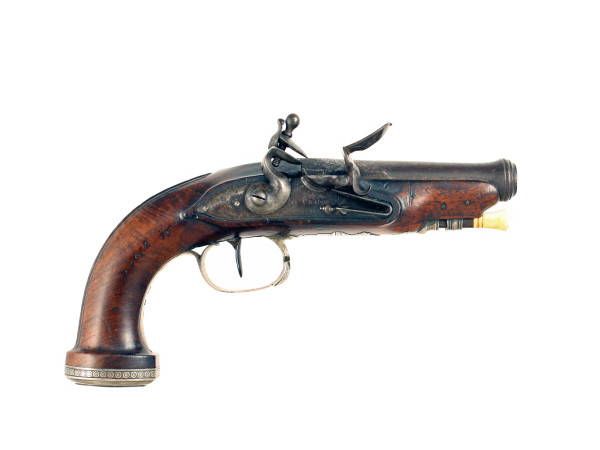
Victorian Overcoat Pistol. A continental Flintlock pocket pistol, approx 7" overall with a 3 1/4" barrel, two stage barrel with fluted chamber. White metal, possibly German silver wire inlay to butt and handle. Steel butt plate and guard with floral engraving, additional floral engraving to the wooden stock. Overall a very decorative pistol circa 1800.Lock and action working well, holding at both half and full cock.Commonly known as an &#acute;overcoat&#acute; or &#acute;pocket&#acute; pistol. These were carried mainly for civilian self defense against highwaymen or muggers
  • Nation : British
  • Local Price : £725.00
Victorian, South Irish Yeomanry Officer’s ’Walking Out’ Heavy Cavalry Levee Sword by Hamburger Rogers & Co, London with Royal Cypher Etched Blade, Leather Knot & Scabbard. Sn 8295. -. This is an attractive original, Victorian, South Irish Yeomanry Officer’s ’Walking Out’ Heavy Cavalry Levee Sword (small version) By Hamburger Rogers & Co, London with Etched Blade, leather Knot & Scabbard. The sword has a 35 1/2"" single edged blade with fuller (41 1/2" overall). The blade is clean and beautifully etched with stylised VR (Victoria Regina) Royal Cypher and foliate decorative panels on both sides. The ricasso is marked with inlaid quality inspection star at the ricasso and the reverse with the Hamburger Rogers & Co, King Street, Covent Garden WC’ (London), manufacturer’s name. The hilt is fitted with original leather washer. The back of the blade is stamped with a crisp serial number ’ 4974’. The bowl knuckle guard is decorated with a void foliate design, and it is fitted with the brass Shamrock shaped badge of the South Irish Yeomanry (the stem of the shamrock is missing) and it has a chequered round pommel. Its fish skin grip with wire binding is in superb condition. The sword is fitted with original leather strap & knot & complete with its leather-bound scabbard with hanging strap. The scabbard retains its original finish and is undamaged. The sword fits snugly into the scabbard. Price includes UK delivery. Sn 8295.
  • Nation : Austrian
  • Local Price : £725
Click and use the code >23075 to search for this item on the dealer website German Army Third Reich Period, Officers Sword By Eikhorn of Solingen
  • Nation : British
  • Local Price : £695.00
**NAPOLEONIC PENINSULAR WARS ERA** British 1796 Pattern Infantry Officer’s Sword With Etched Blade & Scabbard. Sn 22771 -. This is an original British 1796 Pattern Infantry Officer’s sword (see page 160 of World Swords by Withers. In his book withers states that most of these swords are found with missing quillons, & worn blades). Our excellent example has the correct shell guard with foliate decoration, one shell correctly folds for scabbard carry. It has the correct knuckle bow and ornate urn shaped pommel. The wire bound grip is excellent and retains its original quillon finial. All wire is tight and intact. It has a 31 ½” long fullered, single edged blade (37” overall). The blade is etched on both sides. The etchings are foliate & Martial panels & Crown GR (George Rex) devices. All of the etchings are crisp. Its original scabbard has brass mounts and 2 hanging rings. The throat mount has a frog locket. There are no visible maker or date marks on the sword or scabbard. The price includes UK delivery. Sn 22771
  • Nation : Chinese
  • Local Price : £695.00
Chinese Boxer Rebellion Qing Dynasty Duandao. 19th Century Short Sword. #2407024. This scarce duandao dates to the late Qing Dynasty, circa 1890. The duandao was used mainly as a secondary weapon worn on one’s belt and was often a status symbol. The short blade with a slight upwardly curving point was effective for both slashing and thrusting.Swords like these were used by the Boxers during their rebellion (1899-1901). Many duandao held by collectors in the West were brought back as souvenirs by returning British and American soldiers.The 476mm single-edged blade has narrow double fullers below a flat spine and terminates in a hatchet point with a 170mm upper false edge. The blade is approximately 40mm wide at the base and narrows to 22mm before the point.The blade is in good condition with a pleasing patina. The edge remains sharp.The downward curving hilt has an oval cross-section, typical of swords of the late Qing Dynasty. The hardwood hilt is wrapped with shagreen with a copper binding. The shagreen remains tight and intact with a few closed cracks. The tang is peened through the brass pommel which is decorated with a foliate design. The design is repeated on the hilt ferrule and on the oval brass disk guard. The blade is firm in the hilt.The sword is complete with its shagreen covered wooden scabbard with decorative brass mounts. The scabbard is in overall very good condition with a small repair to the shagreen near the lower band. The mouth of the scabbard retains its red felt and the sword sheathes and draws smoothly from the scabbard.This is a scarce example of an attractive late 19th Century duandao. A beautiful Chinese hanger.
  • Nation : Chinese
  • Local Price : £695.00
Chinese Late Qing Dynasty Duandao. 19th Century Chinese Hanger Sword. #2407025. This scarce duandao dates to the late Qing Dynasty, circa 1890. The duandao was used mainly as a secondary weapon worn on one’s belt and was often a status symbol. The short blade with a slight upwardly curving point was effective for both slashing and thrusting.Swords like these were used by the Boxers during their rebellion (1899-1901). Many duandao held by collectors in the West were brought back as souvenirs by returning British and American soldiers.The 475mm single-edged blade has narrow double fullers below a flat spine and terminates in a hatchet point with a 120mm upper false edge. The blade is approximately 40mm wide at the base and narrows to 22mm before the point. The blade is inlet with seven circular brass disks. In traditional Chinese culture, seven represents the combination of Yin, Yang and the five elements - Metal, Wood, Water, Fire and Earth. This combination is considered as “harmony” and therefore lucky.The blade is in good condition with some use-related scratches and two small chips to the forward edge. The edge remains sharp.The downward curving hilt has an oval cross-section, typical of swords of the late Qing Dynasty. The hardwood hilt is intricately wrapped with brown cord. The cord shows wear and is in generally good condition. The tang is peened through the brass pommel which is decorated with a foliate design. The design is repeated on the hilt ferrule. The plain, circular iron dish guard is in good condition with a pleasing patina. The blade is firm in the hilt.The sword is complete with its shagreen covered wooden scabbard with decorative brass mounts. The scabbard is worn with the curved end pointing down, the sheathed blade being edge-up. The scabbard is in overall very good condition with three small patches of loss to the shagreen along the upper edge. The sword sheathes and draws smoothly and is held firmly within the scabbard.This is a scarce example of an attractive late 19th Century duandao. A beautiful Chinese hanger.
  • Nation : French
  • Local Price : £695.00
French Naval Cutlass Early 19th Century. Very Rare. #2407018. This rare French naval cutlass dates to around 1800-1820 and was developed to supply arms to the merchant marine. A similar cutlass is described in Michel Petard’s book, “Le Sabre D’ Abordage.”The 720mm single-edged blade has a broad fuller below a flat spine and terminates in a hatchet point. The blade is a re-purposed sword blade. It was quite common throughout Europe for existing blades to be shortened for use in cutlasses for arming enlisted seamen, both for expediency and as a cost cutting measure.The blade is in good condition for its age, with shallow pitting and speckled tarnish along its length. The blade has been cleaned.The forte of the blade bears a faint anchor stamp. So too does the spine.The cast iron hilt has an off-set oval guard which is stamped to the front with worn marks and an anchor. The iron knuckle bow continues into a crude pommel cap through which the tang is peened. The knuckle bow bears the clearest anchor stamp. The hardwood grip has slight age-related cracking and remains in good strong condition. The blade is firm in the hilt.This is a rare example of an early 19th Century French naval cutlass in very good condition.
  • Nation : ?
  • Local Price : 695.00
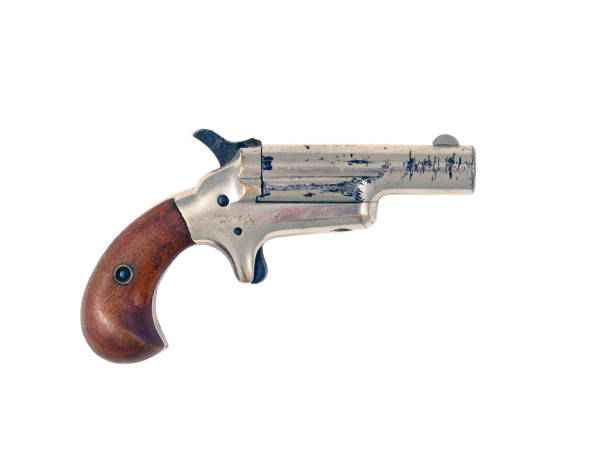
. A Colt 3rd Model Thuer Derringer. With nickel plated frame and barrel, varnished walnut grips. In good original condition with some scuffs to the Nickel. Dimensions: Bore: .41 Rimfire Barrel Length: 2.5 Inches (6.35 cm) Overall Length: 5 Inches (12.70 cm)
  • Nation : British
  • Local Price : £695.00
British 1796 Troopers Cavalry Sword. British 1796 Troopers Cavalry Sword curved blade with large fuller each side and stamped with a small crown over broad arrow plus large B O and arrow. The hilt regulation stamped 13, the grip has lost the leather and the wood is split please see images. The spine maker marked Thomas Craven and complete with matching scabbard with two loose rings, blade length 32.5 inch
  • Nation : British
  • Local Price : £695.00
Victorian Ayrshire Artillery Officer&#acute;s Sword. Victorian Ayrshire Artillery Officer&#acute;s Sword in good condition 3 bar steel hilt with fish skin grip and officer&#acute;s knot. The blade well engraved with VR crown plus regimental badge to one side the reverse with Ayrshire Artillery complete with steel scabbard. Information: Blade Length: 83cm Overall Length: 98cm
  • Nation : British
  • Local Price : £695.00
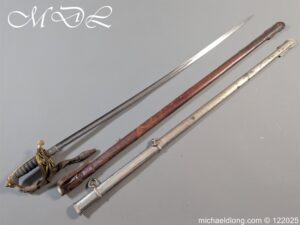
British Officer’s Private Purchase Short Sword Hanger Sidearm With 1821 Pattern Light Cavalry / Mounted Artillery Hilt, & Quality Etched Blade By Firmin & Sons London To The Middlesex Volunteer Artillery & Scabbard. Sn 22645:8 -. The "Middlesex Volunteer Artillery" refers to various volunteer artillery units, associated with the county of Middlesex in England, particularly during the Victorian era and World War. This is an original Middlesex Regiment volunteer Officer’s privately commissioned side arm hanger short sword with British 1821 Pattern Light Cavalry / Volunteer Mounted Artillery Officer’s sword hilt & Scabbard (see page 94 Of Swords Of The British Army by Robson & page 99 of World Swords by Withers). It has a shorter than regulation 25” long blade with fullers and the short sword measures 31” overall length. The blade has its original leather hilt washer. It has the correct fish skin grip with wire binding which is intact and tight and correct 1821 pattern 3 bar guard hilt. The blade is clean and has quality etched panels on both sides consisting of foliate panels, Middlesex Artillery designation and martial arms & heraldic device above combined stylised monogram. The ricasso is marked on one side by the maker ‘Firmin & Sons 153 Strand & 13 Conduit St London’. This is not a shortened full length sword and was obviously made to the commissioning officer’s personal specifications for his use in the field. The lack of ordnance acceptance marks also confirms this is a private purchase piece. The steel scabbard obviously made for this sword has a frog locket. The scabbard has even patina and no damage. The price for this interesting, unusual Officer’s private purchase piece includes UK delivery. Sn 22645:8
  • Nation : British
  • Local Price : £695.00
Pre WW1 1911 Dated British Enfield WD 1908 Pattern Heavy Cavalry Troopers Sword & 1912 WD WSC Wilkinson Sword Company Scabbard. Sn 22645:7 -. This is an original British 1908 Pattern Heavy Cavalry Troopers sword & scabbard. It has an undamaged 35" single edged blade with fuller (43" overall). The ricasso is date marked ’11’ (1911) and has WD inspection marks. The blade is fitted with original leather hilt washer. It also WD arrow & EFD (Enfield) manufacturer mark. The spine has ‘08’ (pattern). The bowl guard has no visible Regiment or date marks. It has a clean undamaged chequered grip with correct thumb recess. It is complete with its original steel scabbard with fixed hanging rings. The scabbard has ’12 (1912) date WD arrow and inspection marks together with maker mark ‘WSC’ (Wilkinson Sword Company). The price includes UK delivery. Sn 22645:7
  • Nation : British
  • Local Price : £695
Click and use the code >25923 to search for this item on the dealer website Historical 16th-17th Century Indian Tulwar Sword From the Siege and Relief Of Lucknow. Battle Trophies of an Irish Captain Of the 32nd Foot, Capt. H.G.Browne From a Collection Swords From The Battles & Defence. Its Knuckle Bow Blasted By Cannon Fire
  • Nation : Spanish
  • Local Price : £695
Click and use the code >25525 to search for this item on the dealer website Very Fine, 17th Century, King ´William & Queen Mary´ Period Hangar Sword Cutlass of Senior Naval Officer´s Admirals and Captains of the Royal Navy. Also, Of Notorious Pirates ð&159;´
  • Nation : British
  • Local Price : £695.00
British Grenadier Guards Dress Sword. Battle Honours. Owners Initials. #2509010. This Grenadier Guards Officers dress sword was made by the Wilkinson Sword Company and was retailed by Edward Smith of Saville Row, London. Smith was an established supplier of swords to Guards regiments.The 825mm thrusting blade (1892 pattern) is of dumbbell form, the first third of the blade having a symmetrical dumbbell-like cross section with a flat spine and belly and a short central fuller. The blade has a wedge-shaped cross section for the last two-thirds of its length and terminates in a narrow spear point.The blade is in excellent condition with only a few small spots of tarnish. The etching is deep and crisp. The blade is etched with the crowned royal cypher of King George V above crossed laurel and palm fronds. Below this are etched eleven battle honours from the Peninsular, Waterloo, Crimea, Egypt, Sudan and South African. A central cartouche bears the owner’s initials, A. M. S.The obverse is etched with a Georgian crown above a flaming grenade and crossed laurel and palm fronds. Below these are thirteen earlier battle honours, from Tangier in 1680 down to Nive in 1813.The ricasso bears the retailer’s details, “E. Smith, 5 Boyle Street, Saville Row.” The obverse ricasso bears a Wilkinson Sword Co. etched Damascus star proof mark, identified by James Elstob as type #377 on the excellent “Langham’s British Sword Research” website.The spine is stamped made in England and bears the Smith customer order number 14012.The Gothic steel hilt is in great condition and retains its nickel plating. The guard bears the flaming grenade badge of the Grenadier Guards above the Flowers of the Union and showing the cypher of George V. The shagreen grip is in good condition and the twisted wire is intact and tight. The blade is firm in the hilt. The upper section of the guard is wrapped with its brown leather sword knot.The sword is complete with its brown leather covered field scabbard. The scabbard is in good condition with some areas of mouse damage at the bottom. The sword sheathes and draws smoothly and is held firmly within the scabbard.This is a great example of a scarce Grenadier Guards officer’s dress sword, complete with researchable owner’s initials. Was: £695.00Now:
  • Nation : British
  • Local Price : £695.00
British 19th Century Mounted Police Sword. #2512001. This rare, mounted police sword is similar to the 1821 pattern used by the British light cavalry. These swords were issued to officers of British Mounted Police in the mid-19th Century.The 805mm single-edged blade is an almost straight version of the 1845 pattern “Wilkinson” blade. The blade has a flat spine above a deep single fuller and terminates in a double-edged spear point. The blade measures 30mm wide at the ricasso and has an 8mm thick spine.The blade is un-sharpened and is in great condition. The ricasso bears the War Department Broad Arrow and WD over an Enfield inspection stamp. It is possible that these swords were also used by the mounted military police.The three-bar hilt is in good condition and is bright and rust free. The shagreen grip is in excellent condition and the twisted wire is intact and tight. The blade is firm in the hilt.The sword is complete with its black leather scabbard with polished steel mounts. The bottom mount has some cleaned pitting. The leather is in good condition and retains its original finish with small losses. The stitched seam is intact and tight. The sword sheathes and draws smoothly and is held firmly within the scabbard.This is a great example of a rare British sword for the Mounted Police.
  • Nation : British
  • Local Price : £695.00
British WW1 Troopers 1908 Sword dated 1915. British WW1 Troopers 1908 Sword dated 1915 regulation sword and what seems to be original paint. The blade marked with issue and inspection marks as is the scabbard under the paint but it is also stamped 5R 904. No damage to sword or scabbard and age wear to paint overall length 42 inch the blade 34.75 inch.
  • Nation : British
  • Local Price : £695.00
English Silver mounted Small Sword Hallmarked 1773. English Silver mounted Small Sword London Hallmarked 1773, with turned ebony grip and silver mounted with decorative pommel cap and raised tang button. The blade slightly curved signal edged with central fuller running full length to the tip overall length 29 inch the blade 23.25 inch, please note two splits to grip
  • Nation : Japanese
  • Local Price : £695.00
Japanese WW2 Officer&#acute;s Sword. Japanese WW2 Officer&#acute;s Sword with the hilt missing. The blade in good condition single hole to tang no signature. Complete with metal scabbard with single ring and canvas sewn part cover in the area where you would hold the scabbard to draw the sword.
  • Nation : ?
  • Local Price : 695.00
. A Pretty Silver Mounted Pocket Pistol by Ant. Chadon, St. Etienne. With flared cannon barrel, octagonal breech, border engraved tang, decorated with flowers, rounded bevelled lock, signed beneath the pan, full-stocked in walnut with engraved silver screw escutcheons, engraved silver trigger guard and ramrod pipes, with horn tipped ramrod. A sweet little pistol of high quality. Ant. Chadon. Dimensions: Bore: 40 bore Barrel Length: 3.5 Inches (8.90 cm) Overall Length: 7.5 Inches (19.05 cm)
  • Nation : French
  • Local Price : 965.00 USD
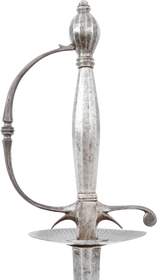
FRENCH SMALLSWORD C.1780-90. All steel, transitional form which was followed by variations with studded hilt elements and triangular section blade. This example has a 30” flattened diamond section blade of fighting weight and form. The forte is decorated with broad scrolling foliage with a stylized maker's mark above. The iron hilt has a faceted grip and pommel and oval guard with radial motif to the inside. See Swords and Blades of the American Revolution, Neumann, #223.S for a related example.
  • Nation : British
  • Local Price : £685.00
Victorian 27th LRV Officers Sword. Victorian 27th LRV Officers Sword. Levee weight sword with brass gilt hilt with folding side guard, fish skin grip, leather liner and sword knot both showing age wear. The blade slightly curved engraved with 27 LRV, Victorian crown and initials J R B the reverse with V R and crown plus regimental badge and motto, Tutus in undis. Complete with two scabbards, parade and field both in poor condition please see images Overall length 37.5 inch the blade 32.5 inch maker marked Joel Edwards and Sons Hanover Street London
Page 18 of 40

The following items match your search but are currently listed on Ebay. We take no responsibility for any aspect of the listings or their accuracy.


Sorry, there is not any matching items.