
(You must register and have a linked account first)
View Privacy Policy


OR

Show


Forgot your password?

Error message here!

Error message here!

Error message here!

Error message here!

Show Error message here!

Show Error message here!


Lost your password? Please enter your email address. You will receive a link to create a new password.

Error message here!

Back to log-in

Close

For Sale

The following items are listed by for sale by users of the site and dealers. They are in no way endorsed or guaranteed by www.oldswords.com

Add a Classified Item
to

Clicking on the sword will take you through to the relevant classified item or dealer site.
Don't miss out! - Do you want to be kept informed weekly of new aditions? Just join our weekly update list.

You can also receive regular email notifcations when items match your keywords. To recieve them just register or logon at the top right of this page.
Page 28 of 41
  • Nation : -
  • Local Price : 475.00 USD
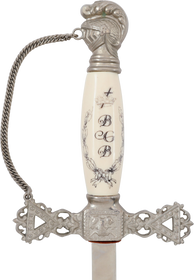
KNIGHT’S TEMPLAR SWORD FIRST HALF OF THE 20TH CENTURY. Nickel (?) plated hilt and scabbard mounts. Composition grip with scrimshawed monogram and cross. Enameled cross and crown.  27” blade decorated over 2/3 its length with crusades scenes, Masonic symbols, foliage, and owner's name on gold ground, complete and bright The forte unmarked as rarely found. Scabbard excellent with the lacquered cross worn. Quality and construction including the decoration consistent with its early manufacture. Good early example in condition consistent with its age.
  • Nation : -
  • Local Price : 475.00 USD
US 1902 PATTERN OFFICER’S SWORD. Pattern specified for all general officers. This example dates about mid 20th century (1950's). Plated hilt, blade and scabbard. The 31" blade decorated 2/3 its length with foliage, military trophies, eagle, US and blank panel for the officer's name. Inset brass proof to the ricasso with N S MEYER retailer's name opposite. A fine vintage example preserved in virtually as new condition.
  • Nation : German
  • Local Price : 475.00 USD
GERMAN GOTHIC SHORT SWORD C.1450. Forged iron, 12 1/4” total length. Thick wedge section blade as found on ballock daggers. Made to penetrate the thick leather doublets worn at the time for protection from attack. Flattened tang, pierced for securing scale grips, probably antler or bone. Made without a guard as was prohibited for peasants, but with the rudimentary scroll side lug which served that purpose. Stable rust growth with minor flaking and very minimal losses. Excavated and professionally preserved. These swords were carried by peasants who were otherwise forbidden to carry weapons. They were justified as agricultural tools, but their use as weapons is verified by the fact that they lack the repeated sharpening and reshaping of the blades which results from agricultural use. A true German Gothic sword.
  • Nation : -
  • Local Price : 4,350 kr
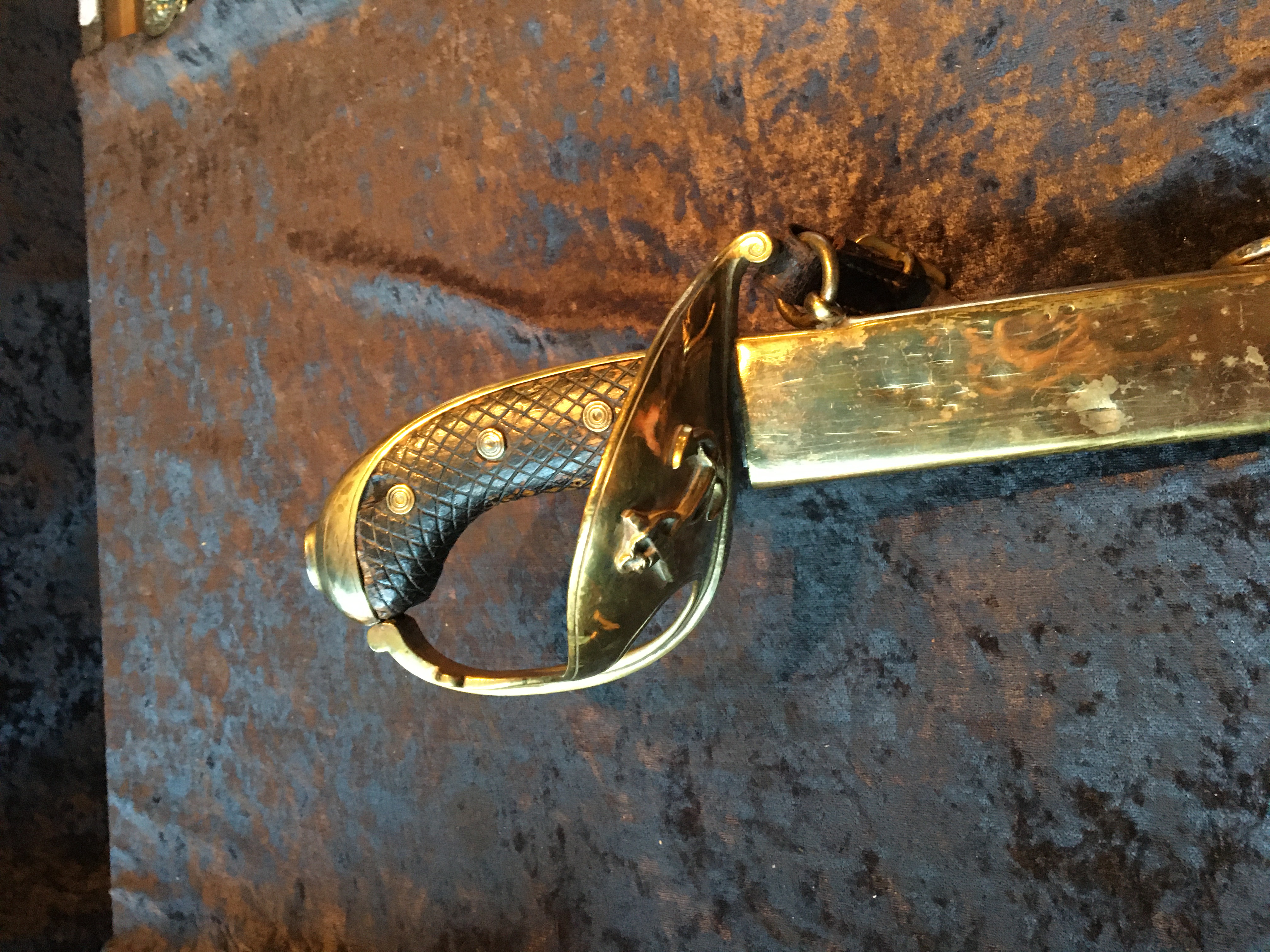
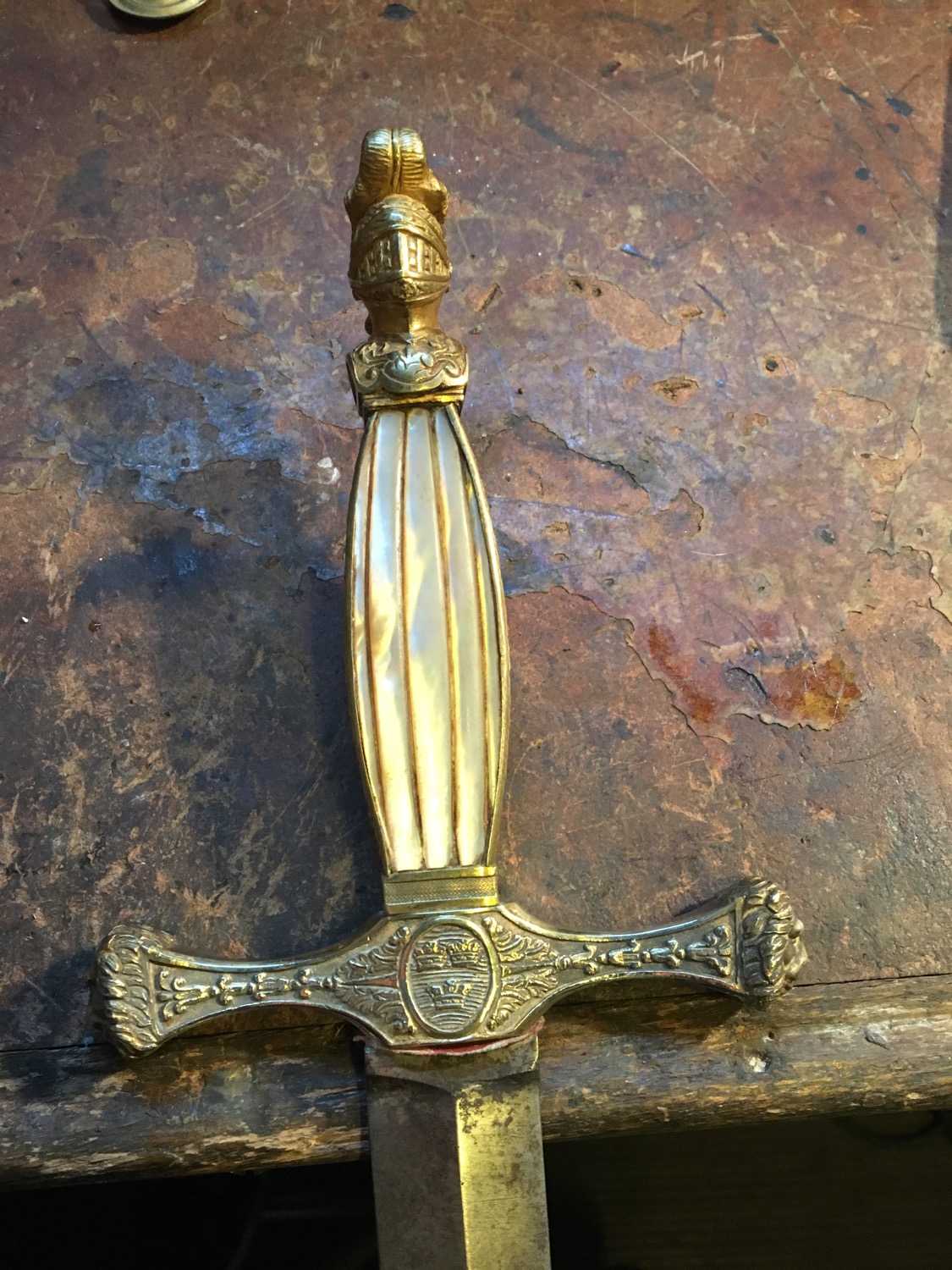
Sv flaggunderofficerssabel m/1846.
  • Nation : -
  • Local Price : 4,300 kr
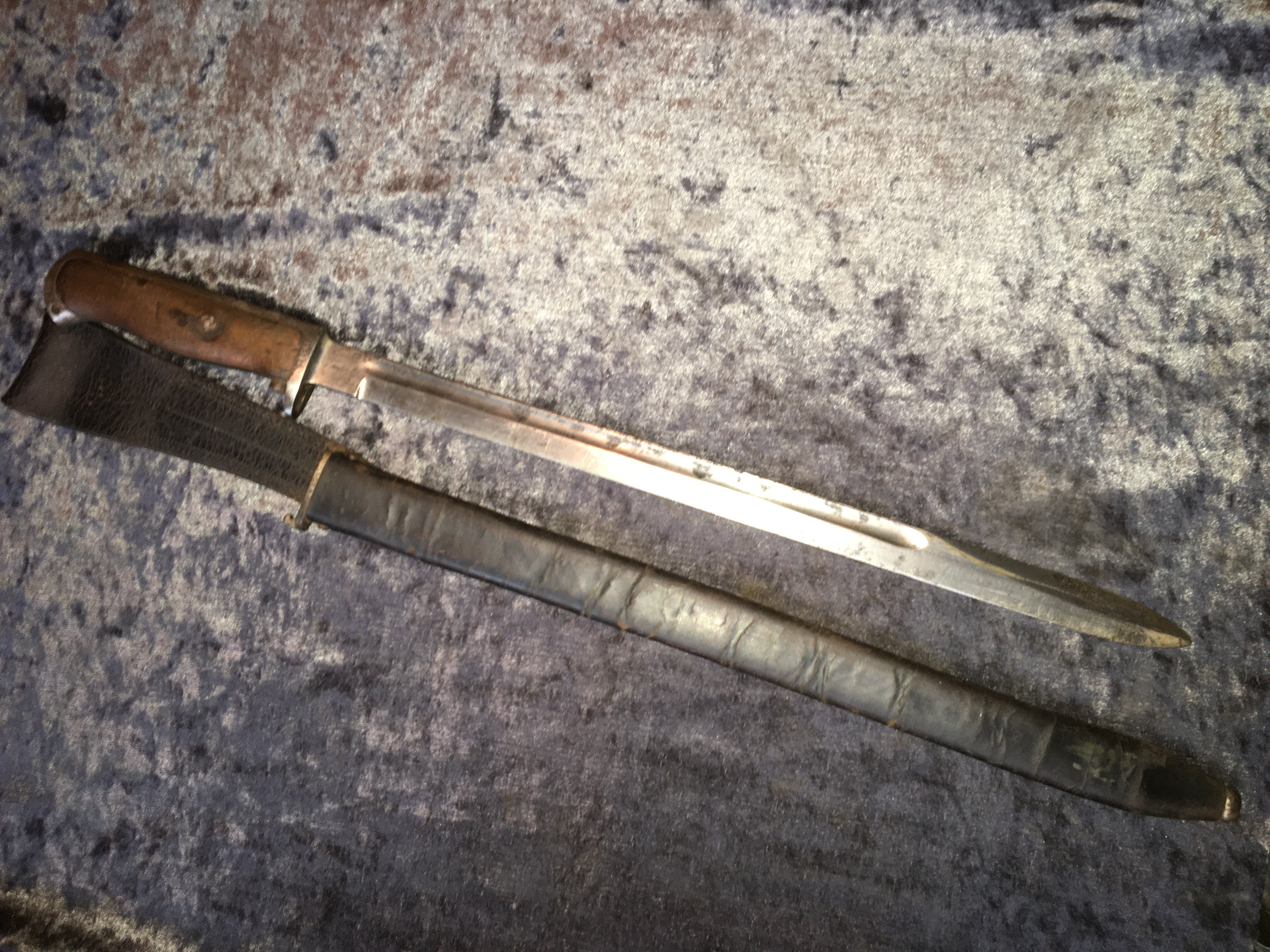
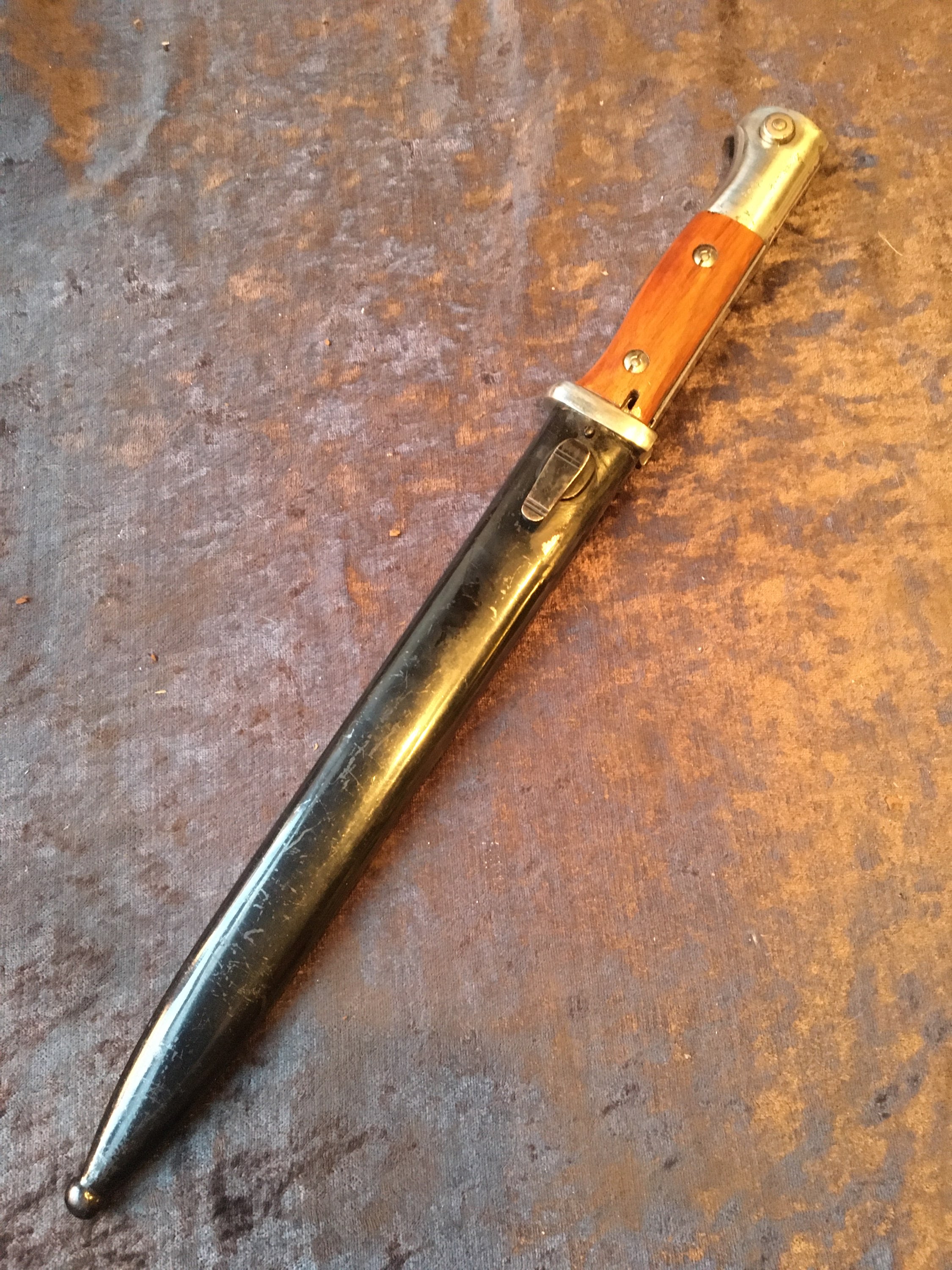
Sv bajonett m/1915 för marinen.
  • Nation : British
  • Local Price : £330.00
British 1899 Pattern Cavalry Trooper&#acute;s Sword, 1st King&#acute;s Dragoon Guards. Description Curved single-fullered sabre blade, Steel bowl guard with turned-over inside edge. No washer. Black pressed leather grips secured to the exposed full-width tang with three large rivets, steel pommel. No scabbard. Blade ~33¼ inches (85.6cm) in length, the sword ~40 inches (101.7) overall. The ricasso of the blade is stamped on one side with a broad arrow War Department mark, &#acute;EFD&#acute; indicating manufactured at the Royal Small Arms Factory at Enfield, a crown inspection stamp with &#acute;E&#acute; for Enfield and an &#acute;X&#acute; indicating the blade passed a manufacturer&#acute;s bending test. It is stamped on the other side with reissue dates of &#acute;02, &#acute;03 and &#acute;06 and two further Enfield crown inspection stamps. The spine of the blade is stamped with &#acute;/99&#acute;, its pattern, and another Enfield crown inspection mark. The exposed tang is stamped near the hilt with the letters &#acute;G&#acute; and &#acute;X&#acute;. The outside of the guard is stamped with another broad arrow, &#acute;EFD&#acute; and crown inspection stamp with &#acute;E&#acute;. The inside of the guard is stamped with the issue date &#acute;9 06&#acute; for September 1906 above the unit mark &#acute;1 DG&#acute;, indicating the 1st King&#acute;s Dragoon Guards and the serial number &#acute;413&#acute;. The &#acute;D&#acute; has been double stamped creating an overlap. The 1899 Pattern cavalry trooper&#acute;s sword was introduced on the 19th October 1899, eight days after the Second Boer War broke out. It was intended to be a refinement on the 1890 Pattern, with a slightly shorter blade, greater protection for the hand and a longer grip. Users generally considered it on the heavy side and much more effective in the thrust than the cut: this cemented the growing consensus that cavalry swords should be built entirely for thrusting. The 1899 Pattern was carried during the Boer War, in which the 1st King&#acute;s Dragoon Guards served from January 1901. Immediately upon their arrival they were drafted into a brigade under Colonel Bethune which drove General De Wet&#acute;s forces out of the Cape Colony. They then operated in the Orange River Colony until the end of the war in 1902. The dates on this example suggest that it was in use with someone as of 1902, and the brown finish found in places on the hilt might well be field camouflage, but the 1906 date next to the unit mark suggests to me that it was not issued to the KDG until then, so its war service is uncertain. The blade has speckled patination with some patches of light pitting, increasing towards the tip. The edge has previously been sharpened with numerous nicks. The tip is rounded. The outside of the hilt has some denting, a few scratches, cleaned pitting and spots of dark patination. There is a noticeable red-brown finish present on most of the inside of the hilt (except near the lip where the unit mark is placed), parts of the exposed tang, and on small areas of the outside of the hilt, including around the sword knot slit and near the turned-over inner guard “ in both cases these are recesses where there would be less friction and polishing would be difficult. This finish may be chemical browning, it does not appear to be paint. Cavalry swords in the Boer War were routinely camouflaged due to the well-known marksmanship of the Boers. The leather grips have light handling wear, a few small dents and abrasions.
  • Nation : -
  • Local Price : 4,200 kr
Officerssaber ca: 1800.
  • Nation : British
  • Local Price : 4,200 kr
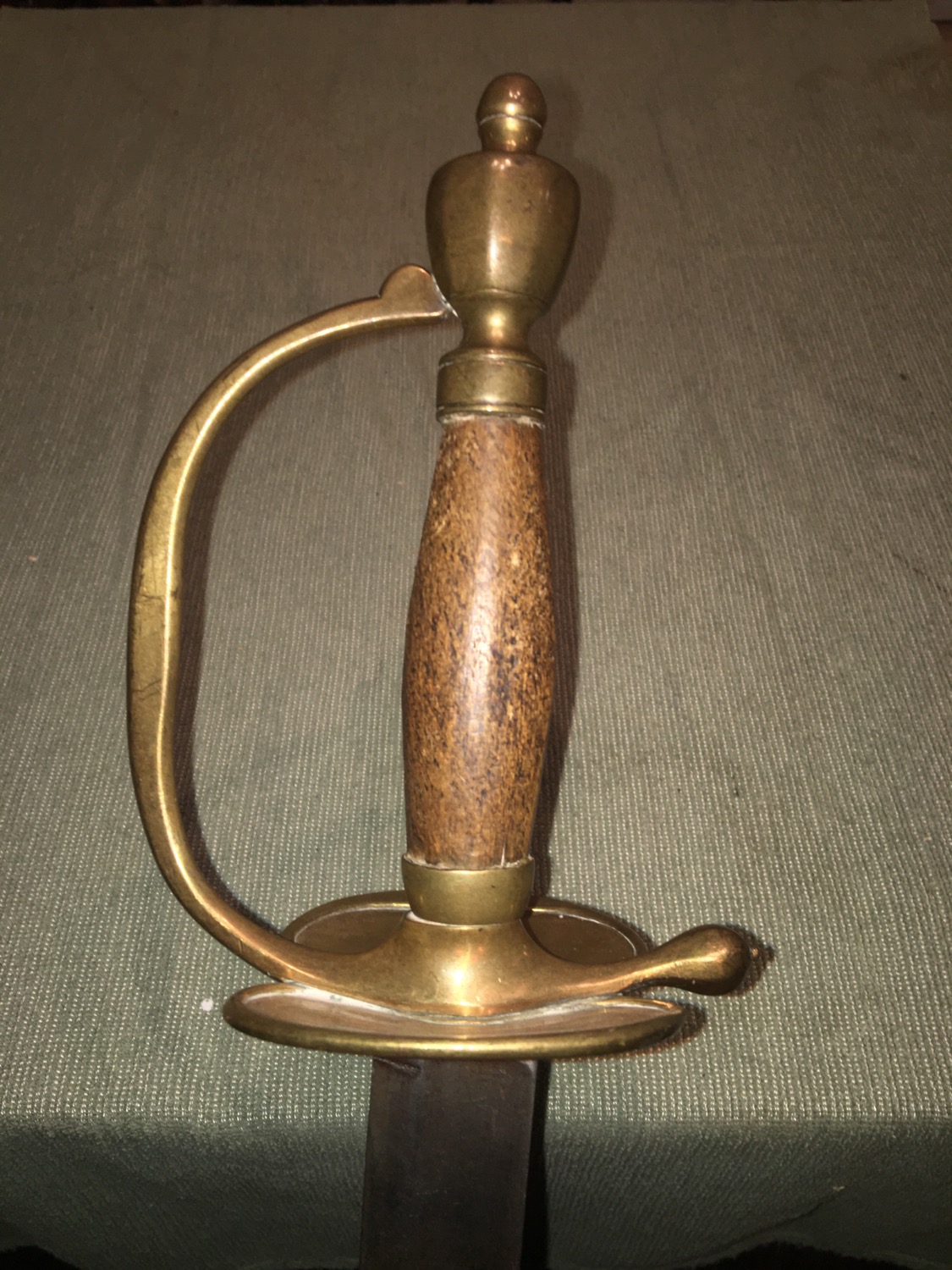
English sergeant sword m / 1796.
  • Nation : Italian
  • Local Price : 455.00 USD
ITALIAN ARTILLERY OFFICER’S SWORD C.1880. Plated iron hilt with segmented bowl guard and radially reeded pommel. Plating worn inside the bowl. One piece ebony grip. 30 1/2” curved broad fullered blade crisply decorated the first half with foliage, arms of Italy, military trophies and the artillery flaming bomb. Plated scabbard freckled with some wear but no dents. This sword dates to the period of Italy's colonial expansion into Africa and the conflicts it brought on including the Italo-Ethiopian War (1895-6) and the ongoing war with the Ottoman Empire which controlled Libya.
  • Nation : German
  • Local Price : £325.00
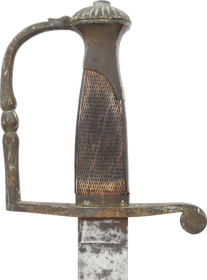
Bavarian Circa 1810 Infantry Trooper&#acute;s Sword. Description Single-edged hanger blade with narrow fuller running close to the spine and hatchet point. Brass hilt with round forward quillon and plain knucklebow, smooth brass backstrap with tang button, ribbed grip of black leather over wood. Black leather washer. No scabbard. Blade ~23½ inches in length (59.4cm), the sword 28¼ inches (71.8cm) overall. The blade is engraved on both sides with the crown and cypher of Maximilian I Joseph, first King of Bavaria, who reigned from 1806 to 1825. The blade is sharp with a number of nicks and chips to its edge in the upper portion. Scattered spots of cleaned pitting to the blade, more significant patches at the shoulder and near the tip. Some rounding wear to the tip sharpening marks, also polishing marks to the faces. The leather washer has some losses on one side. The grip is all intact with no losses. The brass hilt and backstrap have a few small dents and an even midtone patina.
  • Nation : British
  • Local Price : £325.00
British 1879 Pattern Martini Henry Artillery Carbine Bayonet with Sawback Removed. Description Straight single-fullered blade which has had its original sawback removed, steel knucklebow hilt with sword knot slit and muzzle ring. Black pressed leather grips with chequering, steel pommel with external leaf spring. No scabbard. Blade 25¾ inches in length, the bayonet 31¼ inches overall, muzzle ring 0.65 inches in diameter (1.65cm). The blade is stamped on one side of the ricasso with a crown over &#acute;V.R.&#acute; (the lettering very faint), the manufacture date &#acute;12 / 8_&#acute;, meaning December of a year in the 1880s, the last digit no longer present due to the bored hole, two crown inspection marks with &#acute;E&#acute;, for the Royal Small Arms Factory at Enfield, a Birmingham repair/refurbishment mark of a crown over &#acute;BR&#acute;, and issue stamps /90 and /94 for 1890 and 1894. On the other side it is stamped with a broad arrow atop &#acute;WD&#acute;, meaning War Department property, another crown inspection mark with &#acute;E&#acute;, for Enfield, an &#acute;X&#acute; which indicates that the blade passed a manufacturer&#acute;s bending test, two R&#acute;s back to back, a mark meaning the bayonet was deemed unfit for service (often relegated to parade or cadet use), and two broad arrows point-to-point, a mark that was put on War Department equipment that was declared obsolete or to be sold off. The spine of the blade has two more Enfield crown inspection marks, a letter &#acute;W&#acute; and an &#acute;R&#acute;. The exposed tang has another Birmingham repair mark, a letter &#acute;B&#acute;, a Maltese Cross and the number &#acute;18&#acute;. The pommel is stamped next to the mortise slot with another Enfield inspection mark, next to the leaf spring with &#acute;31&#acute; and next to the locking button with another two broad arrows point-to-point. When mounted to a carbine-length rifle the 1879 Pattern bayonet gave a soldier good overall reach, and with its substantial hilt it could also serve as a fighting sword. Its saw-toothed back would have found use in brush-cutting, like other similar designs popular during the 19th century. Production of the bayonets at Enfield continued until 1890. 1879 Pattern bayonets with the sawback removed are a known variation, but no official order to manufacture them has been found and the exact reason for grinding off the saw blade is unclear. Many of the Martini-Henry carbines ended their service lives as drill weapons for cadet forces, and this modification may simply have been to make the bayonets safer for the youngsters who would be handling them on the parade ground. See page 156 of British & Commonwealth Bayonets by Skennerton & Richardson for discussion of this type. The blade has some mottled patination. Its unsharpened edge has no damage, with a little wear to the tip. The hilt has some patination, heavier in the recesses and spotted on the knucklebow and pommel. The leather grips have some light handling wear, a few chips at the edges where the leather touches the exposed tang, and one small spot of abrasion on one side that has removed a few knurled diamonds to expose underlying leather. A hole just over 4mm in diameter has been bored through the ricasso, possibly to allow the bayonet to be hung up or mounted.
  • Nation : Spanish
  • Local Price : £325
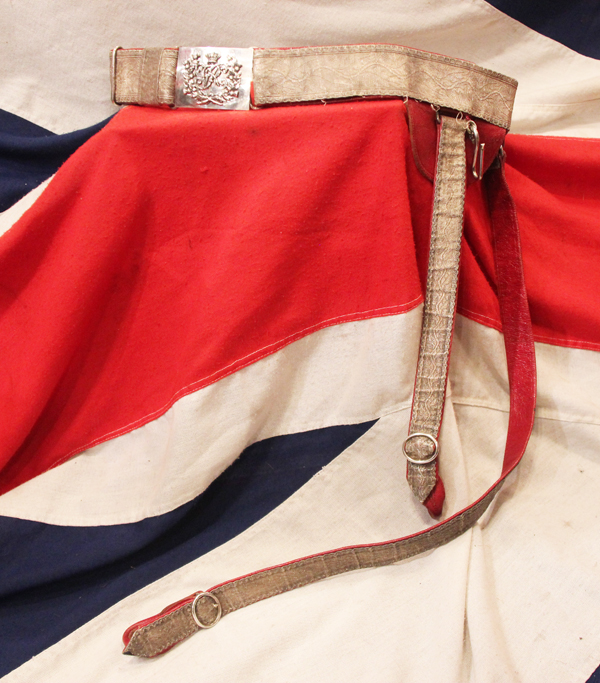
Click and use the code >21339 to search for this item on the dealer website Superb, Victorian, Scottish Lord Lieutenant´s Belt Plate and Silver Bullion, Belt and Sword Straps. Queen Victoria´s Personal Representative in Scotland When She Was Not Available
  • Nation : Romania
  • Local Price : £325
Click and use the code >23897 to search for this item on the dealer website Scarce Pattern of Imperial German 121st infantry Officers Sword XIII Royal Wurtemberg Corps
  • Nation : Italian
  • Local Price : £325.00
Italian M1860 Cavalry Trooper&#acute;s Sword. Description Curved, single-fullered spear-pointed blade. Black leather grip bound with brass wire. Steel hilt with turned over inner edge, large pierced teardrop-shaped hole to form two &#acute;bars&#acute;, and angled rectangular slot for sword knot. Stepped cylindrical steel pommel cap. Steel scabbard with two hanging rings. The ricasso of the blade is marked on one side with &#acute;S&K&#acute;, the maker&#acute;s mark of Schnitzler & Kirschbaum of Solingen, one of the German firms which manufactured these swords on behalf of the Italian government. The hilt is stamped with the serial number &#acute;156&#acute;. The blade’s edge is unsharpened but there are a few very small dents and edge imperfections, with one noticeable chip/roll where the fuller ends. A couple of small dents to the edge of the guard. Some patina to the scabbard, light pitting at the chape end, one noticeable dent to the lower section and one very small dent at the chape.
  • Nation : British
  • Local Price : $450.00
FOR SALE:1796 BRITISH INFANTRY OFFICER SWORD!. I have a very nice British 1796 officers sword. It is tight¸ the hinged guard still works nicely and doesn´t flop about. The blade has a lovely salt and pepper finish on it but has very little pitting except for a few small spots. The grip is silver foil over wood with some peeling. There is still some gold wash on it which is why the hilt looks so bright in the photos. The sword is solid and the blade has a very nice temper. This sword has a fine airy balance for all it´s beefy single edged blade. I am asking $450 for it. Free shipping CONUS.
  • Nation : -
  • Local Price : 4,100 kr
Officials / civil sword 1900c.
  • Nation : -
  • Local Price : 4,100 kr
Civil servants / civil sword 1900c.
  • Nation : -
  • Local Price : 445.00 USD
U S MILITIA NCO SWORD C.1840. Brass hilt with bow tie form cross guard, spread eagle decorated pommel and blackened simulated sharkskin grip with separate wire wrap. That construction was to enhance purchase of the grip for battle. 25 ¾” convex face double edged blade, unmarked. Blade with smooth gray patina. Hilt with expected wear.  Scabbard surface congealed with crisp excellent mounts. Likely owes its survival to its service in the Civil War.
  • Nation : British
  • Local Price : £320.00
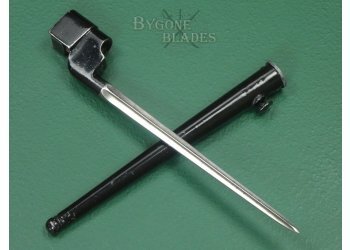
British No.4 Rifle Mk I Cruciform Spike Bayonet. Singer 1941. #2306015. Original and early production British No.4 Mk I cruciform bayonet for the Lee-Enfield No.4 Mk I Rifle. The No4. Mk1 bayonet was only produced from late 1941 and into the early months of 1942. The sole maker was the Singer Manufacturing Co., at their Clydebank plant near Glasgow, Scotland. The 203mm blade is in good condition, with a mild speckled patina that could be re-polished.The socket block was painted black and is stamped with King George’s royal cypher, bayonet designation and S M for Singer Manufacturing Company. The spring mechanism bears the Singer designation and the production date 41, for 1941.This rare bayonet is complete with its correct No.4 Mk I scabbard.
  • Nation : American
  • Local Price : £320.00
US Navy Model 1870 Yataghan Bayonet. Description Yataghan blade, brass hilt with muzzle ring and lobe quillon, brass grip with &#acute;feathered&#acute; or &#acute;fishscale&#acute; texture, beaked pommel with motif of crossed cannon barrels over an anchor. Unusual hilt design with high leaf spring locking catch and lower hole to accommodate the cleaning rod of the 1870 rifle. Black leather scabbard with brass locket and chape, with frog stud. Blade is unmarked. Hilt is marked with &#acute;S&#acute;. The back of the grip is stamped with &#acute;GGS&#acute; and the pommel end with &#acute;J.G.B&#acute;. The US 1870 Navy rifle was a Springfield made rolling block type “ the bayonets for it are thought to have all been made by the Ames Manufacturing Company of Chicopee, Massachusetts. Two versions are known to exist, this version with the yataghan blade and a straight-bladed version. Blade has some pitting, brass hilt has some very small dings and patina as expected for age. Scabbard is very good, only minor rubbing to the leather, no structural damage. Some small dents to the chape piece.
  • Nation : British
  • Local Price : £320.00
British Victorian Malacca Sword Cane. #2603005. This excellent Victorian sword cane dates from the late 19th Century and is made from imported Malacca, an exotic wood from Malaysia.The 585mm bodkin blade tapers to a needle-sharp point. The blade is in good condition with some minor age-related wear and tarnish. The forte of the blade is stamped with the word, “SOLINGEN,” indicating that the blade was made in Germany. This is likely a re-purposed blade, which is quite common in sword canes.The blade sheathes snugly within the body of the cane and is held firmly without rattle.The walking stick has a white metal pommel cap and a replacement nickel-silver collar. The tang of the blade is fixed securely within the handle. The steel-tipped brass ferrule is held firmly in place by two small pins.The cane is in overall excellent condition for its age and use. There are a couple of hairline cracks on the outer surface of the cane but these do not affect the structural integrity of the cane.Total length 895mm.Disclaimer: All sword canes sold by Bygone Blades are sold as historical collectables. They are sold for decorative collectable purposes only. In the United Kingdom and many other countries, it is a serious criminal offence to use a sword cane in public.
  • Nation : Brazilian
  • Local Price : £320
Click and use the code >25921 to search for this item on the dealer website Antique, 19th Century Long & Straight Sword of A Mandinka Warrior, West African, Very Long Fluted Broadsword Blade With Leather Covered Baluster Hilt, .
  • Nation : Siamese
  • Local Price : £320
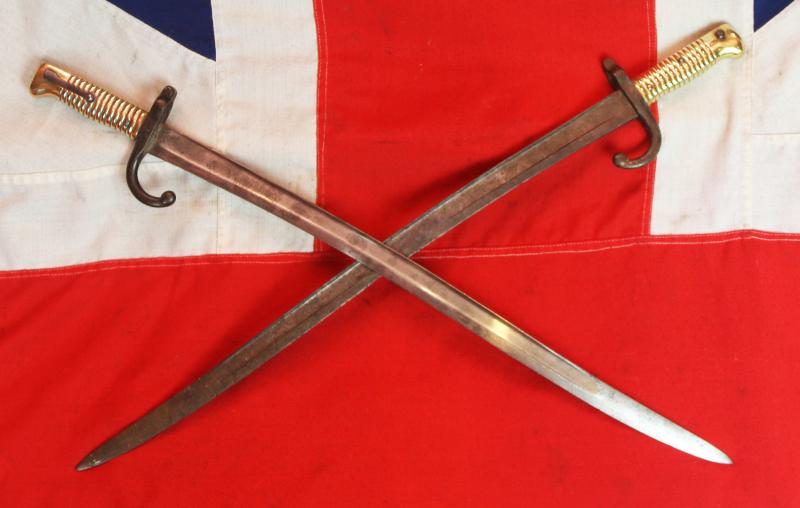
Click and use the code >24843 to search for this item on the dealer website Pair Of French, Chassepot Rifle Sword Bayonets. 1870´s
  • Nation : British
  • Local Price : £320.00
British Circa 1820 India Pattern Brown Bess Socket Bayonet with India Spring. Description Triangular blade with unfullered top surface and fullered lower surfaces. A roughly rectangular leaf spring is attached to the outer surface of the socket, retained by a single screw. Wood-lined black leather scabbard with brass locket and chape piece. The blade is stamped with the maker&#acute;s mark &#acute;S HILL&#acute;, indicating the manufacturer Stephen Hill, who traded from Pritchett Street in Birmingham from around 1830, then changed the trade name to S. Hill & Sons from 1849-1855, an inspection mark &#acute;D 4&#acute;, and the letter &#acute;F&#acute; at the very base of the blade.  The blade markings are partly worn: Indian socket bayonets were repolished often to keep them bright, which often resulted in the loss of detail to the markings. The rear rim of the socket is stamped with &#acute;6&#acute; and four incised lines. The leather at the throat end is stamped with decorative criss-crossing lines. The &#acute;Indian Spring&#acute; was reputedly designed by Ezekiel Baker, the same gunsmith who created the famous Baker Rifle, to improve the fastening of the socket bayonet to the India Pattern Brown Bess musket. This is the later version of the spring introduced around 1820 with an almost rectangular shape, still doing the same job of preventing the bayonet from shifting position once it had been fixed to the rifle, but stronger than the early type, which was more triangular. The bayonet is clean overall with only small areas of patina and some very light pitting near the tip of the blade. The brass chape piece and a small amount of leather have become detached from the rest of the scabbard. The detached chape piece has several dents, the throat piece has one very small one to its rim. The leather of the scabbard is quite worn in places, with rubbing to raised edges and surface cracking.
  • Nation : -
  • Local Price : 4,000 kr
Very nice official / costume smalsword 19c.
  • Nation : German
  • Local Price : 4,000 kr
German bayonet w/84-98 with sawback..
  • Nation : -
  • Local Price : 435.00 USD
SARDINIAN NCO SWORD C.1850. Brass hilt with baluster knuckle bow and radial pattern pommel. Good one piece diced ebony grip (crack). 27” slightly curved blade of heavy wedge section shows gray patina, some isolated pitting and surface marks from use. Dating to the period of the peasant revolts against the privatization and their exclusion from the lands on which they farmed, all of which were repressed by the Sardinian military.
  • Nation : -
  • Local Price : 435.00 USD
U S MILITIA NCO SWORD C.1840. Bronze hilt with bow tie form cross guard, spread eagle decorated pommel and simulated sharkskin grip with separate wire wrap. 28 1/8” medially ridged double edged blade, unmarked. Maroon leather covered iron scabbard with fine pierced pewter mounts. The throat mount with eagle and stars and bars and bronze stud matching the hilt. The tip mount pierced with foliage. Blade with smooth gray patina. Hilt with expected wear.  Scabbard surface congealed with crisp excellent mounts. Likely owes its survival to its service in the Civil War.
  • Nation : German
  • Local Price : £310.00
Prussian M1816 Infantry Hanger / Sabre. Description Curved hanger blade with hatchet point, single fuller. Cast brass heart-shaped hilt with short quillon and knucklebow, brass grip with diagonal grooves on one side and smooth on the other, round brass pommel. No scabbard. Blade 25½ inches (65cm) in length, the sword 31½ inches (80cm) overall. The M1816 was a near-copy of its predecessor the M1715 infantry sword. The Napoleonic Wars having finally concluded, the Prussian army chose in 1815 to adopt the French infantry saber as standard for their infantry “ the Guards regiments however preferred the old Prussian model and so new stocks were produced. The blade is of the form the English called a &#acute;hanger&#acute; although German sources consider it a sabre. Sturdy and simple to produce, these swords had a long service life, remaining in use longest as a parade weapon with the SchloÃ&159;garde-Kompanie (guards of the royal palaces) until they units were disbanded with the end of the Prussian monarchy in 1918. This example is very slightly non-standard, having simpler ferrules and a blade about 3/8 of an inch longer. It bears no official markings so might be a privately purchased version. The blade has a bright polished finish. There are a few small nicks to the blade around its midsection and some very small patches of pitting in the same area. The brass of the hilt has an even patina, with the usual minor dents and some brown spotting. It has one small crack near where the knucklebow meets the hilt, but remains solid with no movement. The quillon is bent slightly to one side.
  • Nation : British
  • Local Price : £310.00
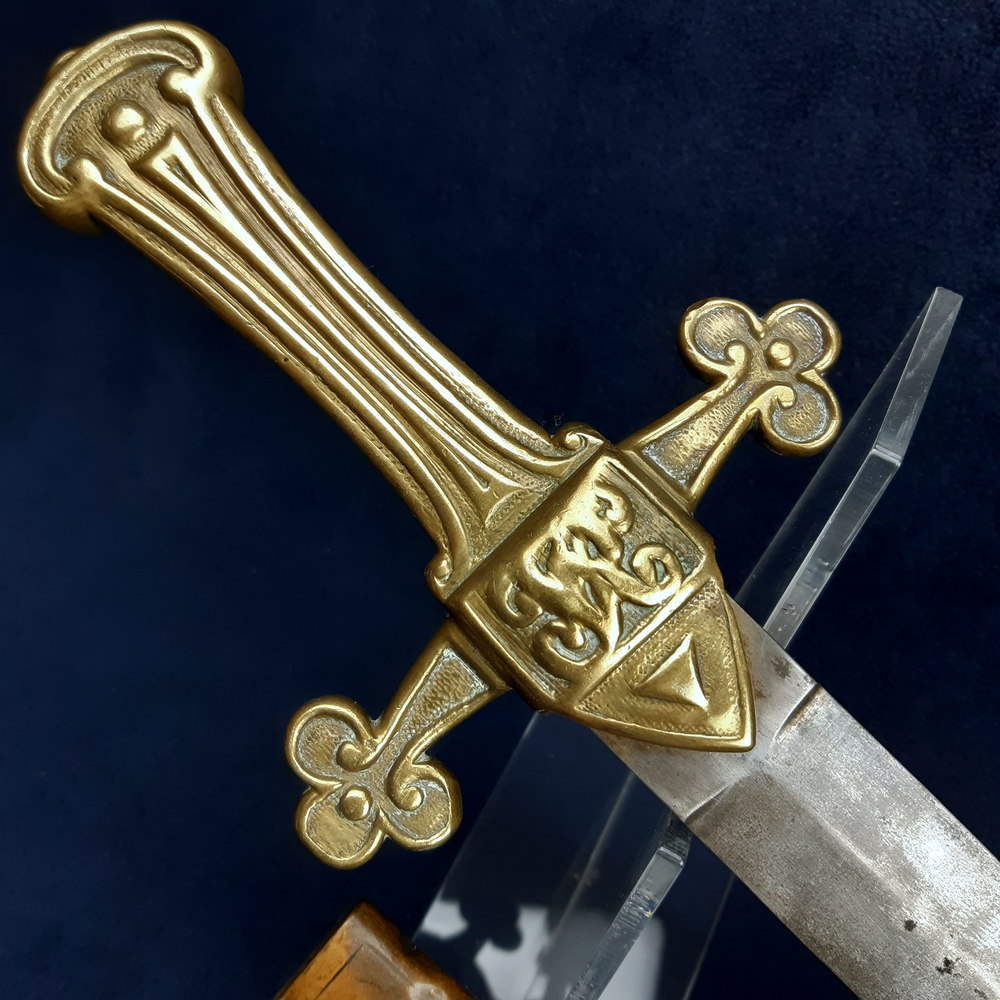
British Mark I 1856 Pattern Drummer’s Sword, Royal Fusiliers, Circa 1886 by Mole. Description Straight unfullered double-edged spear-pointed blade with diamond cross-section, brass hilt with central VR cypher of Queen Victoria, triangular langets and trefoil finials. Longitudinally ribbed brass grip, flared pommel with tang button. Black leather scabbard with brass fittings at throat and chape, the throat piece with teardrop-shaped frog stud. The brass grip is stamped on one of the narrow, smooth sides with &#acute;R F. L.COY.&#acute;, indicating that this sword was issued to L Company of the Royal Fusiliers, as well as a broad arrow over &#acute;WD&#acute; which is a War Department stores mark, and a crown inspection stamp. The other smooth side of the grip is marked with what are probably rack numbers including &#acute;33&#acute;. All the grip markings are somewhat faint due to rubbing which has somewhat smoothed the features of the hilt overall “ this is probably attributable to repeated polishing of the brass, probably during its service life. The edge of the ricasso is stamped on one side with an illegible mark that may be two overlaid stamps. The throat piece of the scabbard is stamped on one edge with the maker&#acute;s mark &#acute;MOLE&#acute;, and next to the throat with the date &#acute;2 . 1886&#acute; indicating February 1886, probably the manufacture date. These short swords were issued to drummers of infantry regiments. While the pattern was ordered to be adopted in 1856, there is evidence that similar-looking swords were being carried by musicians in some units as early as 1843, and some units did not actually adopt the new pattern until years after its introduction. Wholly ornamental, an identical version with a cast iron hilt was issued for buglers. The blade has some light patination in places. The brass hilt and grip has a few tiny spots of patination in recesses, raised areas with overpolishing as previously mentioned. A few small nicks to the unsharpened edge on one side near the midpoint. The leather of the scabbard remains flexible “ take care to support it when withdrawing the blade. Some surface-level flaking and cracking to the leather. All its stitching is intact. The brass pieces of the scabbard have a darker patina. Some dents to the edges of the throat piece. Some light dents and scratches to the chape piece, these creating a few tiny spots of brighter brass. None of these interfere with sheathing and drawing the blade.
  • Nation : ?
  • Local Price : 3,950.00
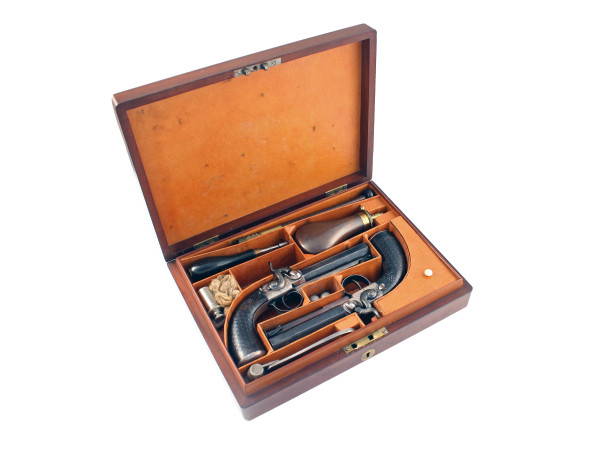
. An Unusual Cased Pair Of 18-Bore Percussion Box-Lock Belt Pistols Retailed By Salmond, Perth, Mid-19th Century. With blued octagonal sighted barrels each engraved around the muzzle and signed along the top flat, silvered breeches and actions decorated with foliate scrollwork, dolphin hammers (one spur repaired) en suite, safety-catches, border engraved trigger-guards retaining some blueing and decorated with foliate scrollwork, unusually chequered figured rounded butts highlighted with silver pins and decorated with silver piqué foliage, silvered border engraved butt-caps each with hinged circular trap cover engraved with a flower-head, belt hooks, one retaining some original blueing, vacant silver escutcheons, silvered under-ribs, stirrup ramrods each with tip engraved with a flower-head, and retaining much of their original finish: in original mahogany case lined in tooled pigskin with accessories including Sykes patent powder-flask retaining much of its lacquered finish, the exterior of the lid with circular brass escutcheon engraved ‘J.A. From W.H.A.', Birmingham proof marks Dimension: Bore: 16 Bore Barrel Length: 4 Inches (10.16 cm) Overall Length: 9.5 Inches (24.13 cm)
  • Nation : -
  • Local Price : 430.00 USD
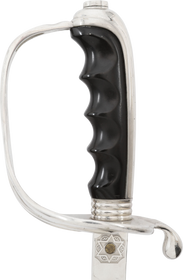
US 1902 PATTERN ARMY OFFICER’S SWORD PRE 1925. See The American Sword, Peterson #77 and pattern still in current use for most offices other than Naval. Plated hilt with composition finger stall grip. 31 1/2” blade decorated over half its length with U S, foliage, Eagle and military trophies. The forte with The M C LILLEY & CO COLUMBUS O. That form of address used 1882-1925 only. Scabbard excellent with minor plating defects. Superior quality and construction including the decoration consistent with its early manufacture. Good early example in condition consistent with its age. 
Page 28 of 41

The following items match your search but are currently listed on Ebay. We take no responsibility for any aspect of the listings or their accuracy.


Sorry, there is not any matching items.