
(You must register and have a linked account first)
View Privacy Policy


OR

Show


Forgot your password?

Error message here!

Error message here!

Error message here!

Error message here!

Show Error message here!

Show Error message here!


Lost your password? Please enter your email address. You will receive a link to create a new password.

Error message here!

Back to log-in

Close

For Sale

The following items are listed by for sale by users of the site and dealers. They are in no way endorsed or guaranteed by www.oldswords.com

Add a Classified Item
to

Clicking on the sword will take you through to the relevant classified item or dealer site.
Don't miss out! - Do you want to be kept informed weekly of new aditions? Just join our weekly update list.

You can also receive regular email notifcations when items match your keywords. To recieve them just register or logon at the top right of this page.
Page 34 of 40
  • Nation : -
  • Local Price : 2,000 kr
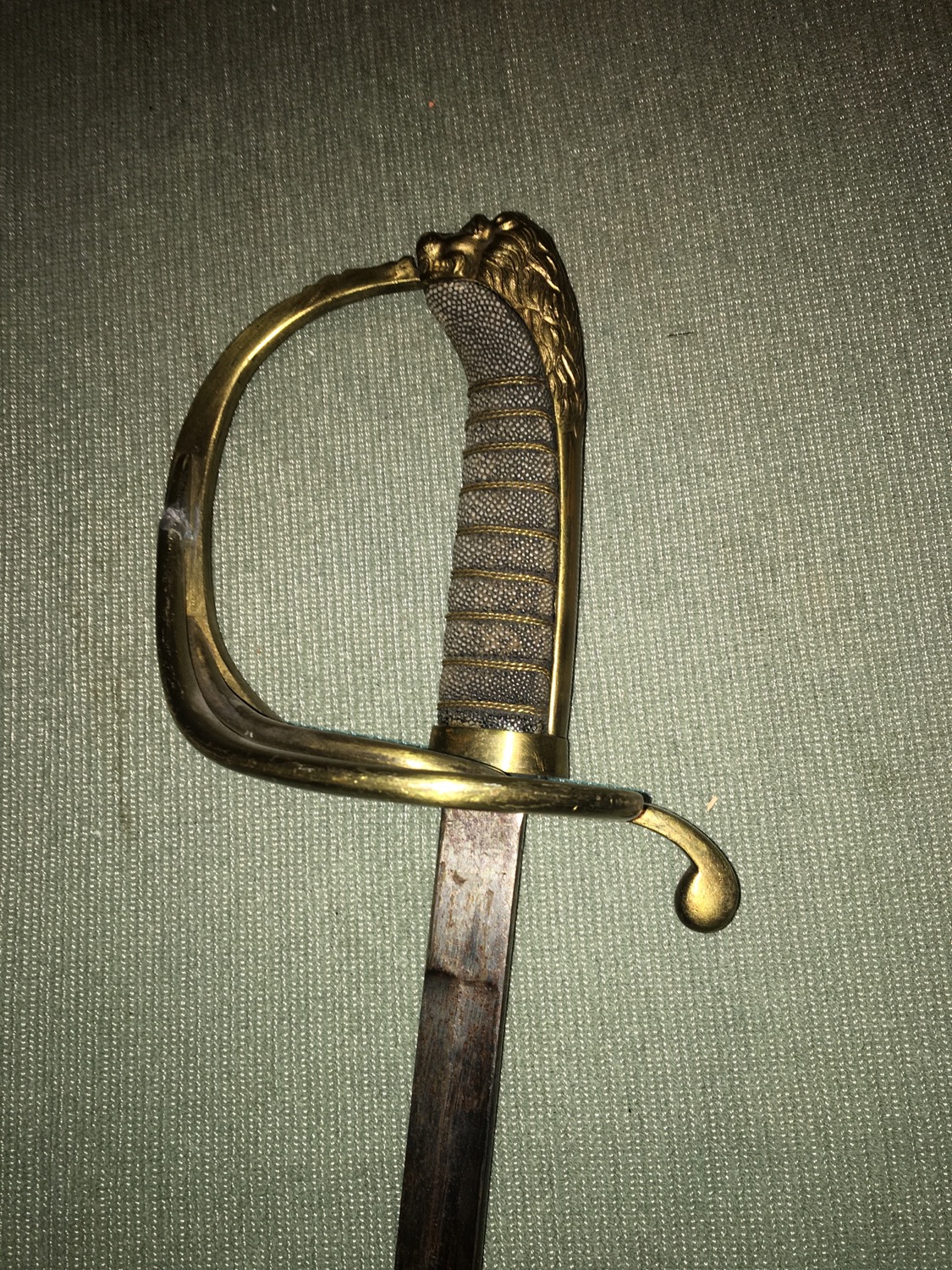
Sv cavalry saber ca:1860.
  • Nation : -
  • Local Price : 2,000 kr
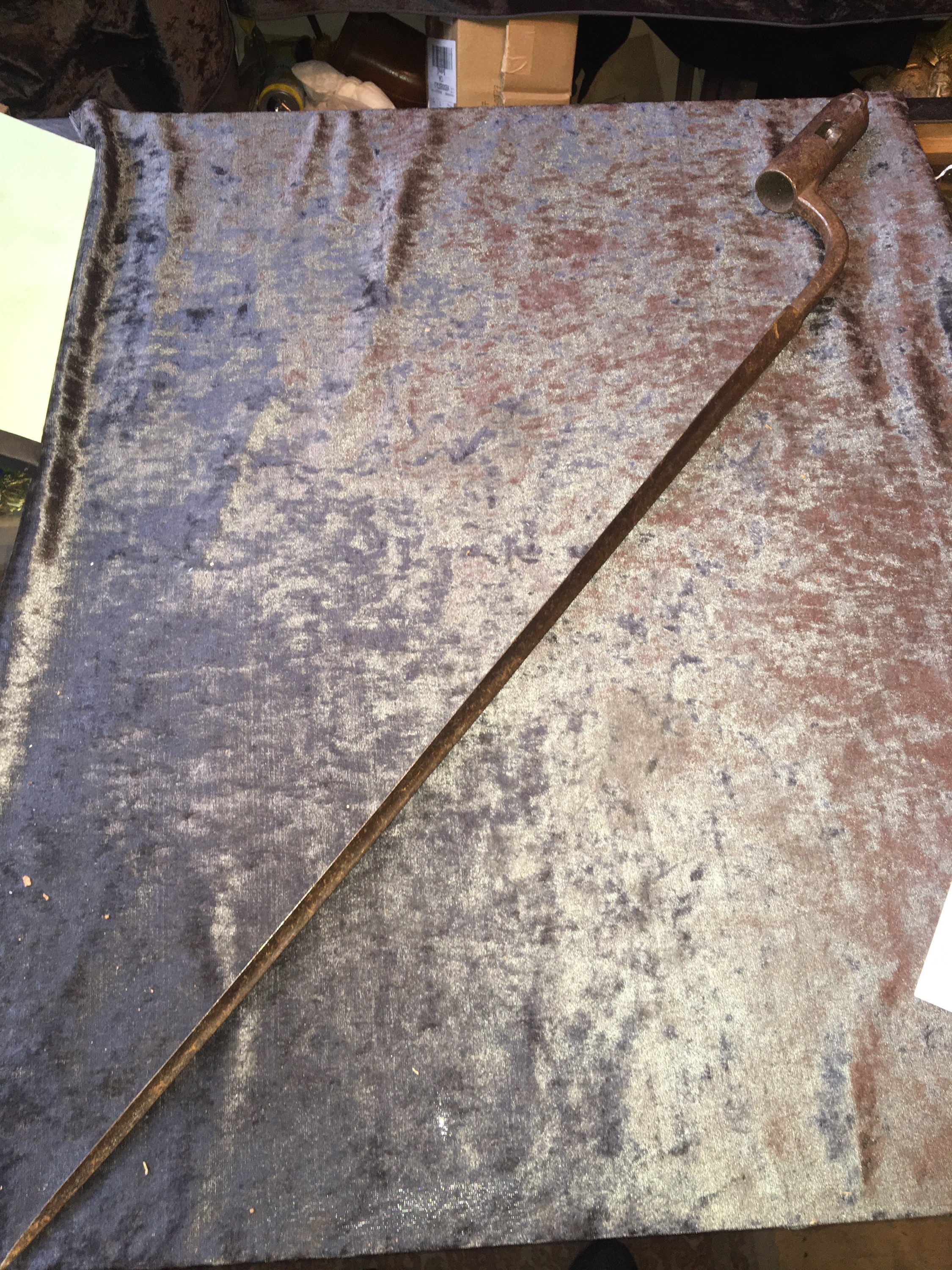
Sv bayonet w/1791-99.
  • Nation : -
  • Local Price : 2,000 kr
Sv bayonet w/1799.
  • Nation : British
  • Local Price : £155.00
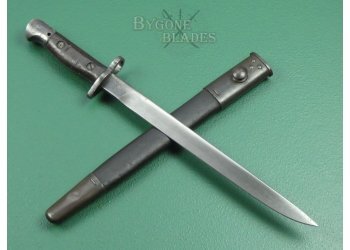
British 1913 Pattern Bayonet. Remington April 1917. WW2 Home Guard Issue. #2410008. This British Pattern 1913 Mk 1 sword bayonet for the Pattern 1914 rifle is in very good condition. The P1913 bayonet was officially introduced into British service on the 21st June 1916 and was made under contract in the USA by Remington and Winchester.By the end of WW1, Remington had produced 1,243,000 of the P1913 bayonets.The 433mm blade has a deep single fuller on both sides and a rounded spine. The blade is in very good condition, retaining its original matt finish and its factory sharpened edge with no additional attempts at sharpening.The blued ricasso is stamped with the pattern date of 1913, the production date of ‘4 ’17 (April, 1917) and the Remington maker’s mark. The obverse ricasso bears two inspection stamps, bend test X and the War Department arrow.The cross guard and pommel retain their original blueing and the wooden grip scales are in very good condition with a great patina. The press-stud locking mechanism works perfectly.The bayonet is complete with its original American Mk II leather scabbard with integral belt hanger. The scabbard is fitted with a brown British 1939 pattern leather frog, suggesting that the bayonet was re-issued for Home Guard use during WW2. The scabbard and frog are in good condition with age-related scuffs and marks. The bayonet sheathes and draws smoothly and is held firmly within the scabbard.This Remington P1917 bayonet is a great example of the pattern.
  • Nation : British
  • Local Price : £155.00
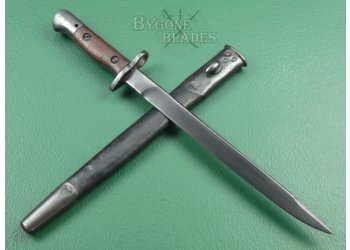
British Indian Army 1907 Pattern Bayonet. Upper Edge. Blackened Blade. #2401020. This is an interesting British WW1 Pattern 1907 Lee-Enfield rifle bayonet made in 1918 by Sanderson, of Sheffield. The bayonet was later modified in 1923 by having an upper edge ground in and the blade blackened. It is likely that this is an Indian refurbished bayonet. Many post WW1 Indian bayonets (which were modelled on the P1907) have a blackened blade with an upper edge ground into them.The 420mm single-edged blade has a long narrow fuller and rounded spine that terminates in a short, 45mm upper edge. The long, single edge was service sharpened. The blade is in good condition and retains its black finish with a small patch of minor pitting on the spine.The ricasso is marked with George V crowned royal cypher over the pattern date 1907. The date of manufacture, 2 18 (February 1918) is stamped above the Sanderson makers’ name.The obverse ricasso bears a bend test stamp, War Department arrow and four Enfield inspection and acceptance stamps. An additional date, ‘23 (1923) is also stamped into the ricasso. The absence of any Indian factory and refurbishment marks is not unusual, as marking of Indian bayonets was rather hit and miss.The crosspiece, muzzle ring and pommel retain their blued finish and are in good condition. The press-stud catch is in perfect working order. The grip scales are in good condition with wear and colouration consistent with age and use.The bayonet is complete with its leather scabbard with a round frog stud. The scabbard is in good condition. The steel locket and chape retain their original finish with shallow pitting to the chape. Interestingly, the locket is stamped with the War Department arrow instead of a factory inspection mark. The leather of the scabbard is in good condition and the stitching is intact and strong. The bayonet sheathes smoothly and is held firmly within the scabbard.This is an interesting, re-profiled 1907 pattern bayonet with a blackened blade, probably of Indian army issue..
  • Nation : British
  • Local Price : £155.00
British Wilkinson Type-D Survival Knife. #2602005. The Type D survival knife was introduced in the 1950’s and was produced by the Wilkinson Sword Company of London. The heavy-duty knife was well-made, strong and versatile and was initially issued to members of the British Special Forces and to RAF aircrew.The 184mm heavy, single-edged blade has a thick, flat spine and terminates in a hatchet point. The unfullered blade has a wedge-shaped cross section and retains a sharp edge. The blade is in good condition with fading and wear to the blackened finish.The base of the blade is stamped with the Wilkinson Sword Company trademark.The hardwood grip scales are secured to the full width, “solid” tang with two 1907 pattern screw bolts and washers. Later examples have the grips secured by copper rivets. The grip scales are in good condition with wear consistent with use.This Type D knife is complete with its original leather scabbard. The scabbard is in good condition with some tarnish to the rivets. The press-stud clasp is in good working order and the knife sheathes and draws smoothly and is held firmly within the scabbard.This is a great example of a Type D survival knife made by the Wilkinson Sword Company.
  • Nation : -
  • Local Price : 1,950 kr
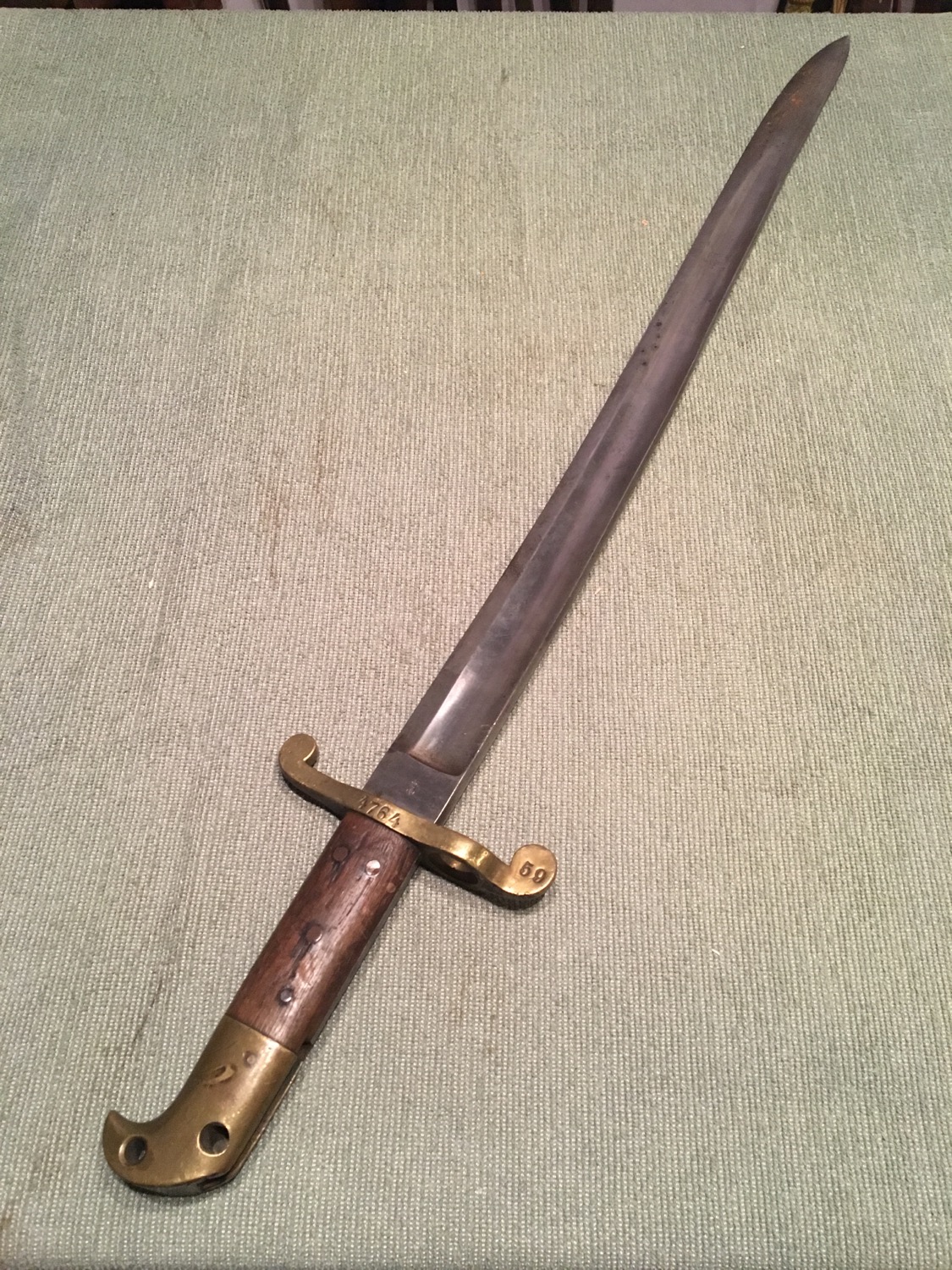
Sv saber bayonet to Remington m / 1867.
  • Nation : -
  • Local Price : 1,900 kr
Tuareg sword known as: Takuba 19th century.
  • Nation : British
  • Local Price : £145.00
British WW1 1913 Pattern Bayonet, Dated 9/1916 by Remington. Description Unfullered spear pointed blade, wood scale grips with two brass rivets. Steel pommel and hilt with short quillon and muzzle ring. Brown leather scabbard with steel throat and chape. Blade 11.97 inches in length (304mm), the bayonet 16.69 inches overall (424mm). This bayonet is a little unusual in that it is completely unmarked with no reference to its maker or any government service. Its muzzle ring has been bushed to around 14.7mm in diameter (the standard for the 1888 Pattern being 16.5mm). Both the bayonet and its scabbard seem to be subtly non-standard, a good but not 100% correct rendition of the Pattern. Putting these factors together this might be the &#acute;India Pattern&#acute; version of the 1888 bayonet - approved in 1904, this version&#acute;s modification &#acute;consisted merely of bushing the muzzle ring to suit the smaller diameter of the Lee-Enfield cavalry carbine barrel, which would make the MRD of the bayonet about 14.7mm&#acute; (see British & Commonwealth Bayonets by Skennerton & Richardson p342, or British Commonwealth Bayonets and Fighting Knives by Skennerton & Labudda p370). If the bayonet was actually produced in India that might explain its non-standard construction. As shown in Skennerton some rough copies of the 1888 Pattern were made for State Forces in India which were distinctly cruder than the official version “ this example is better-made and closer in form to the Pattern than those. Alternatively this might be one of the &#acute;trade&#acute; or &#acute;commercial&#acute; 1888 bayonets, which were not made as part of any government contract and were instead sold to Volunteer units or private buyers by firms including Wilkinson and Greener. These generally bear no government markings, although not even bearing a maker&#acute;s mark is unusual. Some trade bayonets were even assembled from surplus parts, bought up after the end of the official production by Greener. Spare-parts bayonets can show unusual features including having clearance holes on both the pommel and the grips (Mk I grips having been paired with a Mk II or III pommel) or, like this example, no clearance holes at all. The blade is bright with only some tiny spots of very light patination. It is unsharpened with no edge damage. The hilt, exposed tang and pommel have a dark even patina. The wood grips have only a couple of tiny shallow dents and little handling wear, their finish generally lustrous with visible grain. The throat and chape pieces of the scabbard are deeply blued with only small spots of wear to the finish. The chape piece of the scabbard is essentially a tube, open at the bottom “ this may have been deliberate to allow drainage or there may have been a small end plate that has been lost. The leather of the scabbard has some light creasing from bending and a few small spots of rubbing, but is generally good and flexible, with its stitching all intact.
  • Nation : Indian
  • Local Price : £145.00
Indian No.1 Mk II Bayonet. RFI 1943. #2211015. This Indian No.1 Mk II pattern bayonet was made at the Rifle Factory in Ishapore in 1943. The only difference between the Mk II and Mk II* is the upper false edge on the Mk II*. The 306mm single-edged blade has a rounded spine. The un-fullered blade terminates in an asymmetrical point. The blade is in good condition with its original factory edge.The ricasso is stamped with the Mk II pattern designation and R. F. I. maker’s mark below the manufacture date, 8 ‘43. The obverse ricasso bears three inspection stamps.The cross-piece, muzzle ring and bird-beak pommel are in good condition and retain their original blued finish. The locking catch is in crisp working order. The wooden grip scales are in good condition. The scales are held firmly in place with two blued screws.The bayonet is complete with its leather scabbard with steel locket and chape. The scabbard is in good condition. The leather is strong and the stitching is intact. The steel locket and chape retain their original finish. The bayonet sheathes and draws smoothly and is held firmly within the scabbard.This is a good example of an Indian WW2 Mk II bayonet. Was: £145.00Now:
  • Nation : Indian
  • Local Price : £145.00
Indian No.1 Mk II Bayonet. RFI 1943. WW2. #2211014. This Indian No.1 Mk II pattern bayonet was made at the Rifle Factory in Ishapore in 1943. The Mk II was a newly made bayonet as opposed to being a conversion. The only difference between the Mk II and Mk II* is the upper false edge on the MkII*.The 304mm single-edged blade has a rounded spine. The un-fullered blade terminates in an asymmetrical point. The blade is in good condition and retains its factory edge.The ricasso was initially stamped with the incorrect designation (Mk I*) but an additional 1 was later stamped over the *. The ricasso is also stamped with the crowned cypher of George VI, Emperor of India and the manufacture date, 1 ’43 over the R.F.I maker’s mark.The obverse ricasso bears three inspection stamps.The cross-piece, muzzle ring and bird-beak pommel are in good condition with mild wear to their original blued finish. The locking catch is in crisp working order. The wooden grip scales are in good condition with use-related wear. The scales are held firmly in place with two blued screws.The bayonet is complete with its leather scabbard with steel locket and chape. The scabbard is in very good condition. The leather is strong and the stitching is intact. The steel locket and chape retain their original finish. The bayonet sheathes and draws smoothly and is held firmly within the scabbard.This is a good example of an Indian WW2 Mk II bayonet. Was: £145.00Now:
  • Nation : Indian
  • Local Price : £145.00
Indian No1. MkII* Bayonet. WW2. North Western Railways. #2202015. This Indian No.1 Mk II* pattern bayonet was made North Western Railways in 1943. The only difference between the Mk II and Mk II* is the upper false edge on the MkII*. The addition of a false edge was in order to improve the points’ penetration.The 304mm single-edged blade has a rounded spine and upper false edge. The un-fullered blade terminates in an asymmetrical spear point. The blade is in excellent condition with its original blackened finish and factory edge.The ricasso is stamped with the pattern designation, II*, maker’s mark N.W.R over the manufacture date, ‘43.The obverse ricasso bears the number 189.The cross-piece, muzzle ring and bird-beak pommel are in excellent condition and retain their original blued finish. The locking catch is in crisp working order. The wooden grip scales are in excellent condition. The scales are held firmly in place with two blued screws.The bayonet is complete with its leather scabbard with steel locket and chape. The scabbard is in very good condition. The leather is strong and the stitching is intact. The steel locket and chape retain their original finish. The bayonet sheathes and draws smoothly and is held firmly within the scabbard.This is an excellent example of an Indian WW2 Mk II* bayonet. Was: £145.00Now:
  • Nation : French
  • Local Price : £145.00
French M1886/93/16/35 Lebel Bayonet. Description Cruciform shortened spike blade, steel hilt with muzzle ring, brass grip, tubular steel scabbard. Brown leather frog, outer side painted black. Blade 33.5cm (13¼ inches) in length, the bayonet 45.5cm (~18 inches) overall. The hilt is stamped with a serial number which is beneath paint, making it only partly legible. The blade has an inspection mark &#acute;T&#acute; to the forte. The 1886/93/16 bayonet pattern fitted to the M1886 Lebel and M1907 Berthier rifles used by the French Army during WW1, and was the third version of the M1886 (which was revised in 1893 and 1916). This version had a simplified flat locking button and was manufactured without the quillon found on earlier types. The brass handle was another expediency measure to increase production “ German silver (cupro-nickel-zinc alloy) was the original material. In 1935 many of the various types of Lebel bayonets in the French arsenals had their blades shortened to 13¼ inches by removing the slender tip and repointing. The shorter blades were considered less prone to breakage, and perhaps with the decline of the bayonet in warfare additional reach was less important than ease of carry. The scabbards were also modified to match “ this one has been cut down to size by removing the lower section, with the chape end (with drainage hole) then reattached by brazing. The blade has some spots of patination, particularly towards the reshaped tip. The scabbard has a few small dents and some losses to the black gloss paint, revealing patinated steel. The hilt has the same black paint, in the same condition. The brass grip has tiny dents. The leather frog is flexible, with all if its stitching intact. There is one small tear to the edge of the leather on the rear side belt loop, not enough to threaten its integrity. Some surface cracking to the unpainted rear side, and rubbing of the paint in high-wear areas on the front side, revealing the brown leather.
  • Nation : Turkish
  • Local Price : 200.00 USD
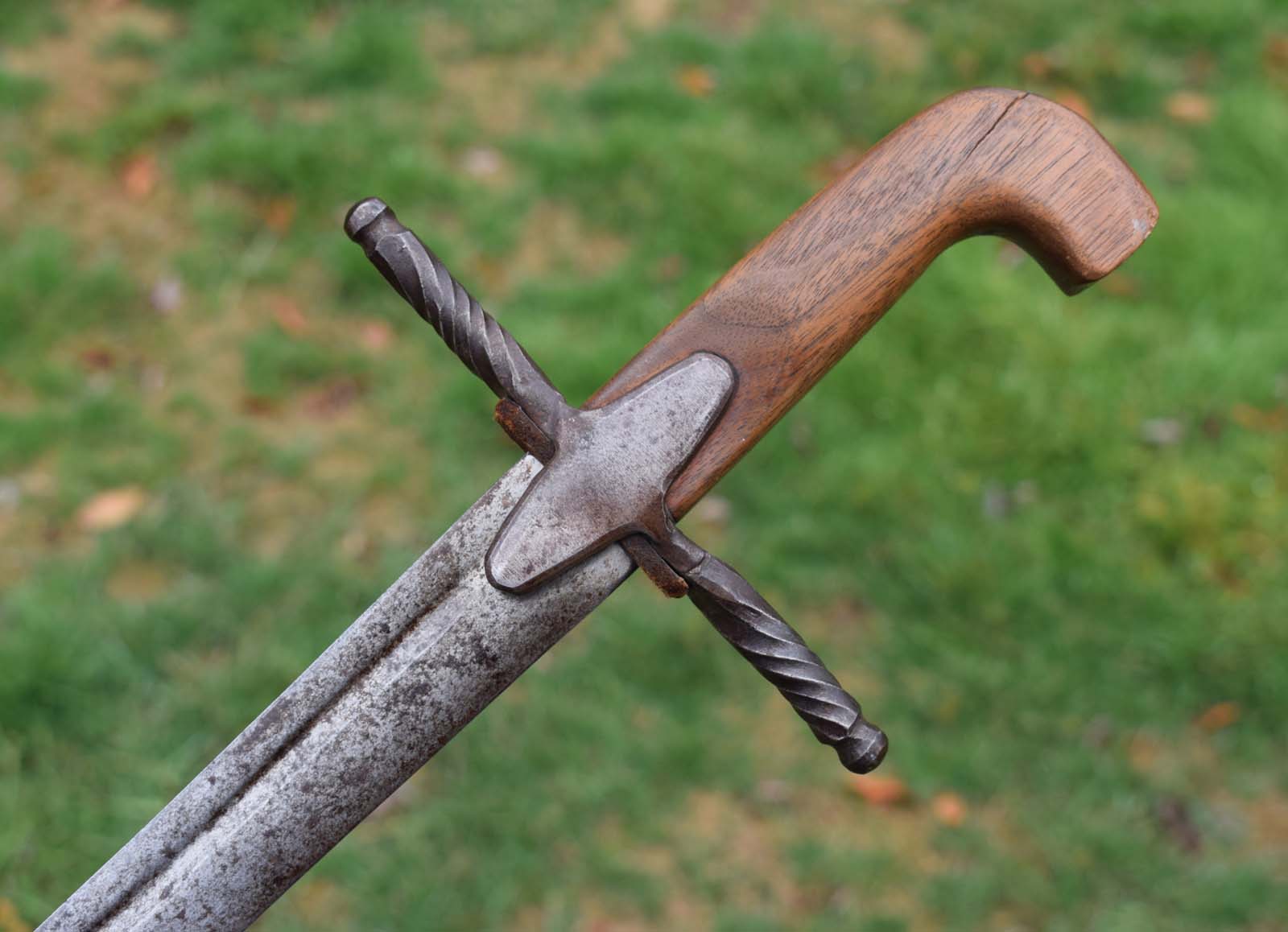
19th Century Turkish Or Hungarian Sword (shamshire)!. Here we have a wonderful Turk or Hungarian drastically curved saber! Blade is 31" long. Hilt has wonderful twisted iron guard and original wood "pistol" grip (some age cracks). A very impressive and very sturdy weapon! Selling at a bargain price! Price is firm. Thanks for looking! Be sure to check out our other listings for more great swords, arms and armor! Our direct email address is: fineartlimited@yahoo.com
  • Nation : French
  • Local Price : 1,800 kr
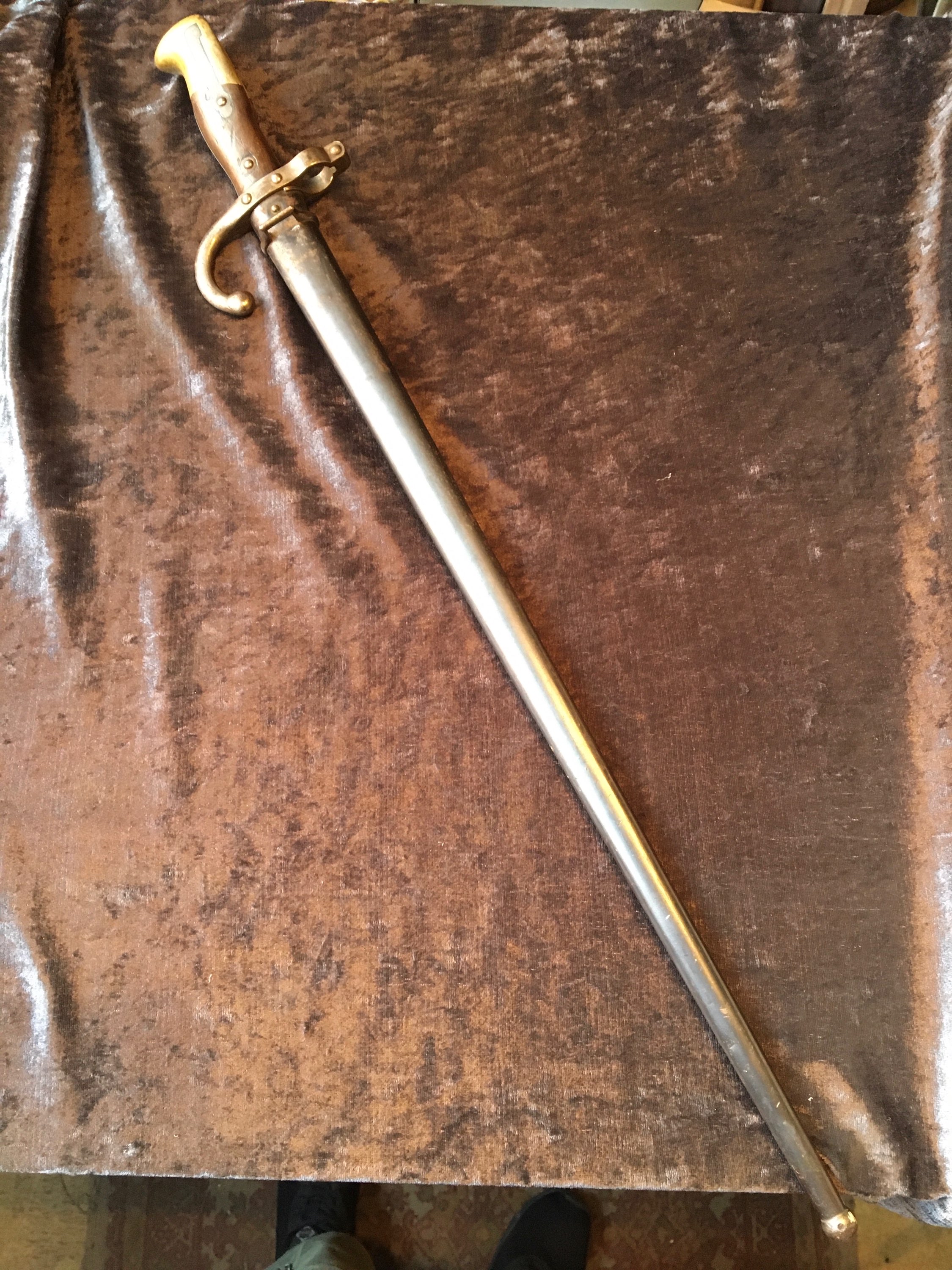
French Gras bayonet w/1874.
  • Nation : French
  • Local Price : 1,800 kr
French Gras bayonet w/1874.
  • Nation : British
  • Local Price : 1,800 kr
English bayonet w/1907 by Wilkinson.
  • Nation : -
  • Local Price : 1,800 kr
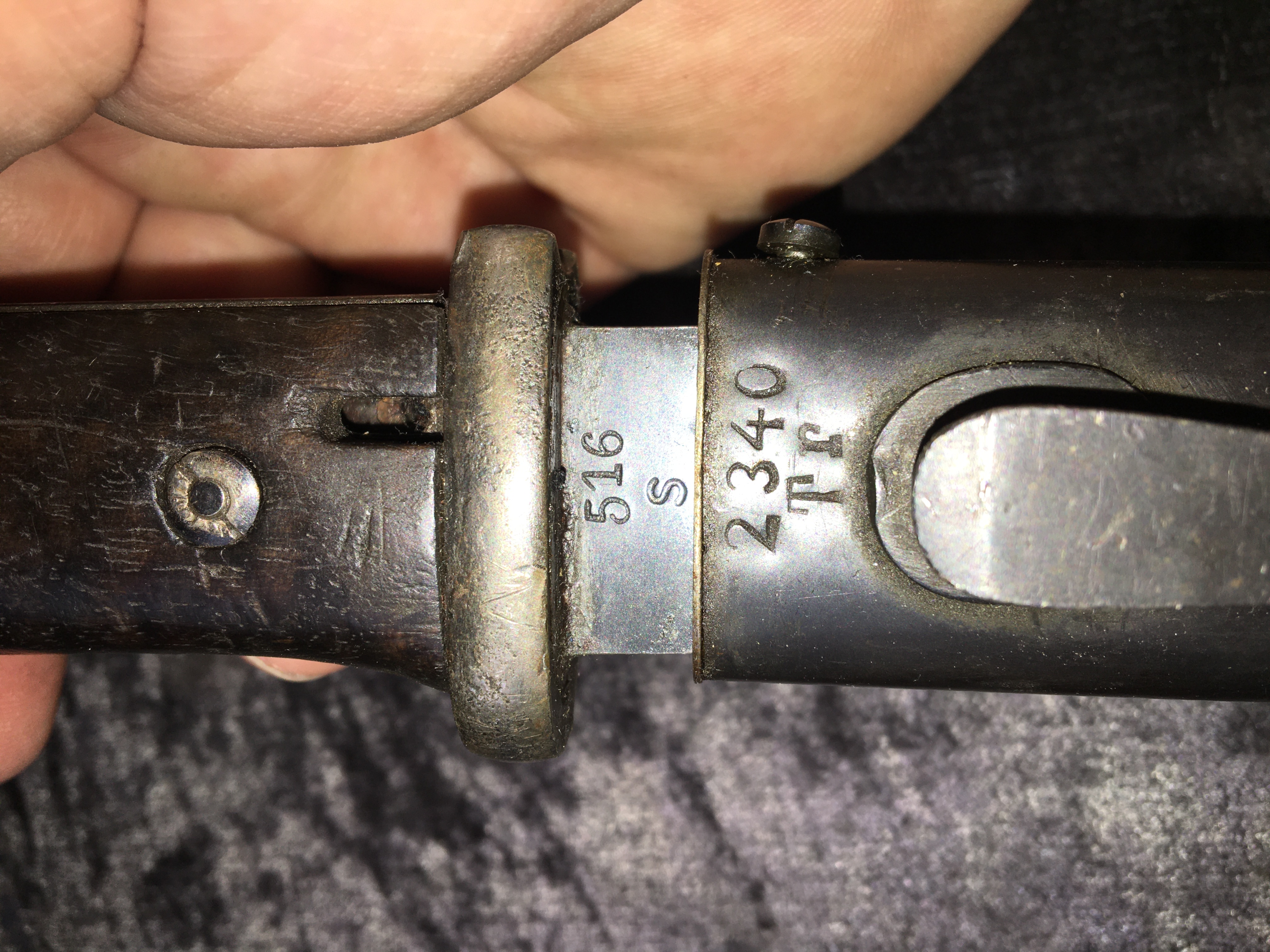
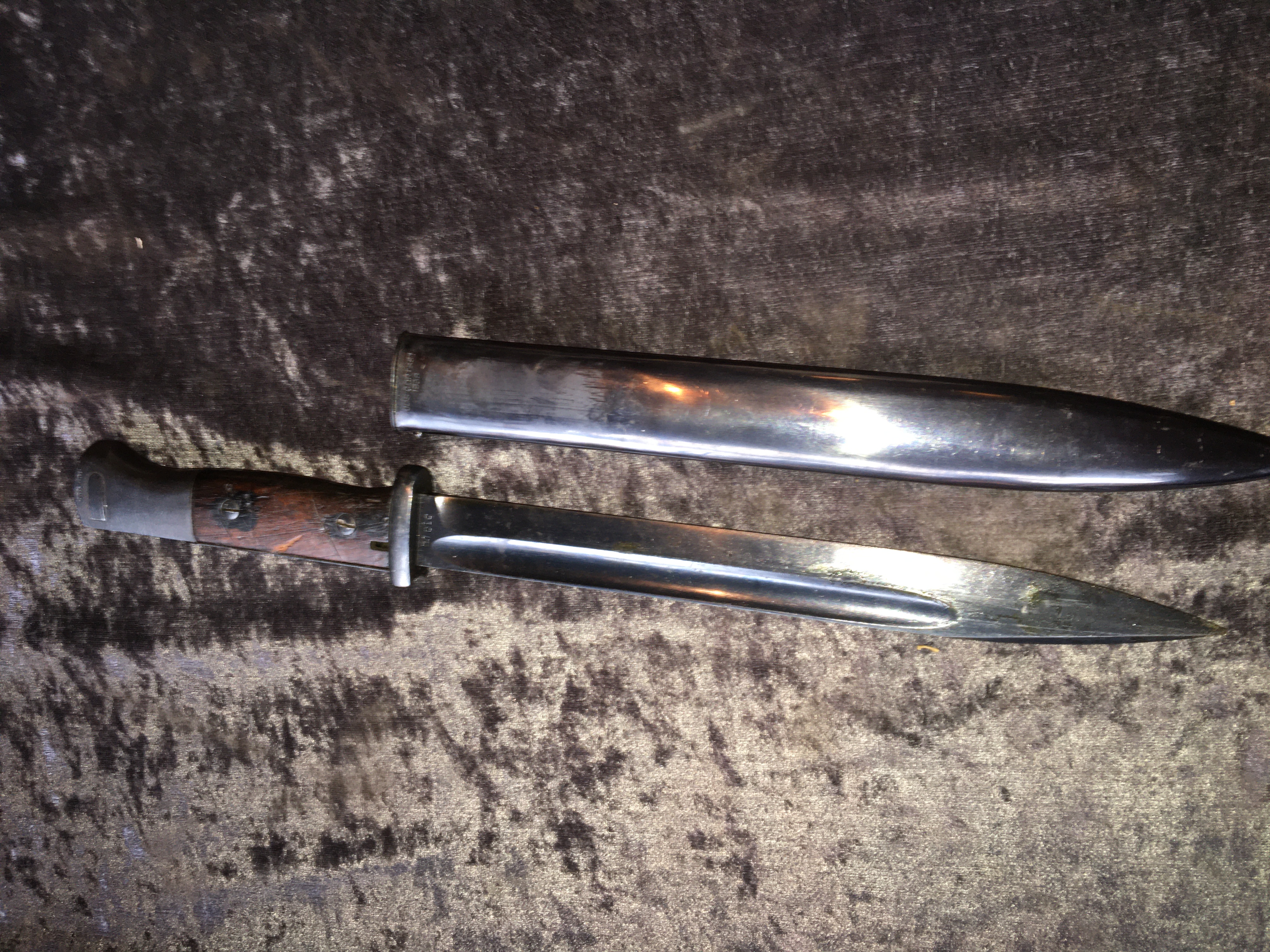
Tysk K-98 (84-98) bajonett.
  • Nation : -
  • Local Price : 1,800 kr
Tysk K-98 (84-98) bajonett WW2.
  • Nation : French
  • Local Price : 195.00 USD
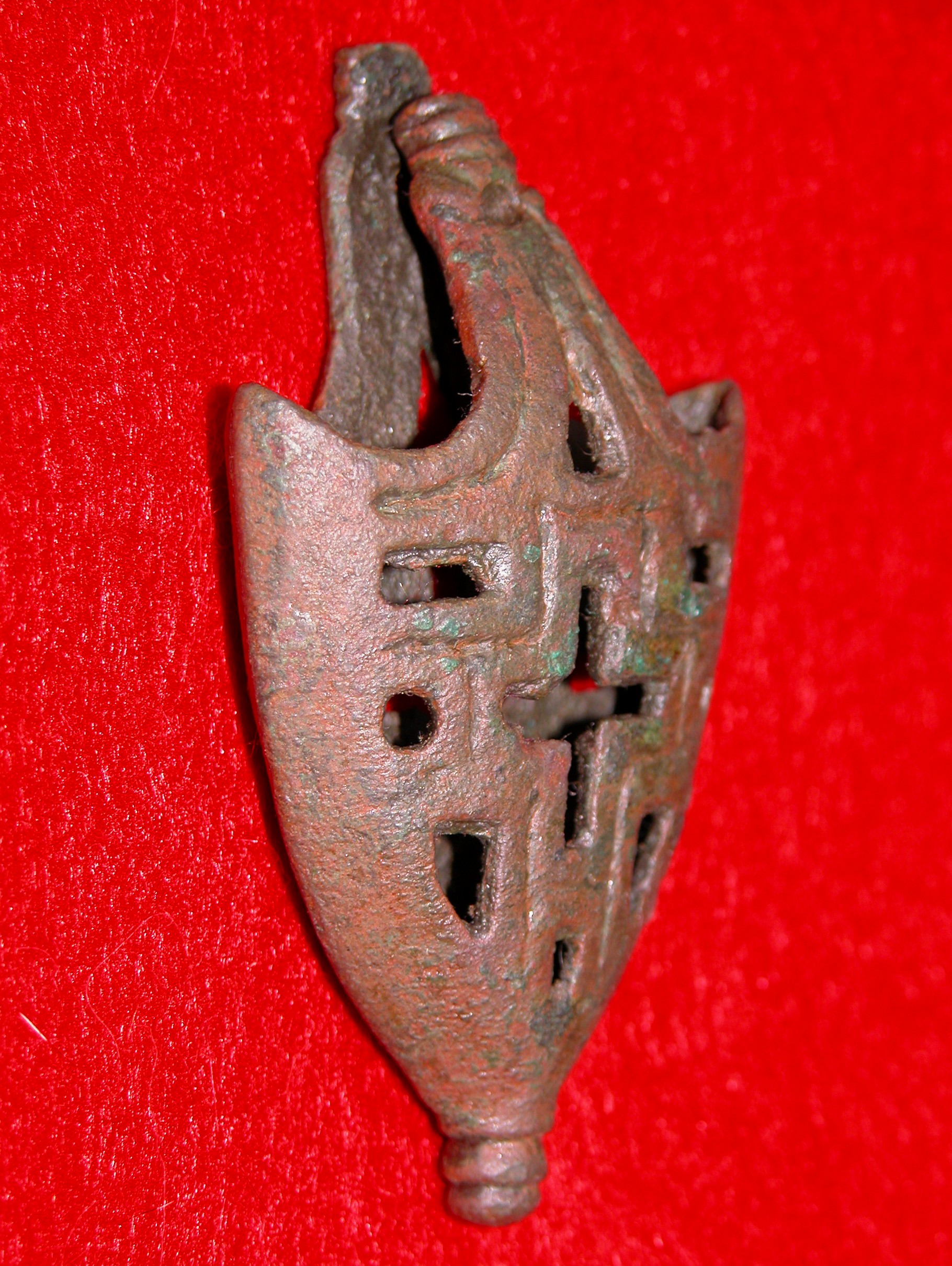
Crusader's Openwork Bronze Sword Scabbard Chape W/ Cross. #ac 123. Here is a very good decorated chape (drag) from a medieval sword circa 1200 AD. It was found in France with a metal detector in the late 20th century. It is in perfect condition with a slight bend from burial, see photo. It has a deep bronze/green patina overall. About 3†tall x 1 ½†wide. A nice example of early Christian art. The openwork is superb. Price is firm. Thanks for looking. Be sure to check out our other listings for more great swords, arms and armor! Our direct email address is: fineartlimited@yahoo.com
  • Nation : Swiss
  • Local Price : £140.00
Swiss M1918 Schmidt Rubin Bayonet by Elsener (Victorinox). Description Double-edged spear-pointed blade, wood slab grips secured by two steel rivets to the exposed tang, crossbar hilt with muzzle ring and lower lobe quillon, steel scabbard with frog hook and leather frog strap, leather frog with buckle. The ricasso of the blade is stamped on one side with &#acute;ELSENER SCHWYZ&#acute;. Karl Elsener was a Swiss knifemaker who opened his own factory in the village of Ibach in the Swiss canton of Schwyz in 1884 making knives and surgical instruments, including military contracts. He invented the Swiss Army Knife in 1891 and later renamed the company Victorinox, which still makes knives in Isbach to this day, run by his great-grandson. The old name indicates that this is a pre-1950 example. The hilt is stamped on one side with the serial number &#acute;55659&#acute;. Its lobe quillon is stamped on the blade side with a small Swiss cross and a circle. The rear side of the leather frog is stamped with several marks faint from rubbing, including a square cartouche (which would have contained a letter but this is too faint to make out), the maker&#acute;s mark &#acute;____BUHE REINACH / BASEL&#acute; - this would have been a saddlery/leatherwork firm contracted to produce the frog, based in the town of Reinach in the canton of Basel at the northern edge of Switzerland - and &#acute;44&#acute;, probably an item number. This bayonet fits the M1911 (K11) and M1931 (K31) rifles and the M41, M43, M41/44 and M43/44 submachine guns. Some tiny spots of patination to the blade, no edge damage, track marks from sheathing and drawing. Likewise some spots of light patination to the hilt, tang and pommel. The wood grips have a few very light dents. The blued finish of the scabbard has worn in places exposing bright steel, particularly where it rubs against the frog, that section not visible without disassembly.
  • Nation : -
  • Local Price : £135.00
Argentine Type A Knife Bayonet for the FN FAL with Tempex Frog, Falklands War. Description Spear-pointed knife blade with partial false edge. Blade 7¾ inches in length, the bayonet 12½ inches overall. Steel hilt with muzzle ring and integral flash-hider prongs, ribbed black plastic grip scales held by two screws, exposed tang, steel pommel. Steel scabbard with throat piece and oval frog stud, green nylon canvas frog with retaining strap, plastic belt grip and wire hanger. The bayonet is stamped on the pommel with the serial number &#acute;03697&#acute;. The scabbard body is stamped with the serial number &#acute;41897&#acute;, slightly obscured by paint. The FN FAL infantry rifle and its bayonet were adopted by Argentina in the late 1950s, initially purchased from FN in Belgium but later made domestically by Argentine manufacturers. Several types of bayonet and webbing attachments were used by the Argentinean Army and Marines during the Falklands conflict: the knife model with distinctive flash-hider &#acute;prongs&#acute; on its muzzle ring was the &#acute;Type A&#acute; bayonet, which fitted to the early FALs. Its blade was based upon the US M4. This was used side by side with the tubular &#acute;Type C&#acute; model, which was introduced when a 22mm muzzle device was added to the FAL in 1962. The scabbards are not interchangeable between Types, the blades being of different shapes. Belt frogs for these bayonets are made of either green leather or nylon fabric: the &#acute;Correaje Argentino de Cuero&#acute; (Argentine Leather Belting) load-bearing system was introduced around 1970, but incorporated some preexisting elements including leather frogs and pistol holsters, which were then painted green to match. The nylon &#acute;Correaje Tempex&#acute; (Tempex Belting) was introduced in the early 1980s to replace it which included a new frog. Both forms of load-bearing system were still in use by 1982 so both were carried in the Falklands. Either frog will fit either Type of bayonet. After Argentine forces surrendered to the British on June 14 1982 their small arms were piled up by the thousand in the Islands&#acute; capital Port Stanley, where most Argentine forces had been deployed or driven back to. A large quantity of arms had also been captured earlier at Goose Green, which was a key ammunition dump for the Argentine forces, and still more were gathered later from unengaged Argentine garrisons on the island of West Falkland. The FAL rifles became British government property and were either brought to the UK or dumped at sea, while bayonets and the short machete-like officer&#acute;s sidearms frequently became personal trophies or souvenirs for British soldiers as they would not be illegal to own in civilian life. This example is most likely one such &#acute;bring-back&#acute;. The blade is very sharp with visible grinding marks, some undulation to its true edge which suggests that nicks or chips have been partly sharpened out. The tip has rounded, the sharpening runs right up to it but with no attempt to repoint. Some frosting and small spots of light patination. The hilt and scabbard retain most of their original black paint, especially where the scabbard was protected by its frog, some chipping to the paint on edges and raised areas like the frog stud exposing steel with some rust spots. The pommel and tang have a heavy grey patina. The plastic grips have only light handling wear and one small (7mm) scrape on one side. The frog has some heavy patination to its steel and brass, very minor fray to the nylon at the top corners but no loss of integrity, its buttons work and frog hook moves freely.
  • Nation : -
  • Local Price : £135.00
Argentine Type C Socket Bayonet for the FN FAL with Tempex Frog, Falklands War. Description Tubular steel one-piece bayonet with flash ports and spear-pointed blade with semicircular profile. Blade length 6½ inches (16.5cm), 11 3/8 inches (28.9cm) overall. Black plastic scabbard with eyelet chape, circular frog stud and steel throat piece, green nylon frog with retaining strap, plastic belt grip and wire hanger. The bayonet is faintly stamped on the blade with the serial number &#acute;01-76943&#acute;. The scabbard is unmarked. The FN FAL infantry rifle and its bayonet were adopted by Argentina in the late 1950s, initially purchased from FN in Belgium but later made domestically by Argentine manufacturers. Several types of bayonet and webbing attachments were used by the Argentinean Army and Marines during the Falklands conflict: the tubular model was the &#acute;Type C&#acute;, compatible with later models of the FAL (post 1962) which had a 22mm muzzle device. This was used side by side with the &#acute;Type A&#acute; knife bayonet, which fitted to the early FALs. The scabbards are not interchangeable between Types, the blades being of different shapes. Belt frogs for these bayonets are made of either green leather or nylon fabric: the &#acute;Correaje Argentino de Cuero&#acute; (Argentine Leather Belting) load-bearing system was introduced around 1970, but incorporated some preexisting elements including leather frogs and pistol holsters, which were then painted green to match. The nylon &#acute;Correaje Tempex&#acute; (Tempex Belting) was introduced in the early 1980s to replace it which included a new frog. Both forms of load-bearing system were still in use by 1982 so both were carried in the Falklands. Either frog will fit either Type of bayonet. After Argentine forces surrendered to the British on June 14 1982 their small arms were piled up by the thousand in the Islands&#acute; capital Port Stanley, where most Argentine forces had been deployed or driven back to. A large quantity of arms had also been captured earlier at Goose Green, which was a key ammunition dump for the Argentine forces, and still more were gathered later from unengaged Argentine garrisons on the island of West Falkland. The FAL rifles became British government property and were either brought to the UK or dumped at sea, while bayonets and the short machete-like officer&#acute;s sidearms frequently became personal trophies or souvenirs for British soldiers as they would not be illegal to own in civilian life. This example is most likely one such &#acute;bring-back&#acute;. The bayonet retains some of its original blued finish, with some wear and rust spotting to the socket. The blade is free of rust, protected by its scabbard, with some wear to the tip. The locking catch of the bayonet and the frog stud & throat piece of the scabbard have some wear to their black lacquer. Minor rubbing and scratching to the plastic scabbard body and belt grip. Light rust to some of the scabbard rivets and wire hanger.
  • Nation : -
  • Local Price : 1,700 kr
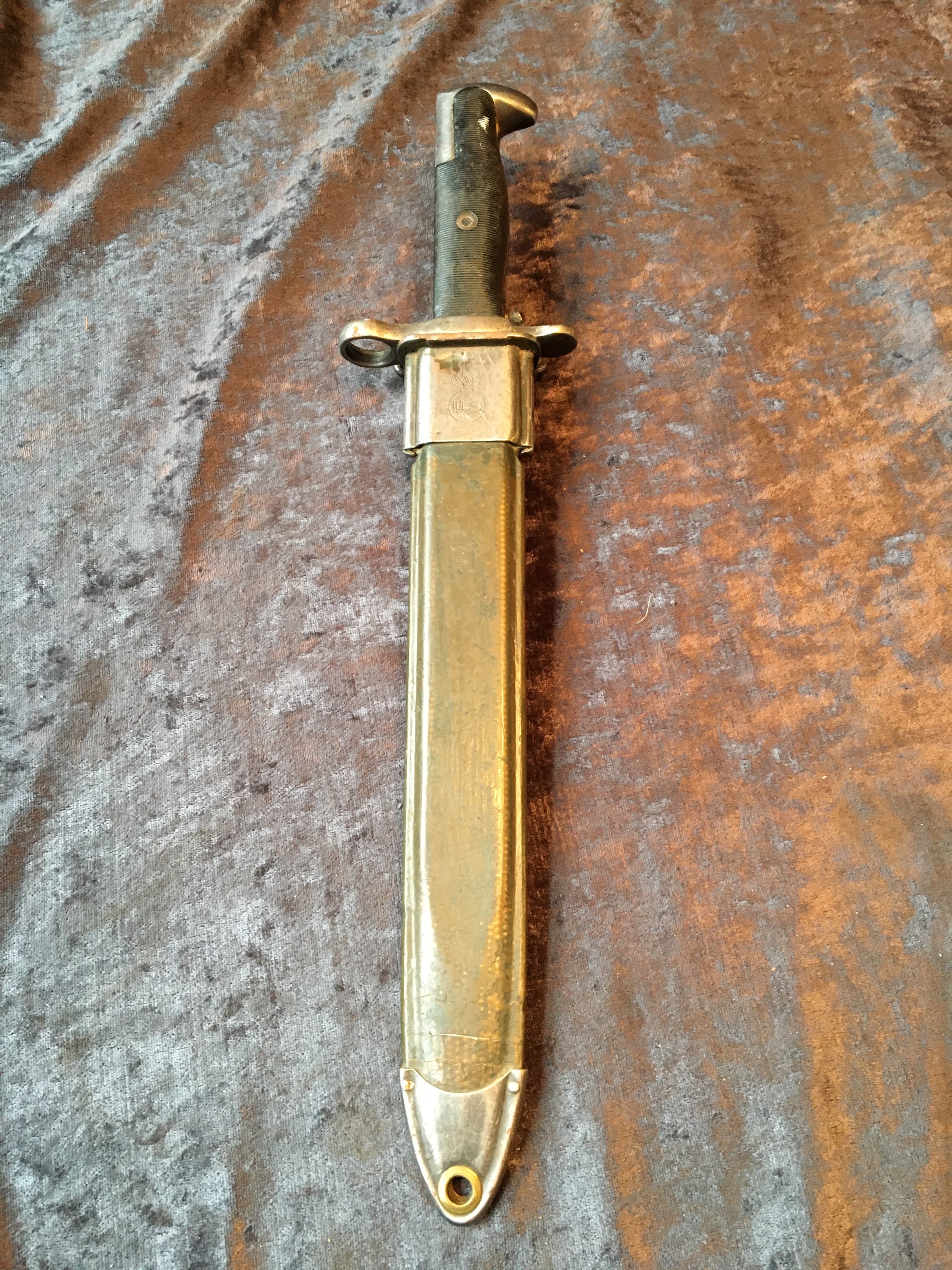
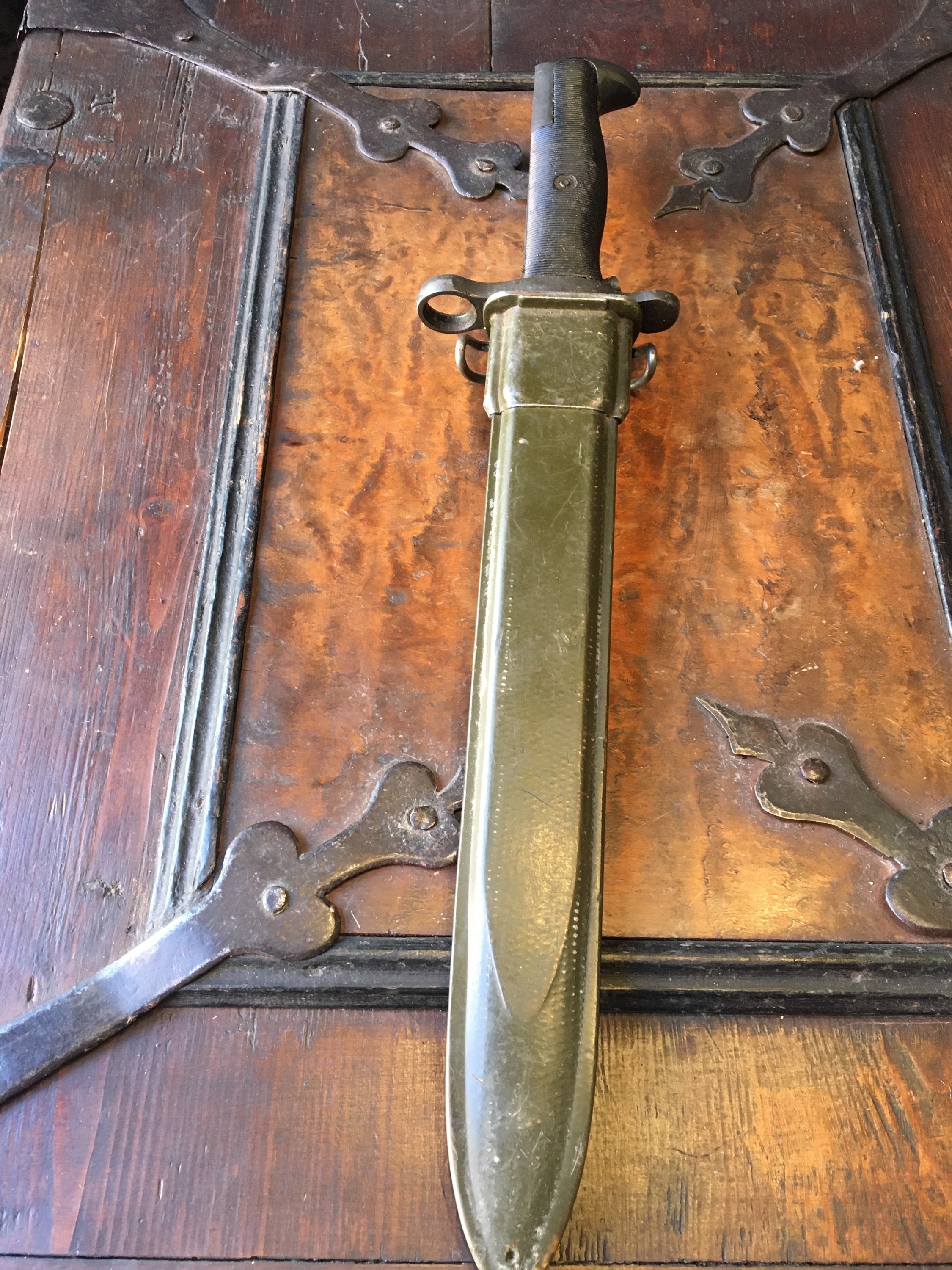
US garand Bayonet WW2.
  • Nation : Indian
  • Local Price : 1,700 kr
Bayonet east india company 1840.
  • Nation : British
  • Local Price : 1,700 kr
English Brownbess/Tower bayonet 18th century.
  • Nation : American
  • Local Price : 1,700 kr
American Garand Bayonet WW2.
  • Nation : -
  • Local Price : 1,700 kr
US Garand bayonet WW2.
  • Nation : Russian
  • Local Price : 1,700 kr
Russian Mosin-Nagant bayonet in Austrian holster WW1.
  • Nation : -
  • Local Price : 1,660 kr
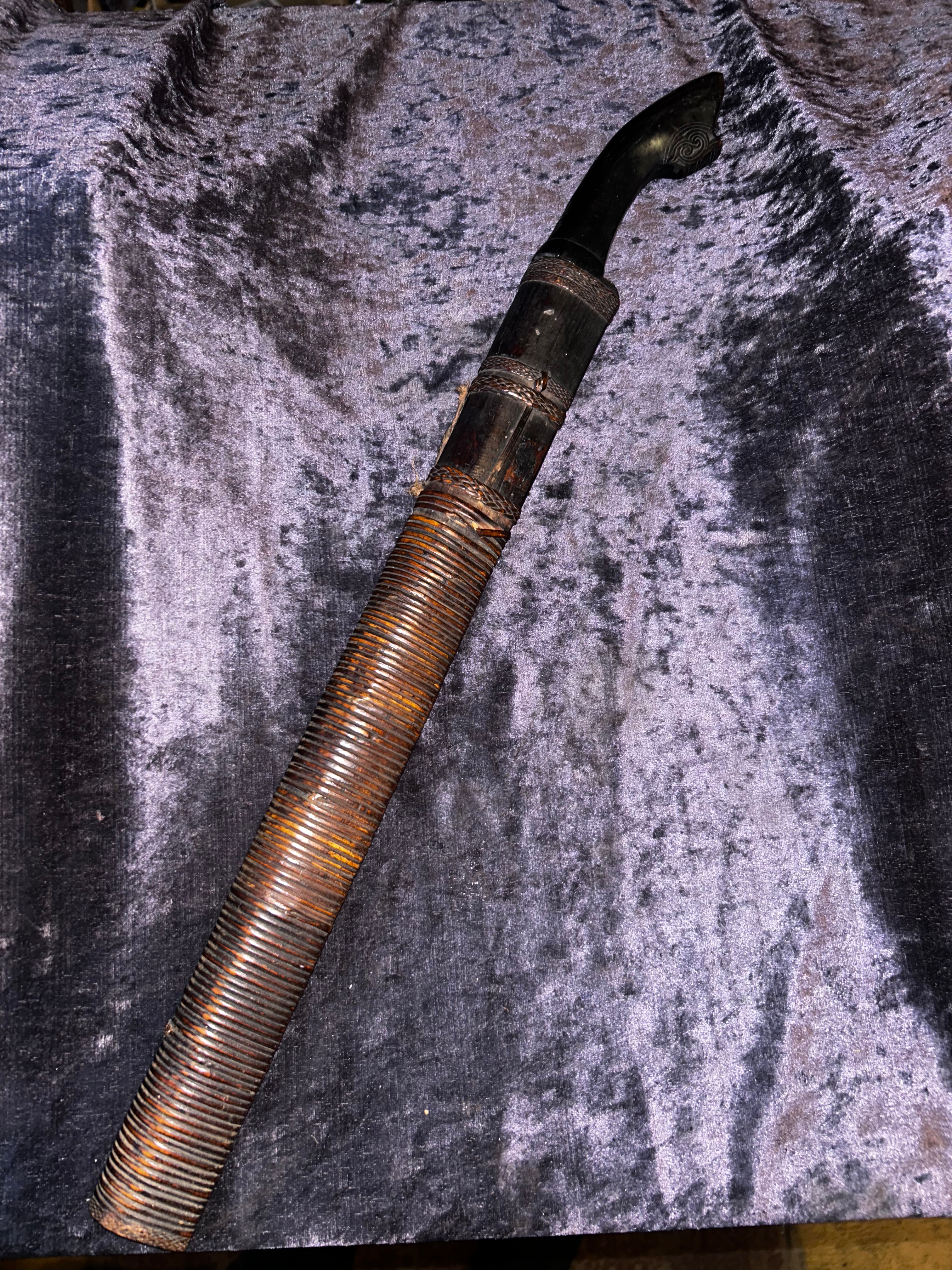
Parang Filippinsk.
  • Nation : Portuguese
  • Local Price : £130.00
Portuguese M1886 Kropatschek Bayonet by Steyr. Description Single-fullered &#acute;yataghan&#acute; downward-curving blade with spear point, steel cross hilt with straight lower quillon & circular finial, and upper quillon projecting from the muzzle ring. Brown wood slab grips riveted to the exposed tang, steel pommel with locking button, plain steel scabbard with frog hook. Blade 18½ inches in length, the bayonet 23½ inches overall. No maker&#acute;s mark to the spine of the blade “ it may have been removed by polishing. The ricasso of the blade is stamped on one side with a clover-shaped Portuguese inspection mark. The hilt is stamped faintly on one side with &#acute;another clover inspection mark and on the other side with &#acute;J668&#acute;. The exposed tang is stamped with &#acute;7&#acute;. The throat of the scabbard is stamped with &#acute;NN63F&#acute;. The frog stud of the scabbard is faintly marked &#acute;WG&#acute;, a Steyr factory mark. The M1886 Kropatschek rifle proved to be reliable and had a long service life - while it was replaced by the 1904 Mauser in the Portuguese army it was used by colonial units in WW1, issued to the Portuguese Legion during the Spanish Civil War, and was still in use by colonial police as late as the 1960s. Its bayonet was one of the last to make use of the &#acute;yataghan&#acute; downward-curving blade.
  • Nation : African
  • Local Price : £130.00
South African Lee Enfield No. 9 Bayonet, With Uzi Blade. Description These bayonets were manufactured in South Africa by ARMSCOR or one of its contractors during the 1960s, using spare blades originally made by FN Herstal for the Uzi submachine gun: unfullered with a spear point and diamond profile. They were issued with the Lee Enfield No. 4 rifle to local defense groups collectively called the Commando System. These military reservists/militia were formally part of the Army but typically deployed as part of police actions, acting to secure more remote areas or where the police needed reinforcement. This example is complete with its South African pattern brown leather frog with buckled retaining strap and brass rivets. The bayonet retains its original blued finish with no edge damage, the scabbard is free of dents with only tiny spots of wear to its black lacquer.
Page 34 of 40

The following items match your search but are currently listed on Ebay. We take no responsibility for any aspect of the listings or their accuracy.


Sorry, there is not any matching items.