
(You must register and have a linked account first)
View Privacy Policy


OR

Show


Forgot your password?

Error message here!

Error message here!

Error message here!

Error message here!

Show Error message here!

Show Error message here!


Lost your password? Please enter your email address. You will receive a link to create a new password.

Error message here!

Back to log-in

Close

For Sale

The following items are listed by for sale by users of the site and dealers. They are in no way endorsed or guaranteed by www.oldswords.com

Add a Classified Item
to

Clicking on the sword will take you through to the relevant classified item or dealer site.
Don't miss out! - Do you want to be kept informed weekly of new aditions? Just join our weekly update list.

You can also receive regular email notifcations when items match your keywords. To recieve them just register or logon at the top right of this page.

Page 14 of 40
  • Nation : British
  • Local Price : £1,150.00
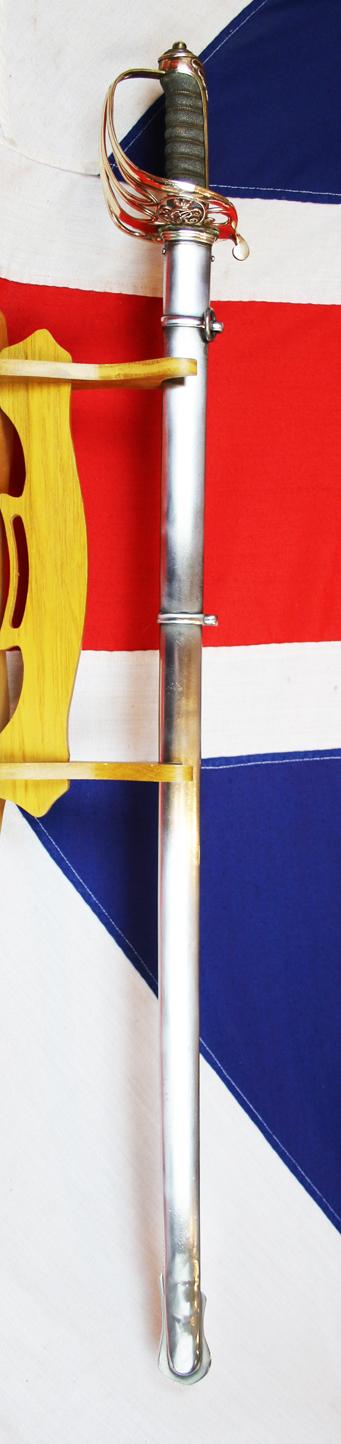
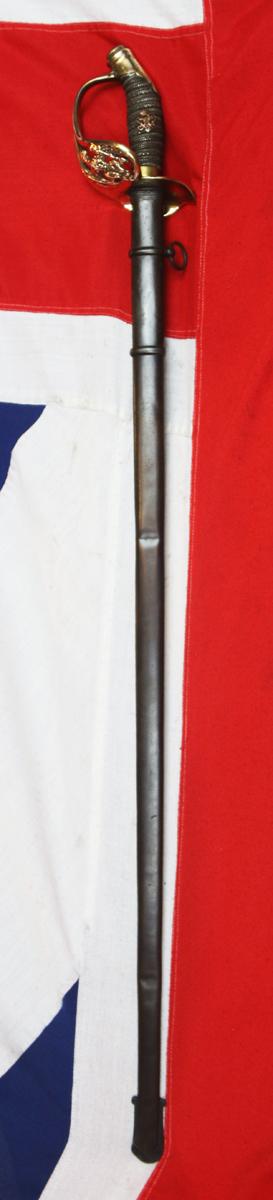
British 6th Gurkha Rifles Officers Sword ER 2 by Wilkinson. British 6th Gurkha Rifles Officers Sword ER 2 by Wilkinson in super condition. Regulation hilt with slung bugle and crown, fish skin grip and black sword knot. The 32.5 inch blade is well etched with the 6th Gurkha’s badge, crown ER 11 and floral decoration, the spine stamped 83583 plus marker details Wilkinson Sword London. Complete with parade scabbard also in excellent condition.
  • Nation : Russian
  • Local Price : £1150
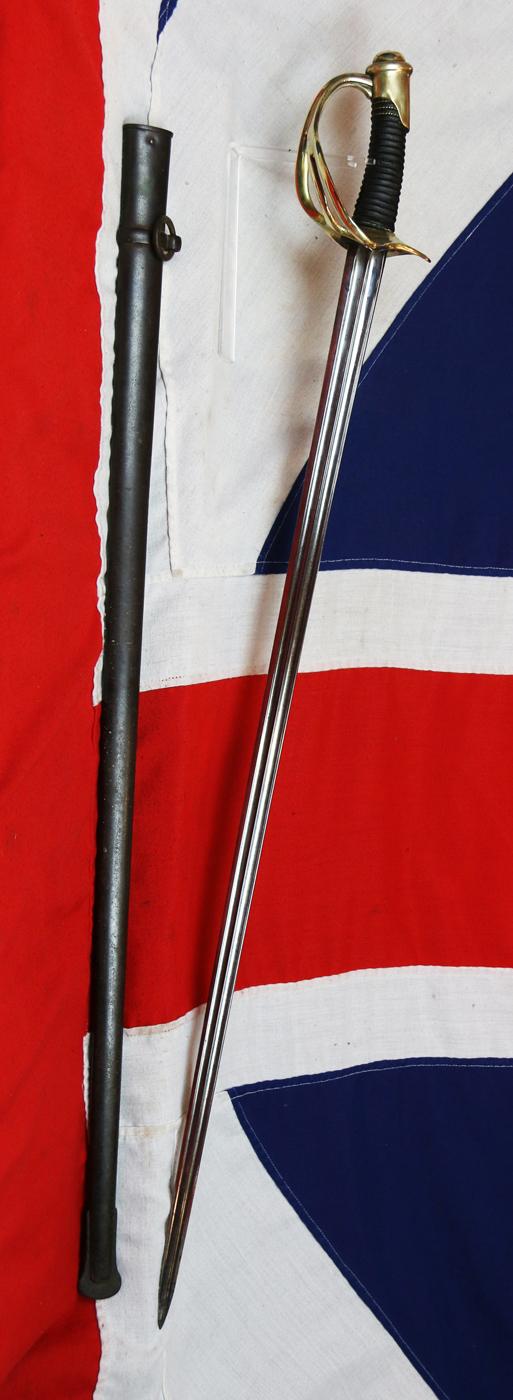
Click and use the code >25910 to search for this item on the dealer website Incredibly Impressive, French IInd Empire, Napoleonic Sword Of the Elite Carabiniers-à-Cheval 1854. Serving Napoleon IIIrd in the Second Empire From The Crimean War and In The Franco Prussian War As Part of Napoleon´s Imperial Guard
  • Nation : British
  • Local Price : £1,150.00
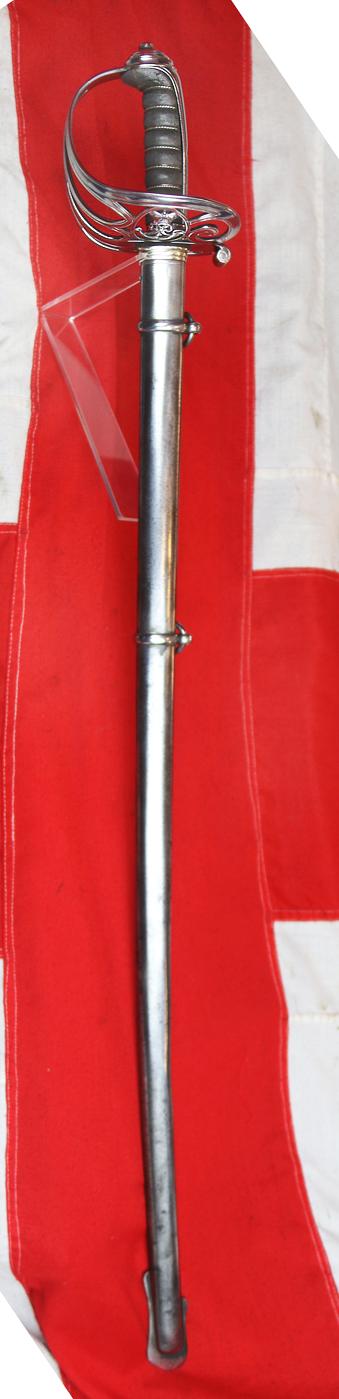
Indian pattern 1912 Officer&#acute;s Sword by Wilkinson. Rare Indian pattern 1912 Officer&#acute;s Sword by Wilkinson Sword regulation hilt but with monogram GRI and crown inside a shield. Straight tapering blade etched with with GRI Royal Coat of Arms and crown to both sides complete with field service scabbard Information: Reference: Swords of the British Army Plates 84 and 85 No Illustration of GRI Monogram Blade Length: 35 Inch Overall Length: 42.25 Inch
  • Nation : British
  • Local Price : £1,150.00
Victorian British Officers Sword – Sir Aylmer Hunter-Weston. Victorian British Officers Sword belonging to Sir Aylmer Hunter-Weston KCB DSO. The sword is regulation with steel hilt with slung bugle; fish skin grip bound with twisted wire back strap and stepped pommel. The blade slightly curved engraved with Victorian crown and slung bugle the reverse with floral decoration and family crest plus initials AHW. Makers details Pulford and Co London plus proof plug. Complete with steel scabbard which shows age wear to the painted finish plus two small dents towards the drag. Lieutenant-General Sir Aylmer Gould Hunter-Weston, KCB, DSO 23 September 1864 “ 18 March 1940 was a British Army officer who served in the First World War on the Western Front, at Gallipoli in 1915, and in the very early stages of the Somme Offensive in 1916 he was also a Scottish Unionist MP.
  • Nation : Japanese
  • Local Price : £1,145.00
**GENDAITO HAND FORGED BLADE**WW2 Era Japanese Army Officer’s Shin Gunto Sword, Scabbard & Expert Assessment. Sn 19571 -. This sword has been assessed by a UK based Japanese sword expert Bill Tagg. His assessment accompanies this piece. In exerts from the assessment he states “Army Officer’s shin gunto pattern. The blade is a lower grade gendaito with a fuzzy oil quenched hamonwhich is nioi crystals based with small notare undulating pattern unsigned tang. A couple of long folding flaws in skin steel, lots of old finger rust to polish obscures any visible grain. Saya ins honoki wood with light coating of black lacquer. No kurikata has slide on metal ashi suspension loop & 1 loop of leather cover around the throat, rest of cover missing. Tsuba good quality & condition lots of gilt finish remaining original seppa. Tsuka is in good original condition all mounts present with gilt finish to fuchi & kabuto gane. Binding intact, fish skin is the flatter type. An un-touched & un-altered example of probably a seki arsenal production”. In his drawings of the blade he describes measurements and other blade characteristics (illustrated in image 2). The price includes UK delivery. Sn 19571
  • Nation : British
  • Local Price : £1125
Click and use the code >24302 to search for this item on the dealer website Most Fine Presentation 2nd Manchester, 33rd Lancashire Rifle Volunteers Antique Victorian Sword of 1869
  • Nation : British
  • Local Price : £1125
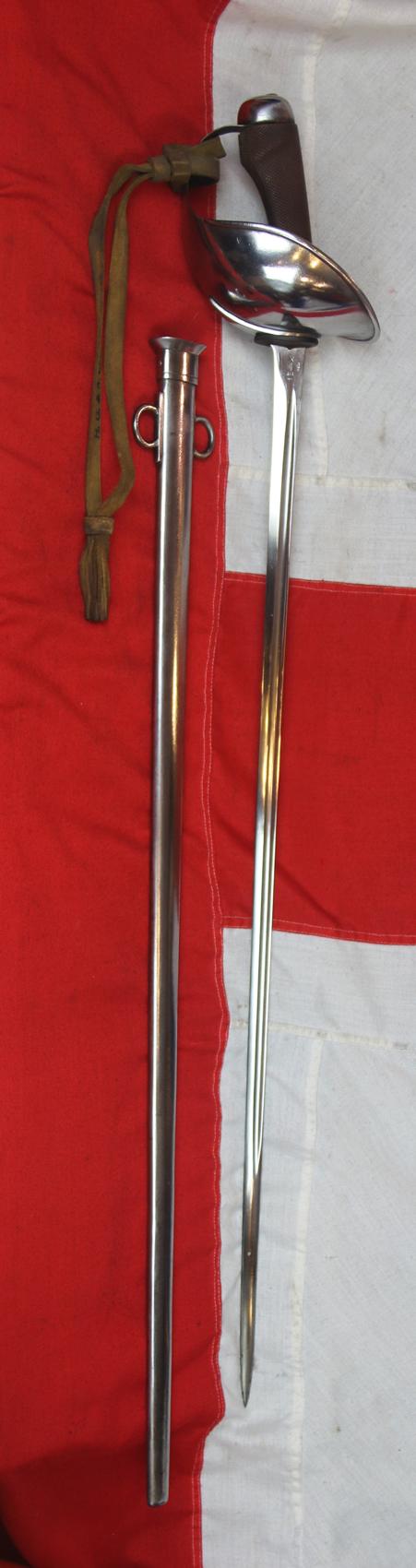
Click and use the code >25527 to search for this item on the dealer website Superb, 1908 Pattern, Historical, British Cavalry Trooper´s Sword by Mole & Wilkinson Sword Co. Issue of 1909. British Front Line Cavalry Issue, & 1918 Australian Light Horse Issue, Original 1918 Australian Light Horse Service Issue Buff Hide Sword
  • Nation : ?
  • Local Price : 1,150.00
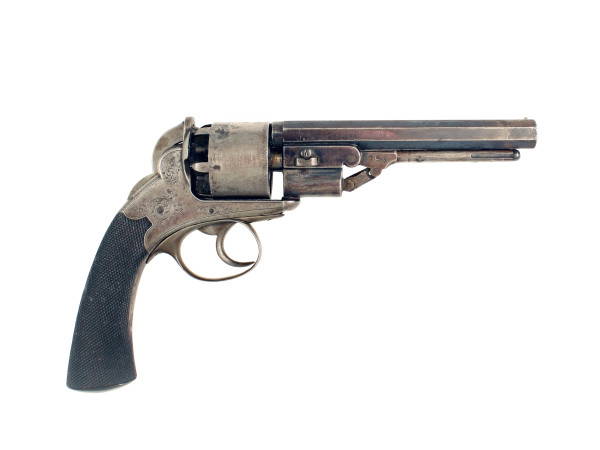
. A Clean Open Frame Revolver by Richards & Co. London. With octagonal sighted barrel, decorated with a band of foliage at the muzzle, signed in full along the top flat, ‘RICHARDS & Co BISHOPGATE WITHAM, LONDON' plain cylinder decorated with a band of foliage at the front, each chamber stamped with a London proof mark, border engraved frame, decorated with scrolling foliage, finely chequered walnut grip with ovoid pommel cap and concealed trap. The barrel retaining most of its original colour. In good clean working order, a nice example. Richards & Co. Dimensions: Bore: Barrel Length: Overall Length:
  • Nation : ?
  • Local Price : 1,150.00
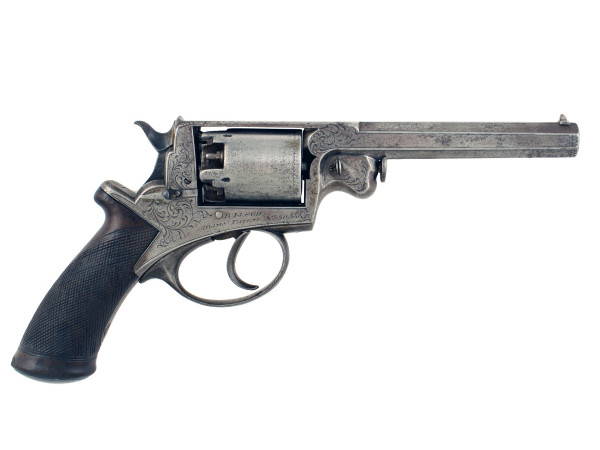
. A 54 Bore Five Shot Adams Revolver, Circa 1860. With border engraved octagonal sighted barrel, top-strap signed in full, serial numbered cylinder (rubbed) border engraved frame engraved ‘Adams Patent No. 50555R' on the right side, foliate engraved trigger guard and ovoid butt-cap, sliding safety stop, (missing side mounted rammer) figured rounded butt, London proofs. Dimensions: Bore: 54 Bore Barrel Length: 5.75 inches (14.60 cm) Overall Length: 12 Inches (30.48 cm)
  • Nation : ?
  • Local Price : 1,150.00
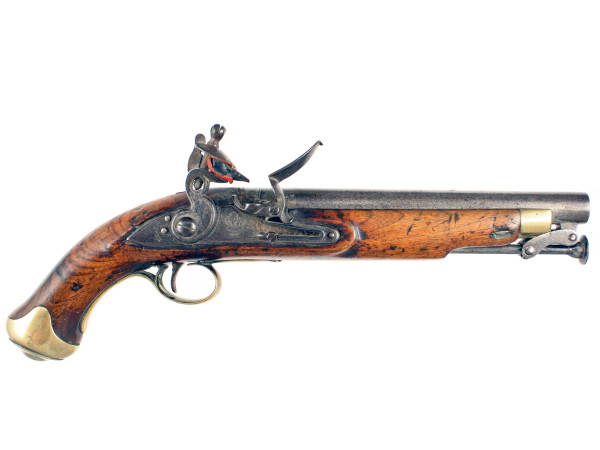
. A Sleepy Flintlock New Land Pattern Pistol. A Flintlock New Land Pattern. Of regulation specification, with round barrel stamped with Tower proof and viewing marks, flat lock stamped with crowned GR and TOWER across the tail, walnut full-stock impressed with Ordnance marks, plain brass mounts comprising of side-plate, butt cap and captive ramrod. Dimensions: Bore: 16 Bore Barrel Length: 9 Inches (22.86 cm) Overall Length: 15.5 Inches (39.37 cm)
  • Nation : ?
  • Local Price : 1,150.00
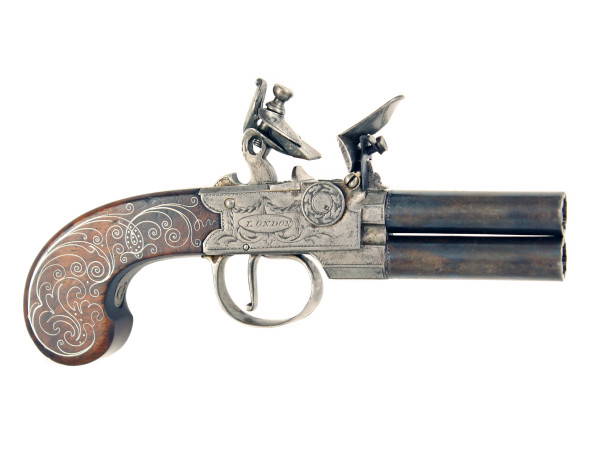
. A Silver Inlaid Tap-Action Pistol. With round turn-off barrels, engraved with bands at the breech ends, border engraved box-lock action, stamped with London proofs, engraved ‘J.PROBIN' within an oval decorated with stands of arms to the left and ‘LONDON' within an oval surrounded by stands of arms on the right, flat sided walnut butt, inlaid with scrolling wire, oval escutcheon engraved with the original owners initials, steel trigger guard decorated with a flower head on the bow. PROBIN Dimensions: Bore: 80 Bore Barrel Length: 2.25 Inches (5.75 cm) Overall Length: 7.5 inches (19 cm)
  • Nation : British
  • Local Price : £1,050.00
Scottish. Victorian Royal Scots Fusiliers Broadsword. Pillin. #2506003. This Victorian, Royal Scots Fusiliers officer’s broadsword was made by Pillin, a renowned 19th Century English sword maker. The Royal Scots were the oldest and most senior line infantry regiment of the British army. The regiment was raised in 1633 during the reign of Charles I of Scotland and served continuously until 2006 when it was amalgamated with the other Scottish regiments to form the Royal Regiment of Scotland.The 830mm double-edged (broadsword) blade has twin, three-quarter length fullers and terminates in a spear point. The blade is etched with foliate scrollwork and arches above and below the flaming grenade of the fusiliers with the regimental title, “1st V. B. Royal Scots Fusiliers” encircling the grenade. The grenade bears a thistle motif. A larger thistle is etched below the regimental emblem. The obverse of the blade is similarly etched with foliate scrollwork and ogee and trefoil arches and bears the royal cypher of Queen Victoria.The ricasso is etched with the retailer’s details, “J. Neilson & Son. Bank Place, Kilmarnock.” The obverse ricasso bears the Pillin maker’s brass proof stud.The blade is in good condition with some small edge nicks.The 1828 pattern basket guard is in good condition and retains its red liner and tassel, albeit with some wear and discolouration.The sword is complete with its plated steel scabbard with twin suspension rings and ball finial to the bottom. The scabbard is in good condition with speckled tarnish, pin-prick bubbling and small losses to the plating. The sword sheathes and draws smoothly and is held firmly within the scabbard.This is a good example of a Victorian, Royal Scots Fusiliers officer’s broadsword by a top maker.
  • Nation : British
  • Local Price : £1,050.00
British WW1 1907 Pattern Bayonet with Early Hooked Quillon, 2nd Battalion Loyal Lancashire Regiment, East African Campaign. Description Straight single-fullered knife blade, steel hilt with muzzle ring and distinctive forward-curving lower quillon, wood slab grips secured by two screws, steel beaked pommel with locking button. Brown leather No. 1 Mk 2 scabbard with steel locket & teardrop frog stud and steel chape piece. Brown leather 1914 Pattern frog with buckled retaining strap and rear strap to attach a helve carrier. This bayonet is still in its original configuration with hooked lower quillon and no oil hole: the quillon was ordered to be removed from new production bayonets in October 1913 and existing examples were often removed by grinding during repair. The ricasso is stamped on one side with a crown over 1907 (the pattern), 11 &#acute;10, indicating the manufacture date to be November 1910 and the maker&#acute;s mark &#acute;EFD&#acute; for the Royal Small Arms Factory at Enfield. It is stamped on the other side with a &#acute;broad arrow&#acute; War Department stores mark, two crown inspection marks with &#acute;E&#acute; for Enfield, a small stamp made up of another broad arrow over &#acute;EFD&#acute; over &#acute;51&#acute;, and an &#acute;X&#acute; indicating that the blade passed a manufacturer&#acute;s bending test “ this appears to have been double-stamped. The pommel is stamped with &#acute;2.N.L.&#acute;, indicating the 2nd Battalion, The Loyal North Lancashire Regiment, and the weapon number &#acute;479&#acute;. The scabbard is identically stamped at the throat with &#acute;479&#acute;, confirming that they are an original pair, and next to the staple on the throat and chape pieces with a faint mark that looks like &#acute;AM&#acute; over &#acute;OA.12&#acute; “ this probably refers to a manufacturer. The leather body of the scabbard is stamped next to the seam with the date &#acute;13&#acute; as well as &#acute;1113&#acute;, &#acute;I^M&#acute;, (where the ^ is a broad arrow), which I think is an Indian stores mark, and the letter &#acute;A&#acute;. The rear of the frog is faintly, informally marked by poking dots and scratching lines, with what looks like &#acute;18278&#acute; and &#acute;F.T.&#acute;, which might be a previous owner&#acute;s initials and soldier number. The frog is of the British 1914 Pattern (part of the Infantry Equipment, Pattern 1914 set of leather webbing). It retains the strap on its reverse side which could be used to attach the helve carrier for an entrenching tool. The 2nd Battalion of the Loyal North Lancashire Regiment was one of only two British battalions deployed to East Africa during the First World War, and the only battalion of British regulars (the other being the newly formed 25th Battalion, Royal Fusiliers). At the outbreak of the war it was deployed to Bangalore, India, joining the 27th (Bangalore) Brigade of the British Indian Army. The Bangalore Brigade was tasked with invading German East Africa via the port of Tanga (in modern-day Tanzania), arriving in November 1914. Despite a substantial numerical advantage this attack, now known as the Battle of Tanga, failed with disproportionate casualties for the invasion force and substantial losses of equipment. The 2nd Battalion had made better progress than most of the British-Indian force but had to withdraw back to their transport ships, which took them to Mombasa. The German East African forces fought a highly mobile guerilla campaign ranging across what is now Uganda, Kenya, Tanzania, Zambia, Malawi, the Congo, Rwanda, Burundi and Mozambique, under the capable command of Paul von Lettow-Vorbeck. While their strength rose to a peak of 11,000 men at the end of 1915 they remained far outnumbered by British Empire forces, who also had support from Belgian and Portuguese allies. Both sides suffered greatly from supply shortages and disease, and the 2nd Battalion was no exception “ it had to be withdrawn from the fight in May 1916 due to ill health among its troops. Early German successes such as Tanga did not translate to long-term advantage, and from 1916 on they were forced out of German East Africa and ground down by the diverse British Empire force, by then under the command of equally capable guerilla fighter Jan Smuts. Their last 1,500 men surrendered in accordance with the Armistice in November 1918. After recuperating in South Africa the 2nd Battalion was transferred to Egypt in January 1917. It seems to have remained in poor condition and was posted to guard lines of communication. In May 1918 it arrived in France and was attached to the 34th Division, with which it took part in various battles of the Hundred Days Offensive in the closing stages of the war. The Loyal North Lancashire Regiment became the Loyal Regiment (North Lancashire) from 1921. It was amalgamated with the Lancashire Regiment in 1970 to form the Queen’s Lancashire Regiment, which merged with two others in 2006 to form the present-day Duke of Lancaster’s Regiment. There is good reason to think that this bayonet was carried by the 2nd Battalion during their time campaigning in East Africa. We know that before the war the 2nd Battalion was posted to India and had been there since 1910, the year of this bayonet&#acute;s manufacture “ before that date it had been in Mauritius so it was certainly away from home when the new bayonet was delivered to them. The scabbard is dated 1913, is probably of Indian manufacture but is identically numbered to the bayonet, suggesting they were brought together in the regimental armoury in 1913 while it was stationed there. This gives the overall picture of pre-war equipment that would have been part of the 2nd Battalion&#acute;s stores in India as of 1914, meaning it is very likely to have been taken with them and carried into the Battle of Tanga and subsequent engagements. The blade is mostly bright, one area of spotted pitting and patination to the spine. The blade retains its blued area at the ricasso. The hilt, exposed tang and pommel have a blued finish. The wood grips have only a couple of dents and some patches of oil staining. The leather scabbard body has light rubbing and surface-level cracking. It is quite flexible, and one should take care to support it once the blade is withdrawn from it. The scabbard fittings are blued, one dent to the chape piece which does not interfere with sheathing and drawing. The frog is in good condition, its leather flexible, some rubbing to the edges on the front side and the retaining strap. One small keyhole-shaped hole to the rear side of the belt loop, just under 1cm long.
  • Nation : British
  • Local Price : £1,050.00
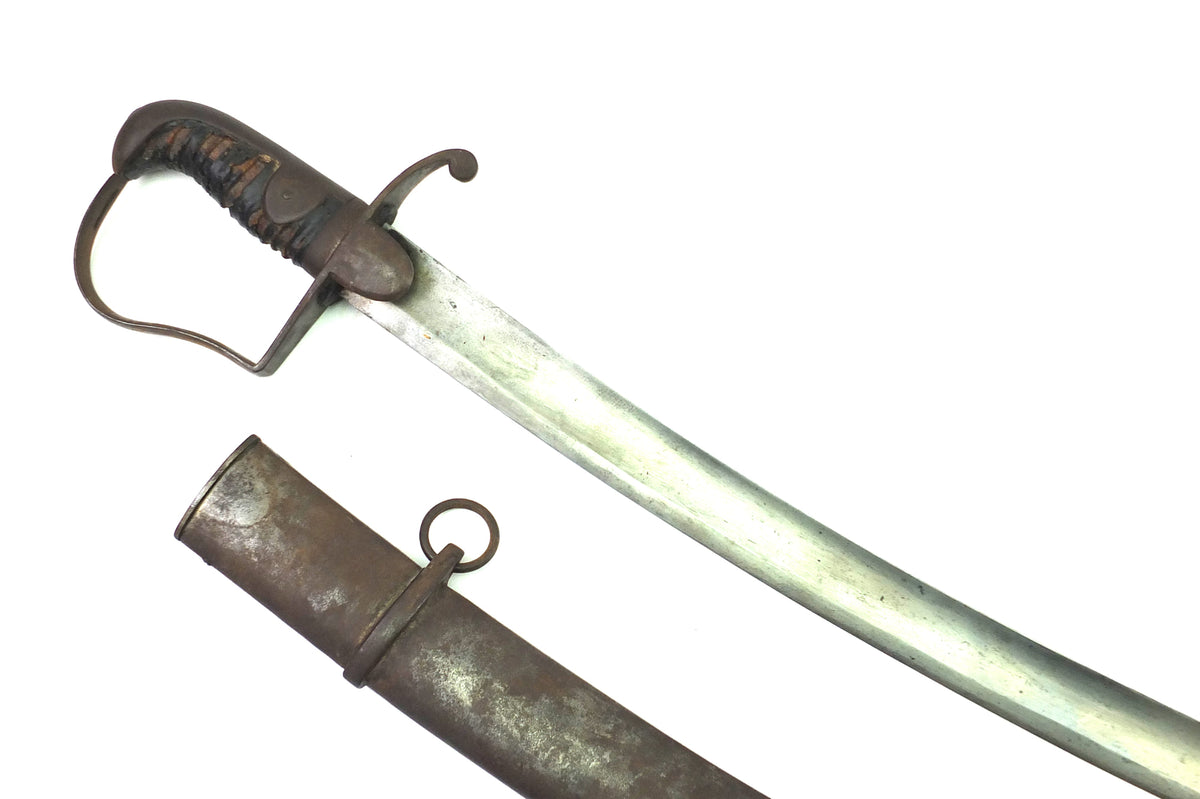
1796 Light Cavalry Troopers Sword. SN 9110. A 1796 Light Cavalry Troopers Sword, 37&157; overall, 32 1/2&157; curved fullered blade. Regulation stirrup shaped hilt with ribbed leather covered grip. In its original iron scabbard stamped Osbourn on back edge, two suspension rings. Circa 1800&194;&160; &194;&160; &194;&160; &194;&160; &194;&160; &194;&160; &194;&160; &194;&160; &194;&160; &194;&160; &194;&160; &194;&160; &194;&160; &194;&160; &194;&160; &194;&160; &194;&160; &194;&160; &194;&160; &194;&160; &194;&160; &194;&160; &194;&160; &194;&160; &194;&160; &194;&160; &194;&160; &194;&160; &194;&160; &194;&160; &194;&160; &194;&160; &194;&160; Sword and scabbard sleepy condition, blade very good but covered in old grease, scabbard and hilt with light old rust, would clean up very well..&194;&160;Grip leather worn.&194;&160; &194;&160; &194;&160; &194;&160; &194;&160; Images courtesy of West Street Antiques (https://antiquearmsandarmour.com/)
  • Nation : Russian
  • Local Price : £1,050.00
Rare Russian M1843 Luttich Carbine Bayonet by P J Malherbe. Description Leaf-shaped, double-edged blade with short, narrow central fuller. Brass cross hilt with twin forward-curving quillons, ribbed solid brass grip. External leaf spring secured with a single screw, its fixed button protruding from the opposite side of the grip. Black leather washer. No scabbard. The ricasso of the blade is stamped on one side with the maker&#acute;s mark &#acute;P J MALHERBE A LIÈGE&#acute; above an inspection stamp and the number &#acute;2&#acute;. The hilt is stamped next to the leaf spring near the pommel with a crown over &#acute;B&#acute;. The .704 calibre Brunswick rifle was designed by Captain Berners, a Jaeger officer of the Brunswick Army, and adopted with some modifications by the British Army in 1836. The Russian Imperial Army essentially copied the British Brunswick as their M1843 Luttich Carbine. The carbines and associated bayonets were manufactured on their behalf in Liège, Belgium by the gunmaker Pierre Joseph Malherbe “ &156;Lüttich&157; is the German name for Liège. Numbers produced are uncertain but low “ anecdotally I read that the observed serial numbers on the carbines have been below 1000, and production of the bayonets was probably equal. The Luttich carbines were used in the Crimean War, issued to specialist Russian sharpshooters as it was the only rifled long arm in their arsenal. The British had already replaced the Brunswick with the improved Minie rifle issued to all their infantry, and introduced the new Enfield rifle over the course of the conflict. Examples of the Luttich found outside Russia may well have been originally taken as trophies in that conflict. The blade&#acute;s lower section has some light patination and spots of pitting, a larger patch of pitting around the tip section on one side. The tip of the blade is slightly chipped. The hilt is in good condition with an even patina. The locking mechanism moves freely.
  • Nation : British
  • Local Price : £1,050.00
British Warwickshire Yeomanry Cavalry Officer&#acute;s Full Dress Mameluke Sword by Hamburger Rogers & Co.. Description Curved, unfullered, hatchet-pointed blade with false edge. Mameluke hilt cast with foliate motifs, with langets and leaf rosette finials. Ivory scale grips secured with decorative rivets, sword knot hole with brass rim. No washer. Scabbard with steel body, steel throat piece, ornate cross-shaped brass band fittings for the hanging rings and ornate brass fitting at the chape. Blade 27 7/8 inches in length, the sword 33¼ inches overall. The blade is etched on one side with the retailer &#acute;HAMBURGER ROGERS & Co 30 King St Covent Garden London&#acute;, as well as crossed lances with banners and foliate motifs including oak leaves with acorns. It is etched on the other side with further foliage and acorns. Hamburger & Co. was a firm of gold & silver lacemen established in 1812. As lacemen they produced uniforms for court and cavalry officers, and like many military outfitters also retailed swords. The brothers William and John Rogers joined the partnership in 1840 and it became Hamburger, Rogers & Co. until 1918, so this sword must postdate 1840. Their swords were made by others “ the firms Mole, Wilkinson and Reeves all supplied them at various times “ but Hamburger was nonetheless notable for supplying unusual regimental swords, having extensive trade with the regiments of the Household Cavalry (which used their own patterns of sword and procured them outside the usual channels) and later procuring custom trooper&#acute;s swords for the Westminster Dragoons. The &#acute;mameluke&#acute; sword was initially introduced to Europeans during Napoleon&#acute;s Egyptian campaigns of 1798-1801, where he fought against and was impressed by the local Mamluk cavalry. The Duke of Wellington owned and carried a mameluke sword from his service in India, and it became an outright craze among British officers to have one as a dress sword. This unofficial trend became officially acknowledged in the 1822 cavalry dress regulations as well as in the 1831 Pattern staff officer&#acute;s mameluke sword, which is still carried by General Officers to this day. Among the light cavalry the mameluke sword was of iconic status: even after Dress Regulations were brought in every Lancer and Hussar regiment retained its own unique variation on the type: always richly decorated and often incorporating regimental motifs in their design. See Chapter 12 of the British Cavalry Sword 1788-1912 by Richard Dellar for extensive discussion of these variations. Plate 12.16 of the same volume (page 115) depicts an identical mameluke to this one, marked to the Warwickshire Yeomanry and dated c1860-70, which enables identification of this unmarked version. Not every mameluke of a given unit bears regimental etching to prove it: being officer&#acute;s swords they would have been privately purchased and such etching would have been an optional extra “ this example is well etched but with a more generic pattern. Four independent troops of yeomanry were raised in the county of Warwickshire in 1794, in Packington, Birmingham, Rugby and Kineton, each of 54 men. These were combined in 1796 to form the Warwickshire Regiment of Yeomanry Cavalry, headquartered at Warwick, which grew to eight troops by 1854. County yeomanry regiments were composed of (or sponsored by) wealthy gentlemen and their fine uniforms and horses made them great local spectacles and sources of pride for their communities. They also had a law enforcement role: the regiment was first called out in 1795 to aid the civil power in suppressing a riot in Birmingham. This was repeated for the waves of Chartist riots in Birmingham in 1839, 1842 and 1848. The regiment saw no action overseas until the Boer War, in which it contributed volunteers to the Imperial Yeomanry “ in 1900, 5 officers and 116 men formed the 5th (Warwickshire) Company of the 2nd Battalion, then a second contingent of 146 men followed in 1901 which became the 103rd Company. The 5th Company saw combat as mounted infantry, most notably in May 1900, when they were ordered to hold a drift (ford) on the Orange River known as Kheis Drift. The drift led to a wooded river island held by a sizeable party of Boers, which fired on them when they approached. British artillery bombarded the island, then the Warwickshire Company were ordered to cross the river and attack. The artillery had not deterred the Boers, who laid in wait then opened fire as the British crossed on horseback. Corporal Baxter, one of the lead men, was left wounded in the water, his horse killed under him. Rather than retreating his comrades rushed to his aid despite heavy enemy fire: Trooper Lane and the company commander Major Orr-Ewing were killed recovering Baxter and six others wounded before the withdrawal was complete. Baxter died of his wounds the following night, the incident marking the first casualties in the regiment&#acute;s 106 years of history. In the First World War volunteers from the regiment served with the 2nd Mounted Division, fighting as infantry at Gallipoli in 1915. It was transferred to the Australian Mounted Division in 1917, fighting as cavalry in numerous battles in Palestine including the charge at Huj in 1917, one of the last great charges of the British cavalry. It was then amalgamated into the 100th (Warwickshire and South Nottinghamshire Yeomanry) Battalion, Machine Gun Corps, serving on the Western Front in 1918. After WW1 the Warwickshire Yeomanry was one of the few regiments which remained as true cavalry “ it entered WW2 as part of the 1st Cavalry Division, Britain&#acute;s last horseback division, garrisoning Palestine in 1940 and fighting in Iraq and Syria in early 1941. In August 1941 its division was finally mechanized as the 10th Armoured Division, which fought in North Africa and Italy. It was amalgamated with the Worcestershire Yeomanry in 1957 to form the Queen’s Own Warwickshire and Worcestershire Yeomanry. There are two present-day descendant units: B (Warwickshire and Worcestershire Yeomanry) Squadron of The Royal Yeomanry and 54 (Queen’s Own Warwickshire and Worcestershire Yeomanry) Support Squadron of the Royal Corps of Signals. Some small spots of patination and cleaned pitting to the blade, some on the etching. The grips are solidly attached with no cracking. The brass components have a moderate patina. The scabbard has a dent on one side, some dark patination and some pitting to the steel, both heavier towards the chape end. One of the hilt finials is very slightly bent forwards. Due to the ivory used in the grip, this sword cannot be exported from the UK. It has been declared and registered as antique ivory under the provisions of the UK Ivory Act and therefore can be sold within the UK. Please note that this is a one-time registration: if you purchase this sword and wish to resell it you must register it again.
  • Nation : American
  • Local Price : 1,450.00 USD
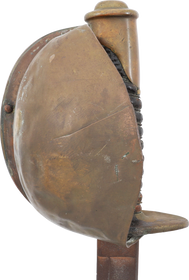
CONFEDERATE CUTLASS. Adapted from a captured Union 1860 pattern cavalry saber and patterned after the US model 1860 cutlass, probably by a ship's blacksmith. The blade with MANSFIELD AND LAMB maker's mark to the ricasso and US 1865 opposite. The blade shortened to 24 ¾” with the point reshaped and thinned appropriately. The hilt with the side bars removed and replaced with a brass semi bowl guard. Original wire wrapped leather covered grip, well worn. The hilt with dark patina. The blade with surface rusting which would clean easily, but should be left to preserve the character. The Confederate Navy protected Confederate harbors and engaged with the Union at blockaded ports to draw off gunships allowing blockade runner to dock. As well, the Confederate Navy sailed the globe disrupting supply ships headed to the north. To that end, Jefferson Davis in 1861 declared that the Confederate government would issue letters of marque, to any wishing to aid the South against US shipping, thus establishing privateers under the Confederate flag. The most illustrious of Confederate naval ships was the CSS Shenandoah which traveled as far as Australia and the Indian Ocean, capturing or sinking 38 vessels and remaining active until November of 1865. It was the Shenandoah which fired the last shot (across the bow of a whaler in the Aleutians) of the Civil War.
  • Nation : British
  • Local Price : £1025
Click and use the code >26148 to search for this item on the dealer website Superb Zulu War Period Original 1845 Pattern Victorian Wilkinson Infantry Officer&#acute;s Deluxe Grade Sword. Traditional Gothic Style VR Cypher Pierced Half Basket Hilt With Queen Victoria&#acute;s Cypher. Exactly As Worn By Lt Bromhead Made by Contract
  • Nation : Chinese
  • Local Price : £1000
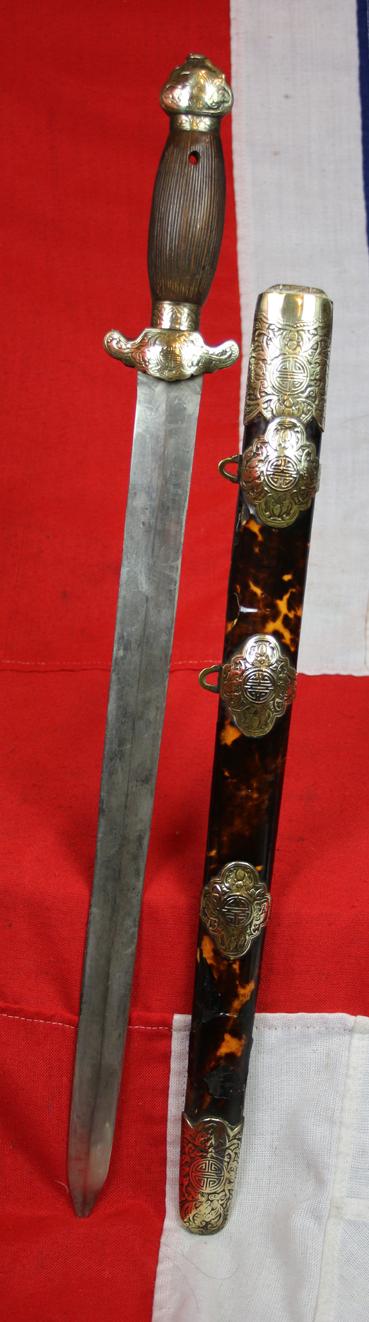
Click and use the code >26035 to search for this item on the dealer website Antique Ching Dynasty Chinese Small Sword Jian, Late 18th Early 19th century. Near Identical to Admiral Sir James Hanway Plumbridge´s Sword in the National Maritime Museum Collection
  • Nation : British
  • Local Price : £995
Click and use the code >25235 to search for this item on the dealer website Very Fine Regimental Officer´s Sword WW1 of the 5th Prussian Jäger Battalion (1st Silesian). Imperial Prussian Eagle Guard With Crest of Kaiser Willhelm IInd. Commanded By Crown Prince Wilhelm of Prussia the Heir of Kaiser Wilhelm IInd. Sword N
  • Nation : British
  • Local Price : £995
Click and use the code >25919 to search for this item on the dealer website most Historical 17th-18th Century Indian Hodson´s Horse Sikh Long Khanda Sword From the Siege and Relief Of Lucknow. Battle Trophies of an Irish Captain Of the 32nd Foot, Capt. H.G.Browne From a Collection Swords From the Siege and Relief Of Lucknow
  • Nation : Japanese
  • Local Price : £995.00
**HIGH GRADE SHOWA-TO**WW2 Period Japanese Katana Sword Blade Seki Gunto Smith Signed ‘NOSHU SEKI JU MATSUDA KANE TAKA SAKU’ In Protective Wood Shira Saya Resting Mounts & Expert Assessment. Sn 22019 -. This is Katana blade has been assessed by UK Japanese sword expert Bill Tagg. A copy of his hand written assessment notes accompany this piece. His notes state “A Showa period katana blade in 20th century resting mounts (shira saya). Probably a war time sword in shin gunto mounts, they must have been very badly damaged with war service and water saturation from the look of the once heavily rusted tang. Put into shira saya to protect the blade which has a just visible signature of a seki gunto smith ‘NOSHU SEKI JU MATSUDA KANE TAKA SAKU’, real name is ‘MATSUDA TAKE ICHI’ born 1911 a student of ‘KOJIMA KANE MICHI’ worked as a gunto smith does not seem to have entered any competitions. No mention of him making gendaito?. There is no sign of either Showa or seki arsenal stamps? Maybe pre 1939 manufacture. Have to class it as High Grade Showa-To because of its condition. Out of polish & heavily scratched & stained. Needs professional polish to reveal workmanship (see fuller & Grgory 1st book for 3 oshigata of this man pages 37 & 38 also Marcus Sesko book on sword smiths page 274. A big strong blade with dramatic hamon, would look good with re-polish”. In his illustrations of the blade he adds “cutting edge is 67.5 cms, total length is 90.5 cms. He also translates the tang signature & describes other blade and tang characteristics and dimensions which can be seen in the images. The price for this Katana with expert assessment includes UK delivery. Sn 22019
  • Nation : British
  • Local Price : £995.00
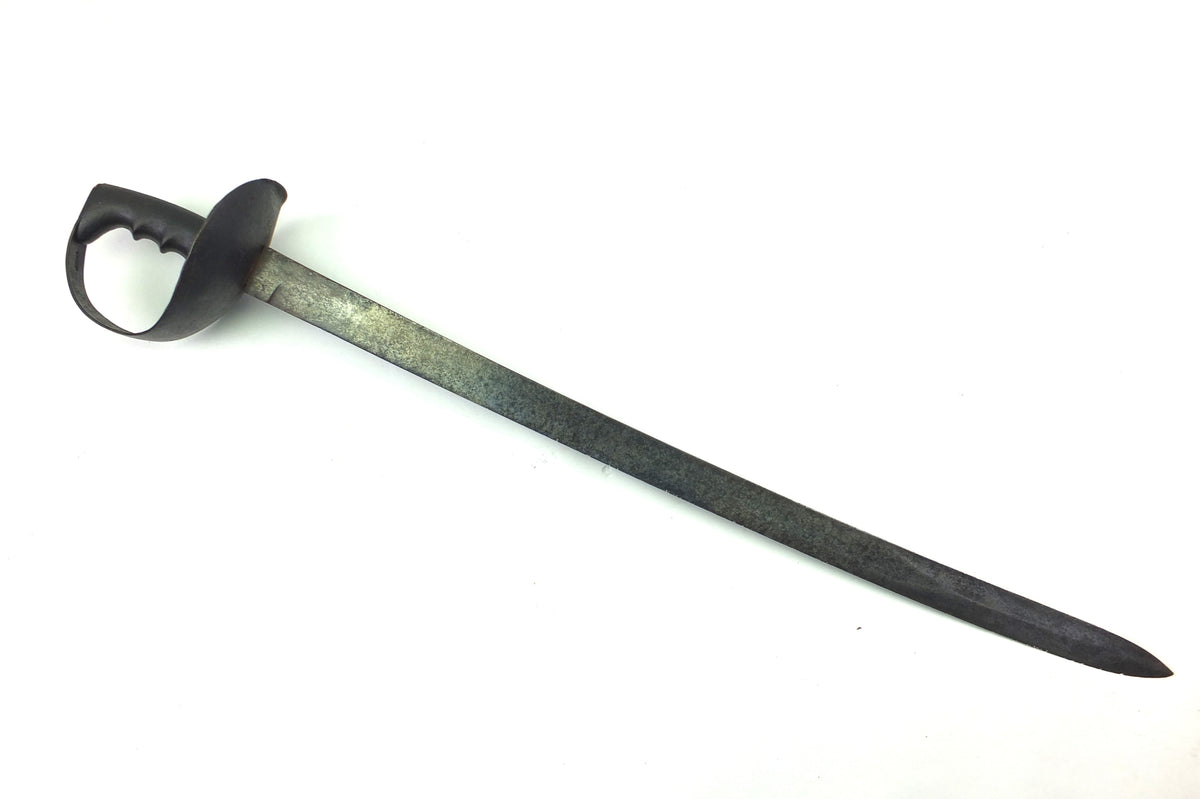
1827 Experimental Naval Cutlass, rare. SN X3220. A Rare 1827 Experimental Naval Cutlass. 34&157; overall, 29&157; blade slightly curved single edged turning into double edged towards the point, steel bowl guard with steel grip shaped for fingers. Circa 1827&194;&160; &194;&160; &194;&160; &194;&160; &194;&160; &194;&160; &194;&160; &194;&160; &194;&160; &194;&160; &194;&160; &194;&160; &194;&160; &194;&160; &194;&160; &194;&160; &194;&160; &194;&160; &194;&160; &194;&160; &194;&160; &194;&160; &194;&160; &194;&160; &194;&160; &194;&160; &194;&160; &194;&160; &194;&160; &194;&160; &194;&160; &194;&160; &194;&160; &194;&160; &194;&160; &194;&160; &194;&160; &194;&160; &194;&160; &194;&160; &194;&160; &194;&160; &194;&160; &194;&160; &194;&160; &194;&160; A rare sword in good condition some original paint on hilt, minor edge nicks. In 1827 three new cutlass designs were trialled by the Admiralty against the 1804 double disk hilt pattern. The new swords by Harry Angelo, Naval instructor in the Cutlass, had a bowl guard & finger grip hilt, two were straight, of different lengths, & one slightly curved as with this example. See ´Naval Swords and Dirks´ by Sim Comfort, EW171 pages 356-7 & ´Swords for Sea Service´ by May & Annis pages 79 to 81. Images courtesy of West Street Antiques (https://antiquearmsandarmour.com/)
  • Nation : German
  • Local Price : $995.00
Late 17th C Officer’s Sword, French or German. Steel hilt featuring oval side ring with central chiseled decoration, filled with an inserted plate finely pierced and chiseled with foliage and birds. Single quillon with downturned acorn finial. Knuckle bow chiseled ensuite and joining the ovoid pommel with button. Original spirally carved wood grip (possibly ebony). Broad 26 1/8″ double-edged blade of flattened diamond section with long oval-section ricasso, retaining traces of an engraved design. Very good condition, the metal cleaned and showing patches of light pitting. Overall length 31 5/8″ (80.3 cm).
  • Nation : French
  • Local Price : £995.00 GBP
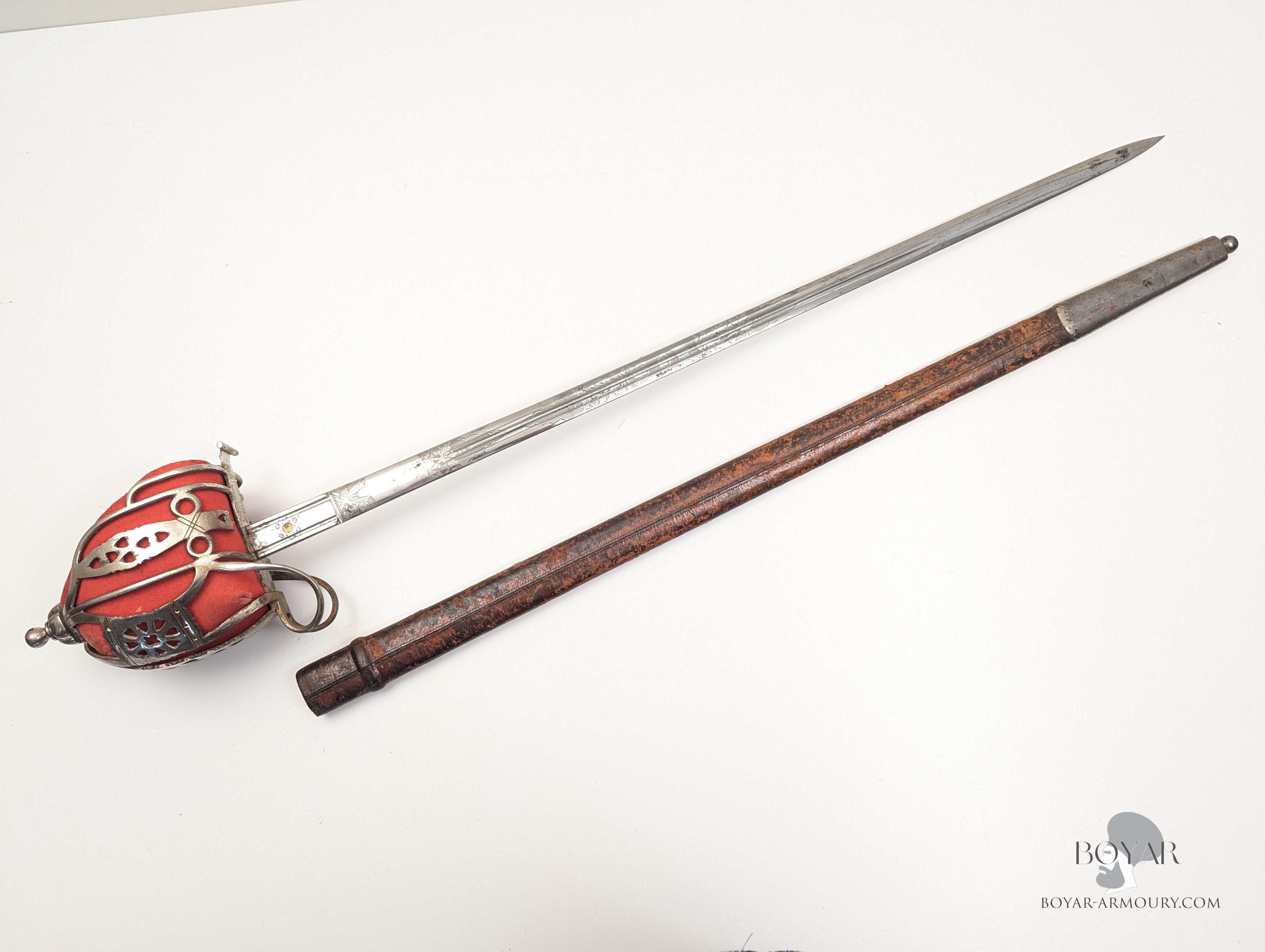
Royal Highlanders of Canada (Black Watch) GVR Basket Hilted Sword. A scarce Royal Highlanders of Canada basket hilted sword, also known as the Black Watch of Canada.  The regiment saw active service during both World Wars. Several battalions disembarked in France between 1915 and 1916 and fought until the end of the war. In 1944, the 1st Battalion suffered more casualties than any oth"
  • Nation : British
  • Local Price : £995
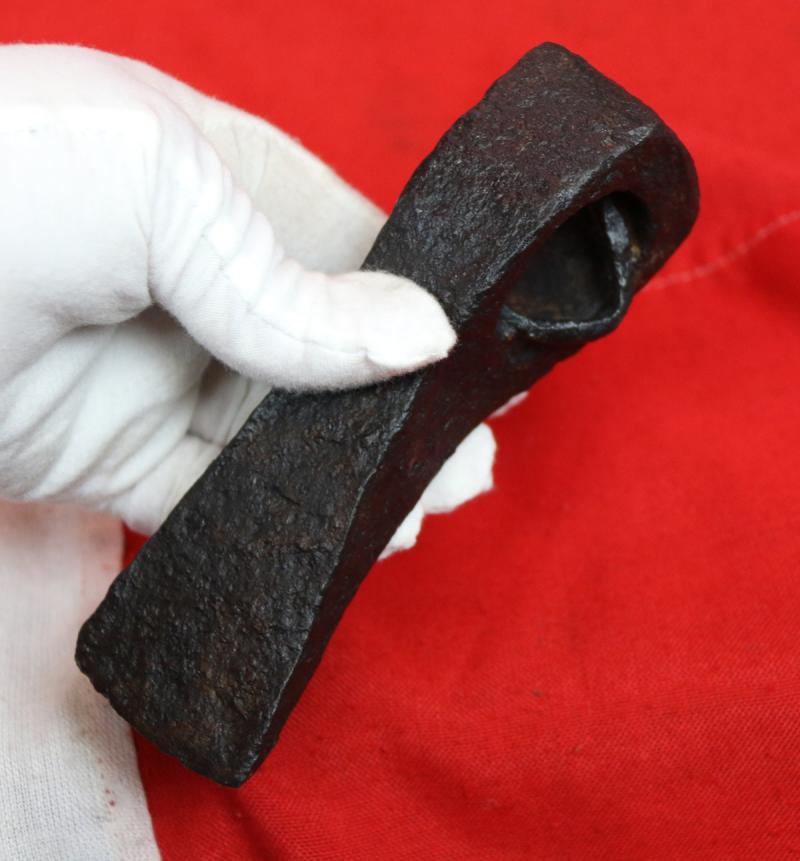
Click and use the code >25874 to search for this item on the dealer website Rare, Original, Ancient Viking Iron Battle Axe-Hammer. Around 1100 to 1200 Years Old. Almost Every Viking Warrior Used the Axe or Spear As Their Primary Combat Weapon. Swords Were the Prerogative of Kings or Earls {Jarls}
  • Nation : American
  • Local Price : $995.00
US M1860 Naval Cutlass and Scabbard. Most US swords of the 19th C were patterned after earlier French models, and the US Model 1860 Naval Cutlass was patterned after the French M1833 Cutlass. It was a robust weapon designed for the close quarters fighting expected on ships of the era, and was in service from the beginning of the Civil War until shortly before WWII. Over 25,000 of these were made, most by N. P. Ames of Chicopee, Massachusetts. This example with the typical brass hilt, featuring large bowl guard riveted with 10 rivets to the knuckle bow. Phrygian helmet style pommel stamped with “D.R.” (R only partially visible), for Ames inspector Daniel Reynolds. Later worn alloy grip, indicating it was likely refurbished and reissued. The inside of the quillon is stamped “10M/975”, which indicates a serial number of 10,975 (10M for 10,000, plus 975). Curved singled-edged 25 3/4” blade with broad unstopped single fuller. The blade is worn and cleaned, with the typical Ames markings no longer visible, though it was likely made in 1862. Original leather scabbard (leather flaking) with lapped seam on the reverse secured by copper rivets and washers; brass frog button. The typical large copper through-rivet securing the end of the scabbard has been replaced with a smooth brass drag. Old leather belt frog. Overall length 31 1/4”, not including scabbard. A few shallow dents in the guard and pommel; guard slightly loose.
  • Nation : Japanese
  • Local Price : £995
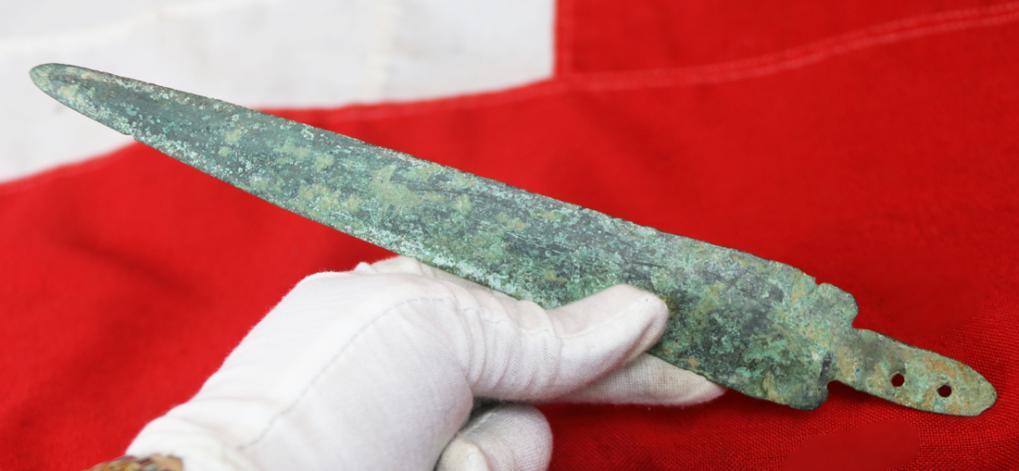
Click and use the code >23417 to search for this item on the dealer website Superb Ancient Greek Dagger Blade 13th to 11th Century B.C. From the Trojan War Era, Acquired With. Full Length Bronze Sword Blade From The Same Era
  • Nation : British
  • Local Price : £985.00
1845 British Rifle Brigade Presentation Sword. 1845 British Rifle Brigade Presentation Sword Gothic hilt in nickel chased with scrolls and foliage. Crowned stringed bugle with wreath in cartouche. Highly decorative back strap and pommel and complete with fish skin grip secured by silver wire. The slightly curved blade is etched to within 3.5 inches of the point and with presentation inscription which reads Presented as a mark of esteem to Captain Williams M.C.P principle of Duro House School by the Duro House Cadets who took part in the Volunteer Cadet Review held at Chrystal Palace Sept 1861. Complete with silver plated scabbard showing age wear. The blade is maker marked but worn all that can be seen is Holborn London but looking at the proof plug it seems likely that it is B Thurkle who operated from this address 1834 “ 1864 Information: Reference: Robson Swords of the British Army Plate 127 – 128 Blade Length: 32.50 inch Overall Length: 38.0 inch
  • Nation : British
  • Local Price : £975.00
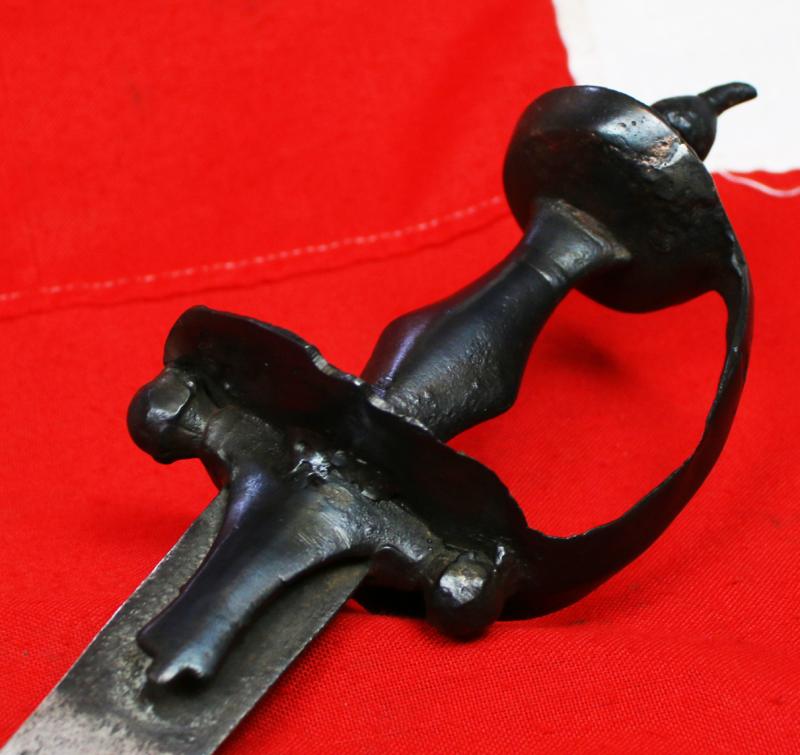
Victorian Era Indian Pata Gauntlet Long Sword. Sn 22753 -. Pata swordsmen of the 17th century through to the Victorian era were specially trained in the use of this weapon, and could be extremely accurate with this somewhat unusual sword form. Peculiar to the Indian subcontinent, these broadswords had a protective gauntlet or armguard of steel, the grip being set at right angles to the blade (see page 485 item 6 of Stone’s A Glossary Of Arms & Armor where a Pata with similar gauntlet form as ours is illustrated). The steel gauntlet on this example has even age and use related patina. The sword has a 38 ½” flat steel double edged fullered blade and measures 4’ 2 ½” overall. The blade is riveted to the ornate extended tang of the Gauntlet. The blade is sharp with no damage and just light staining consistent with age. The inside of the gauntlet has a bar grip set across the inside of the fist part of the gauntlet. The ’cuff’ of the gauntlet has a curved fore arm bar / bracelet which hooks into 2 holes, one either side of the gauntlet. The price includes UK delivery. Sn 22753 (armoury next to bucket)
  • Nation : British
  • Local Price : £975.00
**NAPOLEONIC WARS ERA**EARLY VARIANT**British 1796 Pattern Heavy Cavalry Officers Sword With Gilt Etched Blade By JJ Runkel Solingen. ED 2197 -. An original early example of a British 1796 Pattern Heavy Cavalry Officer’s sword ((Withers, World Swords, 1st edn 2006, p. 86)). It has its regulation brass hilt with correct early variant rigid shell guard. Later variants of the 1796 Infantry sword had folding clamshells. It has the correct knuckle bow & urn shaped pommel. It has a wire bound grip, all tight and undamaged. It has a 32 ½” long blade with fullers. The spine of the blade is marked by the German manufacturer ‘J.J. Runkel Solingen’. The blade has its original leather hilt washer. The blade is etched on both sides. The etchings include ‘Crown GR’ (George Rex), heraldic arms and foliate devices. There is much original gilt on the etchings. The blade is undamaged and has just light staining consistent with age. The sword has its original brass mounted leather scabbard. The scabbard’s throat mount has a single brass hanging ring. The price includes UK delivery. ED 2197
  • Nation : British
  • Local Price : £975.00
**NAPOLEONIC WARS ERA**EARLY VARIANT RIGID GUARD**British John Salter London (Maker To Lord Admiral Horatio Nelson) 1796 Pattern Royal Marine’s Officers Sword With Blue & Gilt Etched Heraldic Arms Fighting Blade & Period Brass Naval Pattern Scabbard.. The Pattern 1796 British infantry officer’s sword was carried by officers of the line infantry in the British Army between 1796 and the time of its official replacement with the gothic hilted sword in 1822. This period encompassed the whole of the Napoleonic Wars. Royal Marines served on board British War Ships during the Napoleonic Wars, seeing combat in Portugal & Northern Spain. John Salter was working as a swordsmith at 35 Strand between 1780 and 1824. The successor to Joseph & Edward Greensill, Salter achieved great fame in his time as a swordsmith, becoming the sword cutler to HRH Duke of Sussex. He also had the honour to make the swords for Lord Admiral Horatio Nelson, and also Lord Exmouth. Additionally Salter was asked to make swords for the Patriotic Fund. This is an original early example of a British 1796 Pattern Infantry Officer’s sword by John Salter 35 Strand Pall Mall (see page 159 of World Swords by Withers). It has its regulation brass hilt with correct early variant rigid shell guard. Later variants of the 1796 Infantry sword had folding clamshells. It has the correct knuckle bow. urn shaped pommel and quillon finials which are often found to be missing from these swords. It has a wire bound grip, all very tight and undamaged. It has a 32” long blade with fullers (38 ½” overall). The blade is faintly gilt etched & blued on both sides with partially visible British heraldic arms. The fighting blade is sharp & undamaged and has just staining consistent with age. The spine of the blade is signed by the maker ‘Salter 35 Strand London Pall Mall’. The sword has its period brass Naval pattern scabbard in which it was found indicating that this fighting sword was most likely carried by a Royal Marine Officer aboard a British war ship during the Napoleonic wars. The scabbard has 2 brass hanging rings & brass shoe. The price includes UK delivery. ED 2398
Page 14 of 40

The following items match your search but are currently listed on Ebay. We take no responsibility for any aspect of the listings or their accuracy.


Sorry, there is not any matching items.