
(You must register and have a linked account first)
View Privacy Policy


OR

Show


Forgot your password?

Error message here!

Error message here!

Error message here!

Error message here!

Show Error message here!

Show Error message here!


Lost your password? Please enter your email address. You will receive a link to create a new password.

Error message here!

Back to log-in

Close

For Sale

The following items are listed by for sale by users of the site and dealers. They are in no way endorsed or guaranteed by www.oldswords.com

Add a Classified Item
to

Clicking on the sword will take you through to the relevant classified item or dealer site.
Don't miss out! - Do you want to be kept informed weekly of new aditions? Just join our weekly update list.

You can also receive regular email notifcations when items match your keywords. To recieve them just register or logon at the top right of this page.

Page 15 of 40
  • Nation : British
  • Local Price : £975.00
**RARE**NAPOLEONIC WARS ERA**British 1804 Pattern Royal Navy Seaman’s Boarding Cutlass With Correct ‘Figure Of 8’ Guard Hilt, Rope Lanyard With WD Brass Boatswain’s Call / Bosun’s Pipe Attached. Sn 23174:31 -. The British Royal Navy due to its global presence and command of the sea was by far the most organised and trained of all the World major sea services and it’s edged weapons used for boarding and repelling boarders reflected this. The Royal Navy was one of the first Navies in the 18th Century to begin standardising the personal edged weapons used by ordinary seaman. The 1804 Pattern Naval Seaman’s Boarding cutlass was the first regulation Naval cutlass issued to British Seamen (see page 241 of World Swords by Withers where a cutlass with 1804 pattern hilt the same as ours is illustrated). British Naval Boarding Cutlasses were made by a number of Government contracted manufacturers. In the Napoleonic-era Royal Navy, a Boatswain’s call (or Bosun’s pipe) was a specialised, high-pitched whistle used to communicate orders across a vessel. As a Command Tool, Its shrill, high-pitched tone was designed to be heard over the roar of gale-force winds, the crashing of waves, and the thunder of cannon fire during battle. In the Napoleonic era, the pipe was a badge of rank for Boatswains / Bosuns. This is a very good, rare to find, original British RN 1804 patten boarding Cutlass. It has the correct 1804 pattern hilt consisting of a black painted flat metal figure of 8 shaped guard and ribbed / segmented iron handle. The 28 ¾” long cutlass blade has staining and old stable pitting consistent with age and sea service carry. The cutting edge has some nicks to the cutting edge consistent with age and service use (34” overall). There is no rust. There are no manufacturer or date marks on the blade or hilt but the may be present under the black finish. As is common the cutlass is without scabbard as they were predominantly stored in ship deck racks. The cutlass was found with a rope lanyard attached to it which is mounted with a brass Boatswain’s Call / Bosun’s Pipe). The Gun: A narrow tube that directs air is straight and The Buoy (or Bowl): A hollow metal sphere with a hole that resonates to create the sound work correctly. The Keel: A flat piece of metal beneath the gun that provides structural support is present with no damage & The Shackle: A ring at the end used to attach a lanyard is present and attached to the lanyard. The Call is 4 ½” length and the Buoy has ‘WD Broad Arrow’ mark. The Call has no date or other maker marks. The price for this piece of British Naval history includes UK delivery. Sn 23174:31 (in bucket armoury)
  • Nation : British
  • Local Price : £975.00
Victorian Era Indian Pata Gauntlet Long Sword. Sn 22753 -. Pata swordsmen of the 17th century through to the Victorian era were specially trained in the use of this weapon, and could be extremely accurate with this somewhat unusual sword form. Peculiar to the Indian subcontinent, these broadswords had a protective gauntlet or armguard of steel, the grip being set at right angles to the blade (see page 485 item 6 of Stone’s A Glossary Of Arms & Armor where a Pata with similar gauntlet form as ours is illustrated). The steel gauntlet on this example has even age and use related patina. The sword has a 38 ½” flat steel double edged fullered blade and measures 4’ 2 ½” overall. The blade is riveted to the ornate extended tang of the Gauntlet. The blade is sharp with no damage and just light staining consistent with age. The inside of the gauntlet has a bar grip set across the inside of the fist part of the gauntlet. The ’cuff’ of the gauntlet has a curved fore arm bar / bracelet which hooks into 2 holes, one either side of the gauntlet. The price includes UK delivery. Sn 22753 (armoury next to bucket)
  • Nation : British
  • Local Price : £975.00
Post 1845 Victorian British Stockport Rifle Volunteers (Cheshire) 1822 Pattern Infantry Officer’s Sword With Etched & Blue Blade, Brass Gothic Style Pierced Basket Hilt & Scabbard. Sn 22426:58 -. The Cheshire Regiment was a line infantry regiment of the British Army, part of the Prince of Wales’ Division. The 22nd Regiment of Foot was raised by the Duke of Norfolk in 1689 and was able to boast an independent existence of over 300 years. The 4th Volunteer Battalion was formed in 1860. The regiment was expanded in 1881 as part of the Childers Reforms by the linking of the 22nd (Cheshire) Regiment of Foot and the militia and rifle volunteers of Cheshire. The title 22nd (Cheshire) Regiment continued to be used within the regiment. On 1 September 2007, the Cheshire Regiment was merged with the Worcestershire and Sherwood Foresters Regiment (29th/45th Foot) and the Staffordshire Regiment (Prince of Wales’s) to form a new large regiment, the Mercian Regiment, becoming the 1st Battalion, Mercian Regiment. The Stockport Armoury building (Armoury Street, Stockport) was the Headquarters of the Stockport Rifle Volunteers (Cheshire Volunteer Rifles) in 1862. The 1822 pattern sword was a radical departure from previous designs, having a ‘gothic’ style pierced basket hilt so named after its resemblance to window shapes in gothic architecture and folding langet on one side. Pre 1845 these swords had pipe back blades. Post 1845 they were made with slightly curved fullered blades (see page 173 of World Swords by Withers & Page 159 of Robson). This original Stockport Volunteer Rifles infantry Officer’s Pattern 1822 sword has a post 1845, 32 ½” single edged fullered curved blade (38 ¼” overall). The blued blade has foliate etched decoration on both sides. There are no maker or date marks on the blade. One side of the blade has The etched Rifle Brigade ‘hung Bugle’ badge and ‘Stockport Rifle Volunteers’ and etched proof star with inlaid brass roundel. The reverse has Queen’s crown Royal Cypher ‘VR’ (Victoria Regina). The gothic style voided brass guard has stylised Royal Cypher VR & Queen’s Crown in the centre. The bar guard is fully intact. It has the correct folding langet on one side. Its fish skin grip with finger grooves & wire binding is in good condition with just light service wear. The sword is complete with its brass mounted leather scabbard which has a frog locket on the throat mount. All leather and stitching are intact. The leather has areas of surface scuffing consistent with age & service use. The price includes UK delivery. Sn 22426:58
  • Nation : British
  • Local Price : £975.00
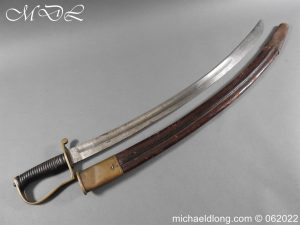
British Indian Army 1896 Pattern Mountain Artillery Sword. A scarce India pattern Mountain Battery sword, made by Robert Mole of Birmingham. The brass stirrup guard is stamped R B. 1. 18 and with blackened ribbed iron grip. The curved blade is 76cm in length and stamped with broad arrow issue marks and dated 1915 The spine is maker marked MOLE Birm and is complete with brown leather scabbard with brass mounts, overall length 89cm
  • Nation : Japanese
  • Local Price : £975.00
C1700 – 1800 Japanese Late Edo Period Mino School Work Very Small Ko Wakizashi Possible Period Boy’s Coming Of Age Festival Sword With Ko-Gatana Side Knife, Scabbard, Carry Bag / Cover & Expert Assessment. Sn 23063 -. An original Japanese small Sword and scabbard. The sword has been assessed by UK Japanese sword expert Bill Tagg. A copy of his hand written notes and illustrations accompany the sword. In extracts from his notes he states “Ko-wakizashi ? Very small sword possibly made for boy’s festival coming of age ceremony, a scaled down katana unsigned looks mid to late Edo period 1700 to 1800. Looks like Mino influenced work shape of tang & what looks like gunome midare hamon (temperline) vaguely showing through the old finger rust & old buff marks needs a professional polish to see work. Fittings (mounts). Saya (scabbard) black lacquer with bright green speckled cloud decoration some old damage and end cap missing. Has ko-gatana (side knife) fitted in pocket blade is signed but unreadable with old rust. Kodjuka (hilt) shows chidori (small birds) flying under large waves signed ‘teru hide’ & kaikihan (seal) omori school style work (undercut waves) bit of wear to it. Tsuba is oval (brass) been gilt showing man with stick pointing at a rabbit with copper rim & one copper plug Hitso Ana nicely engraved circa 1800. Couple nice castellated seppas. Tsuka has old worn black ito over dirty fish skin wrap. Fuchi / Kashira (end caps) are copper been some gilding. Depicts Fish & Waves possibly same workshop as Kodjuka, worn. Menuki difficult to see looks like Motei with his sack in Shakudo & gilt nice quality. When new this would have looked a special sword. Worthy of restoration”. In his illustrations Bill describes the cutting edge as 31 cms & total length as 43 cms. He also describes & measures other blade characteristics which can be seen in the images. The price includes UK delivery. Sn 23059 (in Tanto box armoury)
  • Nation : British
  • Local Price : £975.00
Post 1845 Victorian British Stockport Rifle Volunteers (Cheshire) 1822 Pattern Infantry Officer’s Sword With Etched Blade, Brass Gothic Style Pierced Basket Hilt & Scabbard. Sn 22426:60 -. The Cheshire Regiment was a line infantry regiment of the British Army, part of the Prince of Wales’ Division. The 22nd Regiment of Foot was raised by the Duke of Norfolk in 1689 and was able to boast an independent existence of over 300 years. The 4th Volunteer Battalion was formed in 1860. The regiment was expanded in 1881 as part of the Childers Reforms by the linking of the 22nd (Cheshire) Regiment of Foot and the militia and rifle volunteers of Cheshire. The title 22nd (Cheshire) Regiment continued to be used within the regiment. On 1 September 2007, the Cheshire Regiment was merged with the Worcestershire and Sherwood Foresters Regiment (29th/45th Foot) and the Staffordshire Regiment (Prince of Wales’s) to form a new large regiment, the Mercian Regiment, becoming the 1st Battalion, Mercian Regiment. The Stockport Armoury building (Armoury Street, Stockport) was the Headquarters of the Stockport Rifle Volunteers (Cheshire Volunteer Rifles) in 1862. The 1822 pattern sword was a radical departure from previous designs, having a ‘gothic’ style pierced basket hilt so named after its resemblance to window shapes in gothic architecture and folding langet on one side. Pre 1845 these swords had pipe back blades. Post 1845 they were made with slightly curved fullered blades (see page 159 of Robson’s Swords of the British Army). This original Stockport Volunteer Rifles infantry Officer’s Pattern 1822 sword has a post 1845, 32 ¾” single edged fullered curved blade (38 ½” overall). The blade has faint etched decoration on both sides. One side of the blade has foliate etched panels, the etched Rifle Brigade ‘hung Bugle’ badge and ‘Stockport Rifle Volunteers’ together with etched proof star with inlaid brass roundel. The reverse has foliate etched panels, Queen’s crown Royal Cypher ‘VR’ (Victoria Regina) and etched maker / retailer name and address ‘J&W Wood, Cutlers, Manchester. The blade has areas of staining consistent with age. The gothic style voided brass guard has stylised Royal Cypher VR & Queen’s Crown in the centre. The bar guard is fully intact. It has the correct folding langet on one side. Its fish skin grip with finger grooves & wire binding is excellent. The sword is complete with its brass mounted leather scabbard which has an ornate frog locket on the throat mount and it has 2 brass hanging rings. All leather and stitching are intact. The leather has areas of surface scuffing consistent with age & service use. The price includes UK delivery. Sn 22426:60
  • Nation : Spanish
  • Local Price : 1,350.00 USD
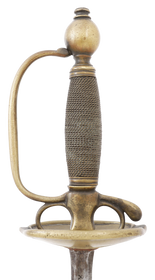
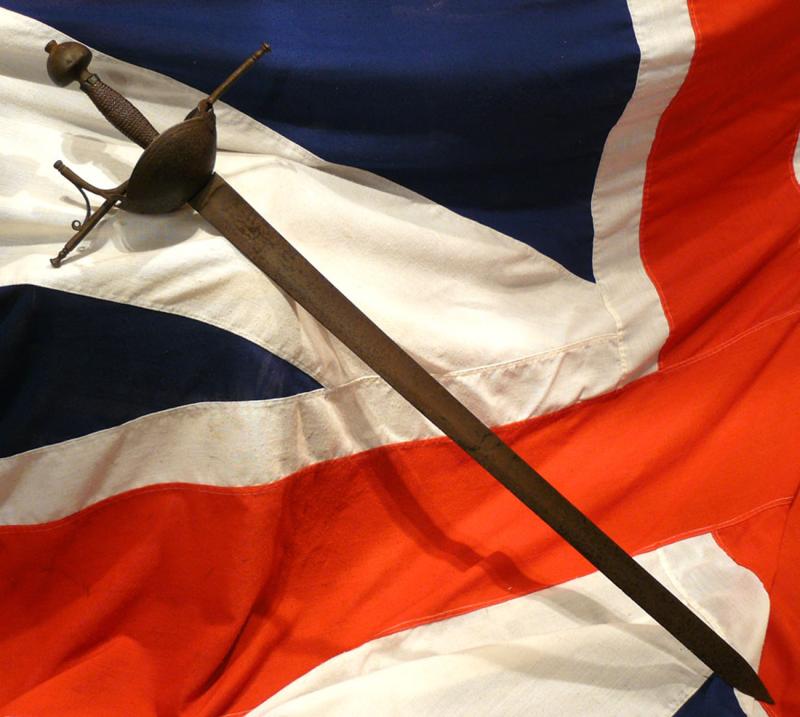
SPANISH RAPIER C.1700-50. Brass hilt, originally gilt, with large ring guards and olive form pommel. Thickened edge guard formed as two shells joined with a web. The right shell with flower maker's mark and 3. Twisted brass wire wrapped grip with banded ferrules. Fine 29 ½” diamond section blade. The forte, with deep groove marked EN TOLEDO each side. The Spanish take on what developed as the smallsword in northern Europe. Owing to fencing techniques and custom, the rapier remained in use in Spain at the time. 
  • Nation : ?
  • Local Price : £950.00 GBP
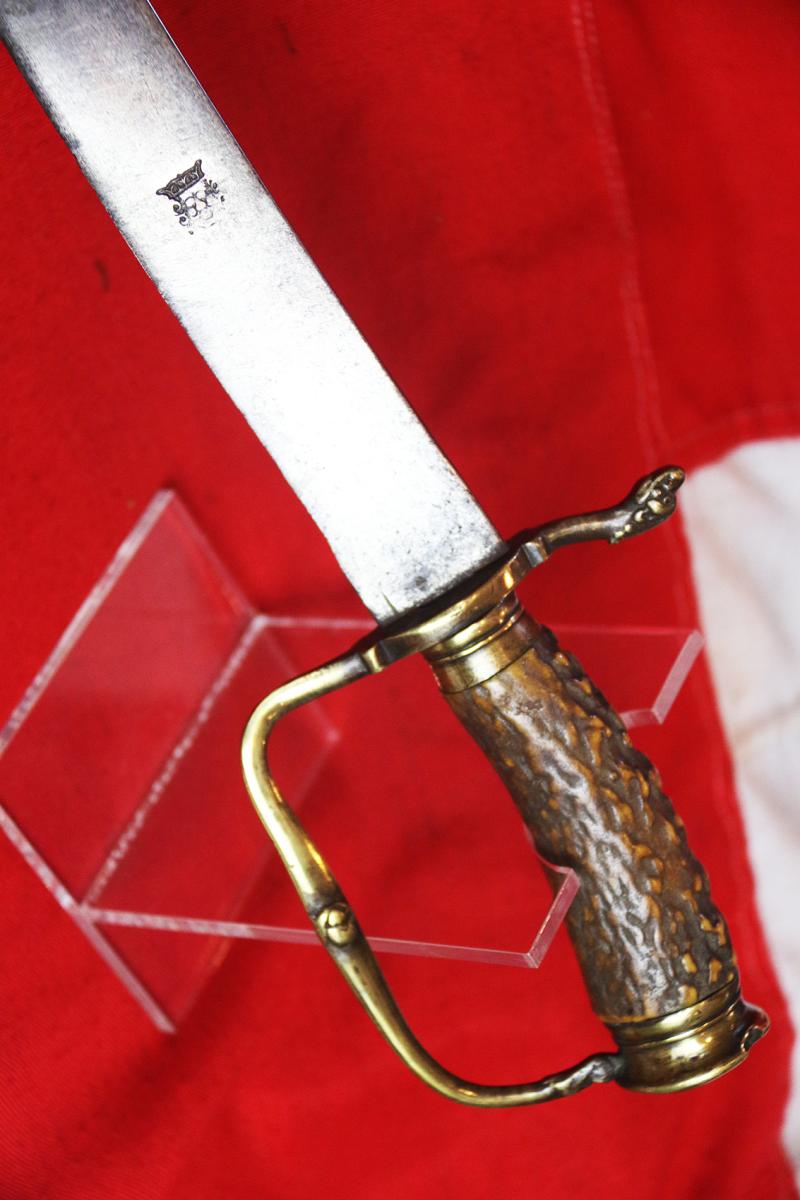
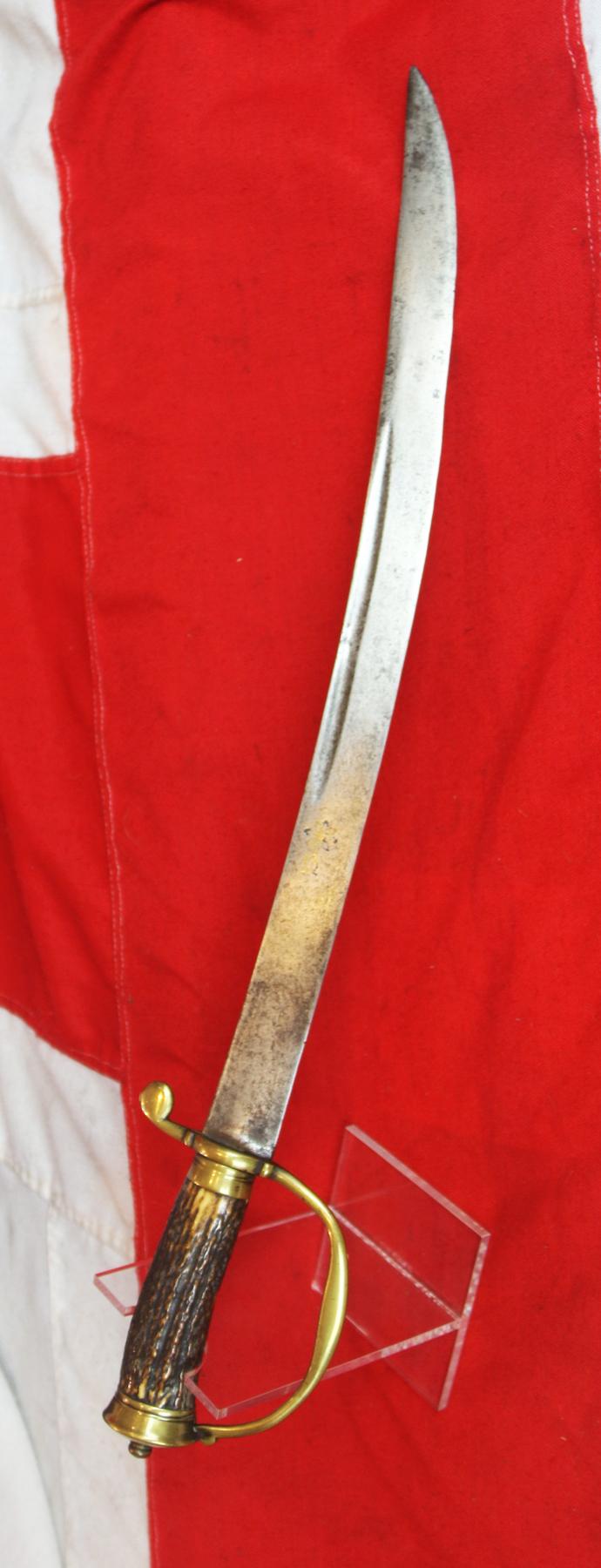
Pandur Hanger, 18th Century. A Central European 'Pandur' hanger. These were made to resemble the style of Eastern European 'Pandur / Pandour' free corps. In Wallachia, being a Pandur was a fixed, legally recognized social status, whether or not one was a member of a specific military unit. By the middle of the 18th century, law enforcement in the "
  • Nation : British
  • Local Price : £950.00
18th Hussars 1821 Officer&#acute;s Sword by Wilkinson. 18th Hussars Victorian Officer&#acute;s Sword 1821 pattern regulation three bar hilt chequered pommel and fish skin grip. The blade engraved 18th Hussars regimental badge, WATERLOO and PENINSULA plus V R and crown to both sides. Maker marked Henry Wilkinson London and numbered 29696 – further research needed. Complete with steel scabbard. Information: Reference: Swords of the British Army Plate 78 Blade Length: 35.0 inch Overall Length: 41.0 inch
  • Nation : British
  • Local Price : £950.00
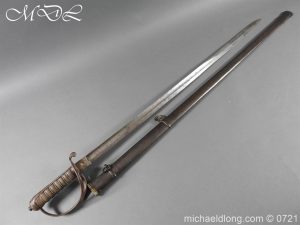
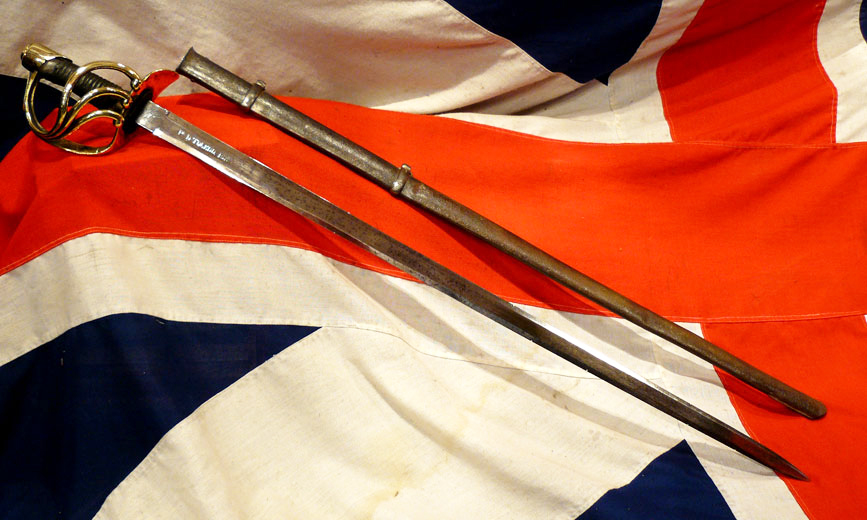
British Officers P1821 Light Cavalry Prize Sword. British Officers P1821 Light Cavalry Prize Sword, regulation 3 bar hilt with fish skin grip, stepped pommel and white buff sword knot. The blade regulation nicely engraved with V R and crown to one side the reverse with presentation as follows: 1893 Ayrshire Yeomanry Best Swordsman B troop J C Tabrum. Maker marked E Thurkle Soho London and complete with steel scabbard, overall length 105cm the blade 91cm
  • Nation : British
  • Local Price : £950.00
British WW2 1925 Pattern Royal Air Force Officer’s Sword of Group Captain David Lumgair CBE. Description Straight single-fullered spear-pointed blade. Brass hilt with pierced and cast decoration including the crown and cypher of King George VI and the crown & eagle badge of the Royal Air Force within an oval. Brass ferrule, brass backstrap, integral pommel in the form of an eagle&#acute;s head. Wire-bound white shagreen grip, white leather washer, blue and gold parade sword knot with acorn. Black leather scabbard with brass throat, chape and middle pieces, hanging rings on the throat and middle pieces. Black leather sword bag, blue and gold sword belt with brass buckle cast with the RAF badge and motto &#acute;PER ARDUA AD ASTRA&#acute; within a laurel wreath. Blade 32 3/8 inches in length, the sword 38 inches overall. The blade is etched at the ricasso on one side with a six-pointed star within which is set a brass proof slug stamped with &#acute;PROVED&#acute; and a fleur de lys. The blade is further etched with banners and foliate motifs, centred around the royal coat of arms on one side, and the crown & eagle of the Royal Air Force on the other. There is a cartouche for the optional etching of the owner&#acute;s name, within which is etched &#acute;DAVID LUMGAIR 2ND JUNE 1930&#acute;. George VI&#acute;s reign did not begin until 1936 and the etching does not appear to have been applied retrospectively, so it would seem that this sword was rehilted at some point in its owner&#acute;s career to bring the cypher up to date with the current monarch. This was not mandatory as previous cyphers were generally accepted on parade and could be seen as a mark of long service. David Lumgair Jr was born in 1907 in Liscard, Cheshire, now a part of Wallasey. His family relocated from Cheshire to the Isle of Man in the 1920s, where he attended King William&#acute;s College from 1920-23 and while there became a cadet in the school&#acute;s OTC unit. The Officers&#acute; Training Corps were established in 1908 as part of the wide-ranging Haldane Reforms to the British Army&#acute;s structure. They were intended to alleviate the shortage of trained officers in the various volunteer units (Militia, Yeomanry, Volunteer Force and Reserve of Officers) by forming a system of junior training units in public schools and senior ones in universities. Some of the junior OTCs were formed out of existing school Cadet Corps, but many were new. The contingent at King William&#acute;s College was established in 1911. Thousands of OTC recruits gained commissions in the regular Army during the First World War but King William&#acute;s College was the only OTC contingent to itself see active duty, its cadets tasked with guarding prisoners of war sent to the island. In December 1925 David joined the 4th/5th (Earl of Chester’s) Battalion of the Cheshire Regiment as a 2nd Lieutenant. This was part of the Territorial Force of part-time volunteers attached to regular regiments as additional battalions. David resigned his commission with the Cheshire Regiment in June 1930 and was commissioned into the Royal Air Force the next day, joining the Accountant Branch at the rank of Pilot Officer. This matches the date etched on the blade, and the sword would most likely have been ordered upon his commission as part of his new uniform. In June 1931 he was promoted to Flying Officer and in June 1937 to Flight Lieutenant, which would have been his rank upon the outbreak of WW2. In June 1940 David was promoted to temporary Squadron Leader. His youngest brother Ranulph was killed in 1943 fighting with the Argyll and Sutherland Highlanders in Tunisia, leading an assault on a German artillery post at the Battle of Hunts Gap. In 1944 David was made a war substantive Squadron Leader and temporary Wing Commander “ his seniority as a Squadron Leader was later set from June 1945. The Accountant Branch was a dedicated specialist unit within the Royal Air Force dedicated to its financial administration, including pay, allowances, contracting and management of funds. Consistent with the other specialist branches (Legal, Medical, Dental, Stores and Chaplains) its officers held commissioned rank and underwent specialist training at the Accountant Officer&#acute;s School. Specialist officers were not trained pilots, however, which in the interwar period limited their promotion ceiling to Head of their respective branch, while pilot-trained &#acute;General Duties&#acute; officers who made up the bulk of the service were eligible for operational command at the highest levels of the service. During WW2 there was some criticism of the Accountant Branch as wasteful of manpower, although it did not stand out among similar offices in the other forces. Efforts were made to release men from it for other duties, but the expansion of the Air Force created a great deal of accounting work to be done and the government recognised that proper resource management in the services required good accountancy. As of September 1945, 2,006 R.A.F. officers and 8,016 airmen were serving there, as well as 127 officers and 4,864 airwomen of the W.A.A.F. These numbers were drawn down and the system of military finance substantially restructured in the following decades: today the senior finance role in the RAF is held by the Director of Resources, a civilian, with wider support and administration duties pertaining to the Air Force carried out by civilian staff and/or specialist finance officers within the wider Ministry of Defence (MOD) structure. Remaining with the Air Force after WW2, David was promoted to Group Captain in 1949, and he served as Station Commander of RAF Digby from 1949 to 1952. Notably the promotion ceiling on specialist officers appears to have broken down by this point. In 1953 he was awarded the Queen Elizabeth II Coronation Medal while serving at Headquarters of the 2nd Tactical Air Force. As of 1958 he was Air Officer Commanding at the headquarters of No. 90 (Signals) Group, based at RAF Medmenham in Buckinghamshire. Also titled RAF Signals Command, this was a radar, telecommunications and electronic warfare unit - it was absorbed into the new RAF Support Command in 1973 and exists today as a tactical communications, network and cyber operations unit. David was named Commander of the Order of the British Empire (CBE) in the 1959 Birthday Honours. David retired from the service in 1961 and in his retirement became an ordained minister, training at the Edinburgh Theological College and serving a curacy at St Mary&#acute;s Cathedral, Edinburgh. He took up the vicarage of Stanton on the Isle of Man briefly in 1970, then became chaplain of St Vincent&#acute;s Chapel in Edinburgh and Dean of the Order of St Lazarus from 1975 to 1977. He is commemorated in a stained glass window in St Vincent&#acute;s Chapel which includes the badge of the RAF and the Lumgair family coat of arms. David died in 1991 in Huddersfield, Yorkshire. The only Pattern of sword introduced for the Royal Air Force, the 1925 Pattern is based on the 1897 Pattern Infantry Officer&#acute;s Sword, but with decorative elements added which are more in line with the Navy such as its white shagreen grip, black leather scabbard and brass fittings. The blade&#acute;s finish is excellent with only the tiniest spots of light patination, its etching crisp and clear retaining the contrast between the matt acid-etched background and the reflective polished designs within it, no damage to its unsharpened edge or notable wear generally. The shagreen of the grip is all intact with no handling wear, its wire binding is all present and tight. Light and lustrous patination to all brass parts, including on the scabbard. The scabbard leather is in excellent condition with no dents, creases or abrasion, all of its stitching is intact. No fray to the sword knot.
  • Nation : British
  • Local Price : £945.00
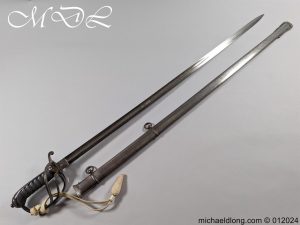
**OLDEST BRITISH ARMY REGIMENT**C1870 British Ordnance Proofed Honourable Artillery (HAC) Officer’s Sword By Kenning London With Etched Blade To ‘Richard White’, Bullion Cord & Portepee & Scabbard. Sn 22645:9 -. Established in 1537 the HAC is the oldest Regiment in the British army. It was primarily a citizen militia and raised in times of national emergency including the Armada, English Civil war and Napoleonic wars. Until the Victorian era, Officers would have followed regular infantry sword patterns. As this was a volunteer army, they would have to pay for all service equipment including their own swords. This sword highlights the strong influence of French sword design in that era, particularly with regard to the knuckle bow and angled or canted pommel (see page 175 of World Swords by Withers).This is a very good example of the HAC Officer’s Sword. Our example has a 30 ½” long, rapier type steel blade (36 ½” overall). The blade has light staining consistent with age. Both sides have foliate engraved panels, one side has stylised combined ‘HAC’ badge, name in banner ‘Richard White’ (most likely the Officer who carried this sword) and British Ordnance inlaid brass proof roundel. The reverse has foliate panels ‘HAC’ badge and maker / retailer name ‘Kenning Little Britain London’. It has brass guard with canted pommel and pierced upturned clamshell featuring the embossed ignited grenade artillery emblem. The undamaged fish skin covered hilt has its original copper wire binding which is tight and intact. The hilt is fitted with original bullion cord and portepee which has some service wear. The sword is complete with its original brass mounted leather scabbard. The scabbard with brass shoe has 2 original brass hanging rings. The scabbard has no damage & all leather & stitching are intact. The price for this sword worthy of further research regarding the named officer includes UK delivery. Sn 22645:9
  • Nation : Spanish
  • Local Price : £945
Click and use the code >25114 to search for this item on the dealer website Most Rare, Original, Late 18th Century Spanish Heavy Dragoon Cup Hilt Sword of the Napoleonic War Peninsular Campaign. An I8th Century or Earlier Form Spanish Rapier Hilt With a British 1796 Heavy Cavalry Ordnance Stamped Hadley Contract Blade
  • Nation : British
  • Local Price : £945
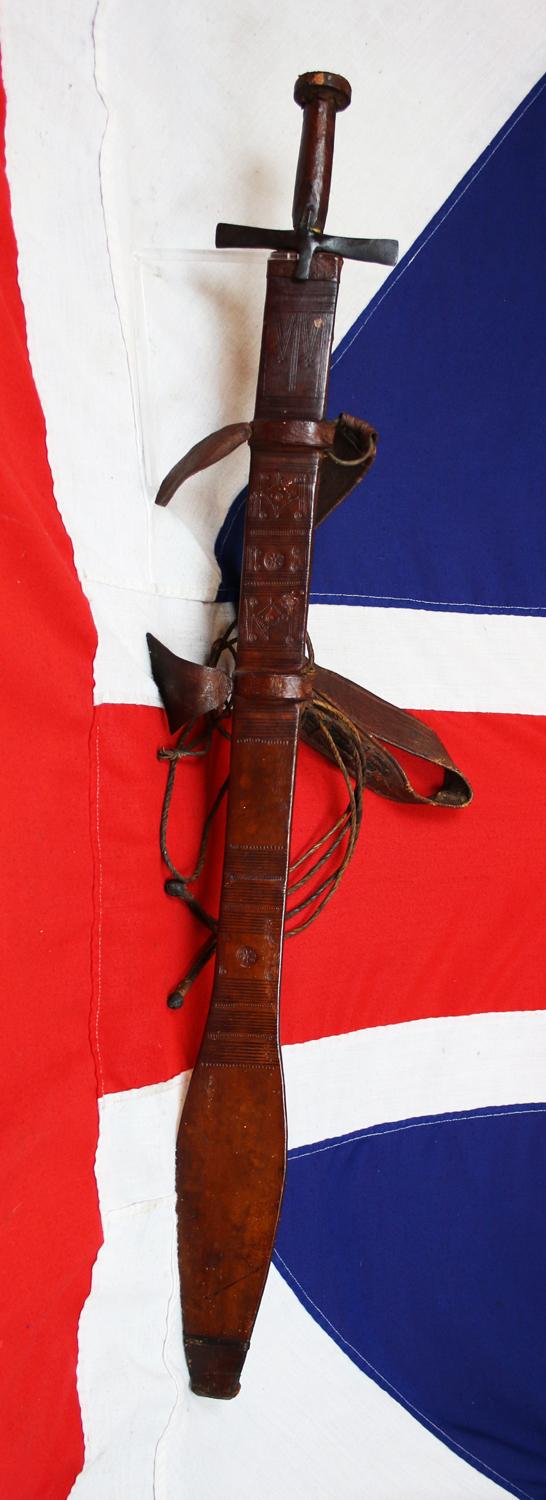
Click and use the code >26061 to search for this item on the dealer website Hugely Impressive, Attractive and Historical, Sudan War ´Mahdi´ Warrior´s War Sword, a Siege of Khartoum´ Period & Battle of Omdurman Kaskara. With Spectacular Blade Bearing Armourer´s Stamps & Inscription "May God Bless
  • Nation : Spanish
  • Local Price : £945
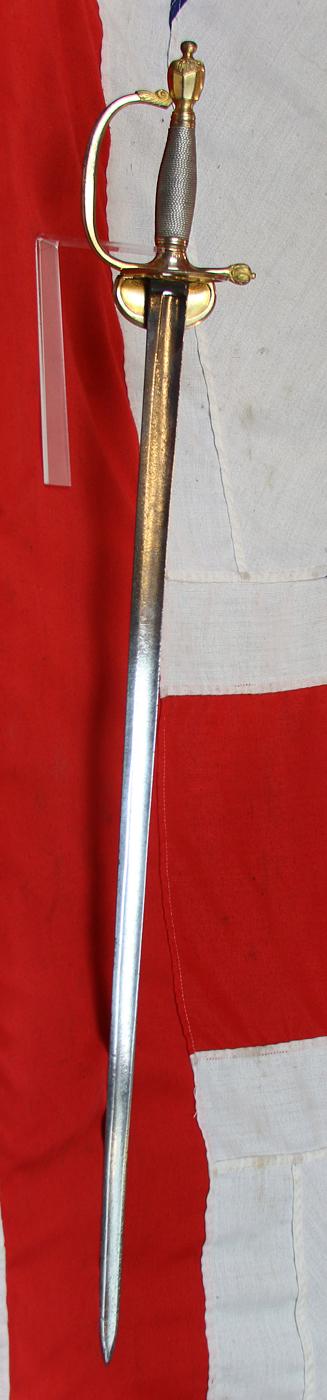
Click and use the code >25896 to search for this item on the dealer website Fine 1796 Infantry officer´s Sword Of The Napoleonic Wars, From The Peninsular Campaign to Waterloo. With A Near Mint Mercurial Gilt & Silver Hilt.
  • Nation : British
  • Local Price : £945
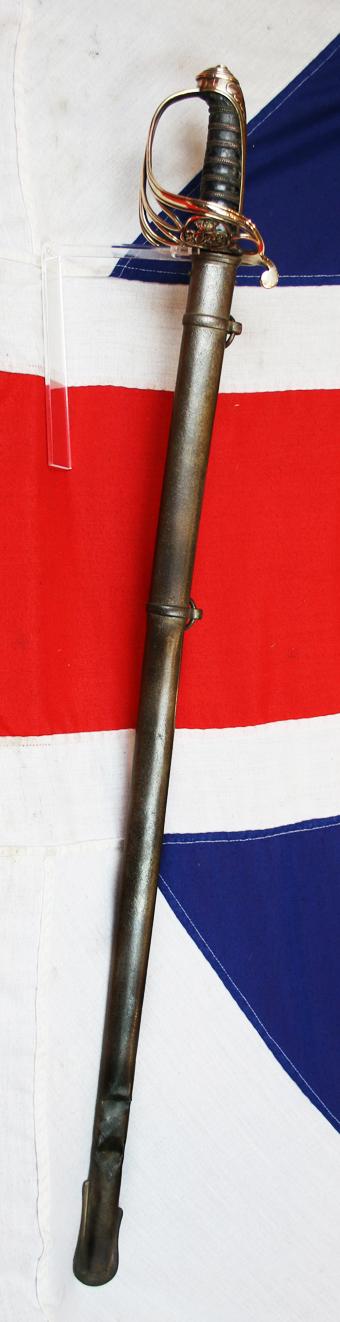
Click and use the code >26087 to search for this item on the dealer website Crimean & Zulu War Original 1821/45 Pattern Victorian Wilkinson Infantry Officer&#acute;s Deluxe Grade Combat Sword. Traditional Gothic Style Pierced Half Basket Hilt With Queen Victoria&#acute;s Cypher. Exactly As Worn By Lt Bromhead. Of a 57th Regt. Of
  • Nation : British
  • Local Price : £940
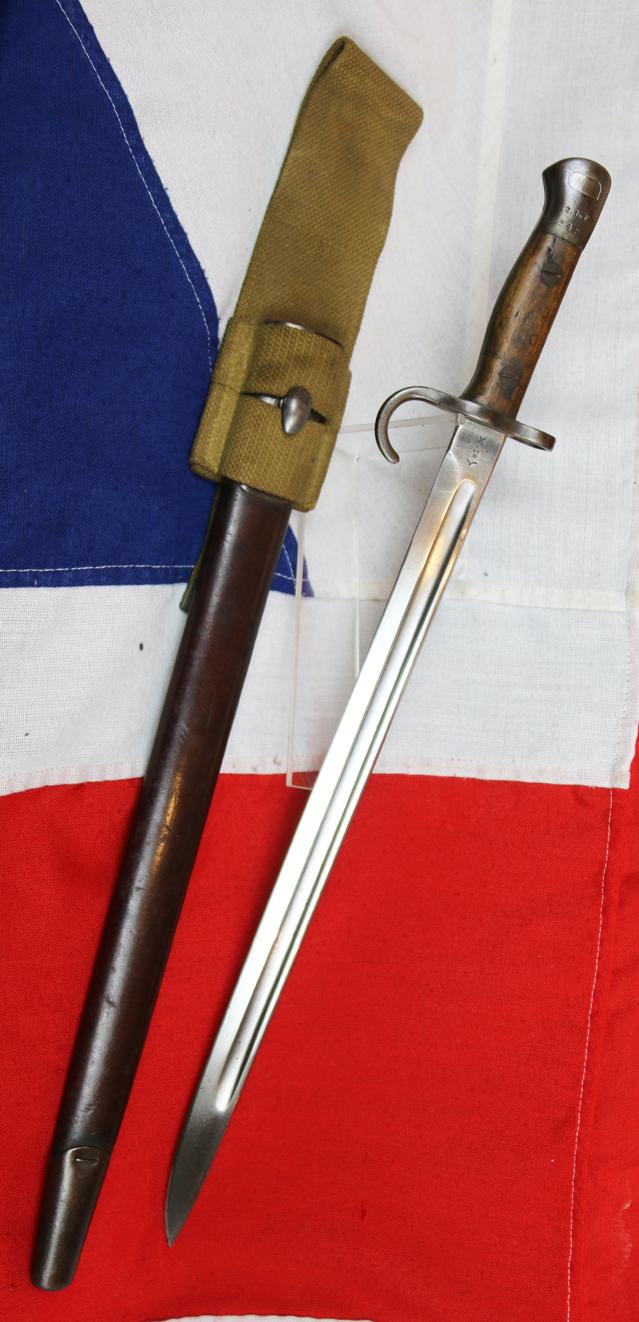
Click and use the code >25692 to search for this item on the dealer website 1907 King Edward VIIth Wilkinson Sword Enfield Hook Quillon Bayonet For the Early SMLE Rifle in Original Scabbard & Canvas Frog. issued To The 2nd Bt. Lancashire Fusiliers
  • Nation : Spanish
  • Local Price : £940
Click and use the code >25380 to search for this item on the dealer website Very Fine, 17th Century, King ´William & Queen Mary´ Period Hangar Sword Cutlass of Senior Naval Officer´s Admirals and Captains of the Royal Navy. Plus The Arm of Choice For All Infamous Pirates of The Day. With Stunning King´s He
  • Nation : Spanish
  • Local Price : £935
Click and use the code >22097 to search for this item on the dealer website 19th Century Napoleonic Pattern, Spanish Dragoons, Heavy Cavalry of the Line Sword
  • Nation : British
  • Local Price : £925.00
British 1804 pattern Cutlass. A British 1804 pattern Royal Naval Boarding cutlass in excellent condition. The 73cm blade is clean with minor spotting has a crowned &#acute;GR&#acute; cypher and crown over 8 inspection stamp. The figure 8 guard and chequered &156;pineapple&157; grip are in excellent condition with the original black japanning, and stamped with a military broad head arrow. The blade spine is stamped &#acute;Hadley&#acute;, for T Hadley one of the original 1804 contractors. The overall length is 85cmThe origin of this sword first appears on 30 May 1804 when the Board of Ordnance ordered "10,000 Swords for Sea Service to be made to a new pattern suggested by Henry Osborn". The contractors for the 1804 Pattern cutlass of May, 1804 were Henry Osborn, T Hadley, Woolley & Co, Craven and Co, and Dawes. A second order was made in 1808, with no further orders made during 1814-41 when a new pattern was issued
  • Nation : Persian
  • Local Price : 1,275.00 USD
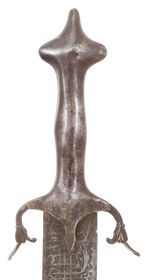
PERSIAN RENAISSANCE REVIVAL SWORD, 19TH CENTURY. Iconic example of this rare type which are dated variously from late 18th century to mid 19th. 28” broadsword blade, replicating the 15th century originals. Decorated with five portraits of nobles each side on a background of thicket made up of stylized thuluth calligraphy. Elaborately shaped iron hilt with cross form pommel and monster form quillon terminals. This example with remnants of silver decoration on both sides. The silver worn and the pommel with a dent each side, probably from ritual use. At least one reference states that these are made with undecorated hilts and we found only one other with decoration, further distinguishing this example.
  • Nation : French
  • Local Price : £900.00
18th Century French &#acute;Manstopper&#acute; Pistol. A large bore &#acute;manstopper&#acute; pistol from the late 18th or early 19th century. With a twisted damacus barrel, swan neck cock, chequered grip and engraved steel mounts, comprising trigger guard and turned ramrod pipe. Marked on the lock Aubrun à Nantes. The lock and action are in good condition and the pistol holds half and full cock well.The pistol is the work of Jean Aubron ca 1771-1818 in Nantes (France), a town located on the upper Loire River in Brittany. The Aubron family of gunsmiths began in the 1770s with Jean, and was continued by his son Jules Aubron ca 1805-1855 and through the latter part of the 19th century with Jules son Thomas
  • Nation : British
  • Local Price : £895.00
Original Victorian Era Indian Pata Gauntlet Long Sword. Sn 22752 -. Pata swordsmen of the 17th century through to the Victorian era were specially trained in the use of this weapon, and could be extremely accurate with this somewhat unusual sword form. Peculiar to the Indian subcontinent, these broadswords had a protective gauntlet or armguard of steel, the grip being set at right angles to the blade (see page 485 item 6 of Stone’s A Glossary Of Arms & Armor where a Pata with similar gauntlet form as ours is illustrated). The steel gauntlet on this example has age and use related wear and one small hole possibly old battle damage. The sword has a 37” flat steel double edged blade and measures 49 ¾” overall. The blade is riveted to the ornate extended tang of the Gauntlet. The blade with coarsely formed fuller / blood groove is sharp and has a few nicks consistent with age. The inside of the gauntlet has a steel bar grip set across the inside of the fist part of the gauntlet. The ’cuff’ of the gauntlet has a curved fore arm bar/ bracelet which hooks into 2 holes, one either side of the gauntlet. The price includes UK delivery. Sn 22752 (armoury next to bucket)
  • Nation : Japanese
  • Local Price : £895
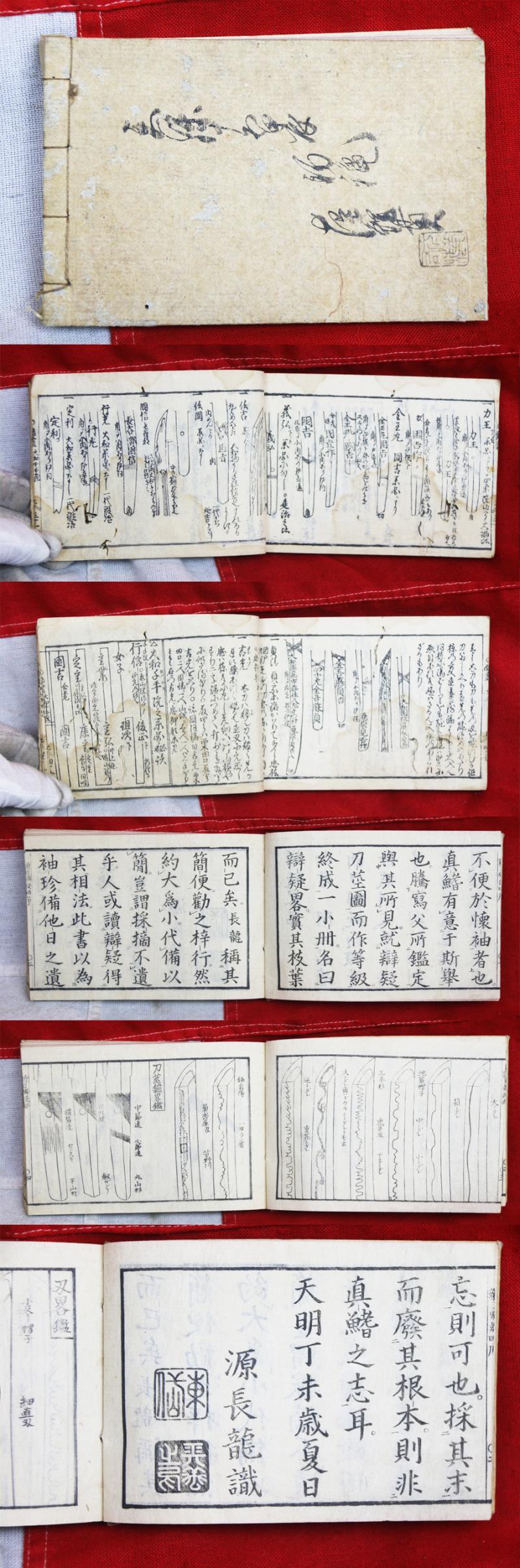
Click and use the code >24737 to search for this item on the dealer website Rare Collection of Three Original Early Edo Woodblock Hand Printed Books of Samurai Sword Oshigata, of Blade Forms Hamon and Kanji. Ideal For A Scholar Of Samurai Sword Master Makers, Or, A Collector Of Rare Samurai Sword History. Rarely Seen In England
  • Nation : German
  • Local Price : £895.00
**ORIGINAL**WW2 Era Nazi German Fire Protection Police Officer Rank Furhredegen Dress Sword By Holler, Solingen With Fire Protection Police Officer’s Bullion Cord & Portepee & Scabbard. Sn 22850 -. This is an original WW2 period German Nazi Police /Fire Service Officer Rank Furhredegen Dress Sword. These swords were for wear by Officers& officials of officer rank of the Police & Fire Department (see page 252 of the book ‘Swords Of Germany’ By Angolia for similar swords). The sword measures 36 ¾”overall and the ricasso of its clean, 31 ¼” single edged, blade with partial fullers is stamped with the ‘FW Holler Solingen’ manufacturer’s name and trademark. Its brown wood ribbed grip is undamaged and one side has white metal Eagle with Swastika (original, but not typical of the wreathed Eagle with Swastika usually seen on Nazi Police swords). The handle has on ornate oak Leaf motif ferrule, knuckle guard and stepped pommel. The hilt is fitted with original Fire Protection Police Officer’s Bullion Cord & Portepee (see page 326 of Angolia’s book where a Fire Protection Police Officer’s rank portepee the same as ours is illustrated). The sword is complete with its original black painted steel scabbard with single steel hanging ring, fixed strap bar and shoe. The throat has an ornate steel mount with geometric design. The scabbard has a few small dents and just light surface scuffs to the paint consistent with service wear and age. As with all of our stock this item is guaranteed 100% original. The price includes UK delivery. Sn 22850
  • Nation : Japanese
  • Local Price : £895.00
**MATCHING NUMBERS, BLADE NUMBERED ON SIDE**Original, WW2 Japanese NCO’s Type 95 Katana With ‘The Lijima Swords Factory’ & Kokura Arsenal Marks, Original Leather Strap With Barrel Knot & Scabbard. Sn 22842 -. This is an original WW2 Japanese NCO’s Katana and scabbard. The sword has the typical aluminium cast handle with lanyard ring and fully functioning scabbard retaining clip. The hilt retains some of its original brown paint. Its early, fullered, 27 ½” blade is stamped on one side ’50445’ and with inspection mark (later examples were stamped on the spine). The blade has no damage and is clean. The hilt is stamped with Lijima Swords Factory roundel with crossed swords mark and inspection mark together with Kokura arsenal mark (see pages 185 & 186 of Swords Of Imperial Japan by Dawson). The hilt’s sarute loop was found fitted with original leather strap with barrel knot. The strap and knot are clean and intact (the leather was a little dry with age and we have removed it from the hilt to leather feed it). The hilt’s locking catch works as it should. The sword is complete with its original scabbard which has a single hanging ring. The scabbard retains most of its original olive green paint finish. The throat of the scabbard is stamped with matching number. This piece is clearly a WW2 bring back, surrendered or recovered from the battlefield. The price includes UK delivery. Sn 22842
  • Nation : British
  • Local Price : £895.00
1796 Infantry Officer´s Sword by Osborn. Ref 9275. A 1796 Infantry Officer´s Sword by Osborn. 39&157; overall, 32 1/2&157; straight fullered engraved blade with crown GR, foliage & trophies of arms with Pre 1801 Union Jack,&194;&160; Osborn & Warranted in a ribbon . Forte with GG blade smith mark . Folding guard, D shaped knuckle bow, faceted pommel, twisted silver wire grip. In its original black leather scabbard with gilt brass top mount & chape with frog button & one suspension ring. Circa 1796-1801. &194;&160;&194;&160;&194;&160;&194;&160;&194;&160;&194;&160;&194;&160;&194;&160;&194;&160;&194;&160;&194;&160;&194;&160;&194;&160;&194;&160;&194;&160;&194;&160;&194;&160;&194;&160;&194;&160;&194;&160;&194;&160;&194;&160;&194;&160;&194;&160;&194;&160;&194;&160;&194;&160;&194;&160;&194;&160;&194;&160;&194;&160;&194;&160;&194;&160;&194;&160;&194;&160;&194;&160;&194;&160;&194;&160;&194;&160;&194;&160;&194;&160;&194;&160;&194;&160;&194;&160;&194;&160;&194;&160;&194;&160;&194;&160;&194;&160;&194;&160;&194;&160;&194;&160;&194;&160;&194;&160;&194;&160;&194;&160;&194;&160;&194;&160;&194;&160;&194;&160;&194;&160;&194;&160;&194;&160;&194;&160; Sword in good condition, scabbard repaired with leather full length contemporary reinforcement. Henry Osborn, Sword Cutler, Bordsley Near Birmingham, Circa 1800 &194;&160; Images courtesy of West Street Antiques (https://antiquearmsandarmour.com/)
  • Nation : -
  • Local Price : £895.00
1796 Variant Officers Sword. 1796 Variant Officers Sword, the hilt, pommel and back strap very similar to 1796 light cavalry sword but finer in detail. The grip leather bound with twisted wire with shield shaped langets, broadsword blade which is straight with small central fuller, no visible markings. Complete with matching steel scabbard with two loose rings please note two dents and slight age damage to the throat please see images, overall length 38 inch the blade 32.75 inch
  • Nation : French
  • Local Price : £895.00
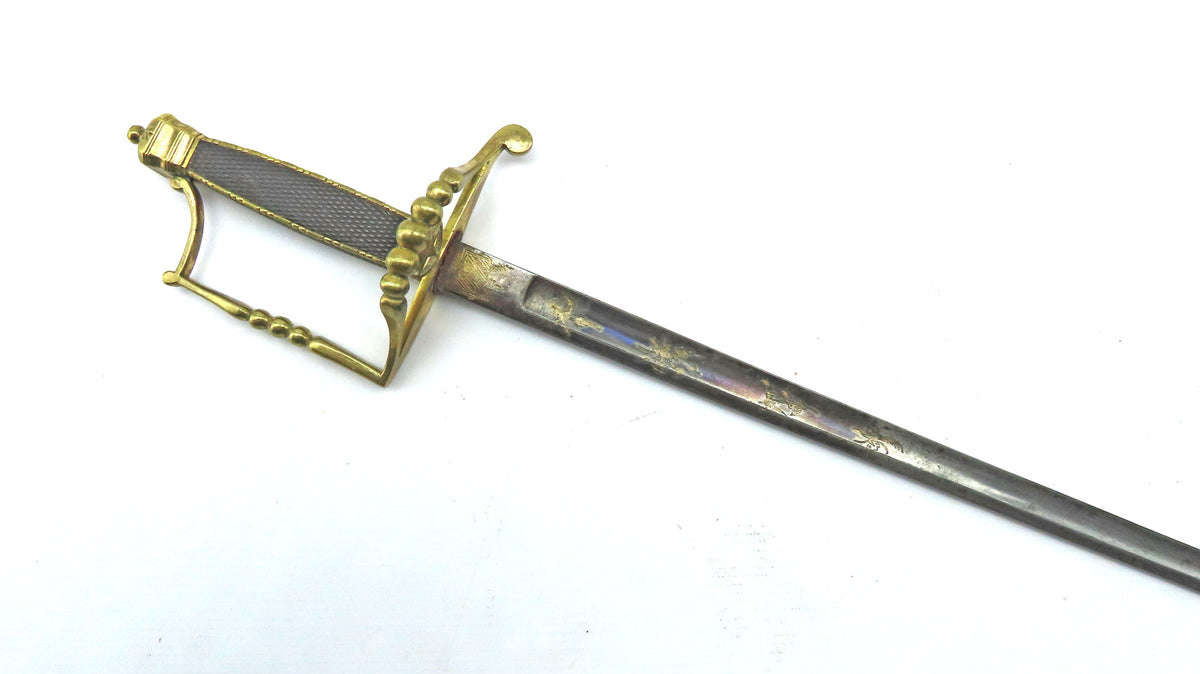
French Five Ball Hilt Spadroon. Ref X3409. A Fine French Five Ball Hilt Spadroon. 38 1/2&157; overall, 33&157; slender blue & gilt straight blade decorated with trophies of arms. Five ball gilt hilt with star in side bar, cushion pommel engraved with bay leaves & chequered ebony grip, with gilt brass edges. Lacks scabbard. Circa 1800&194;&160; &194;&160; &194;&160; &194;&160; &194;&160; &194;&160; &194;&160; &194;&160; &194;&160; &194;&160; &194;&160; &194;&160; &194;&160; &194;&160; &194;&160; &194;&160; &194;&160; &194;&160; &194;&160; &194;&160; &194;&160; &194;&160; &194;&160; &194;&160; &194;&160; &194;&160; &194;&160; &194;&160; &194;&160; &194;&160; &194;&160; &194;&160; &194;&160; &194;&160; &194;&160; &194;&160; &194;&160; &194;&160; &194;&160; &194;&160; &194;&160; &194;&160; &194;&160; &194;&160; A very attractive high quality sword in good condition, possibly for a Naval Officer. &194;&160; &194;&160; &194;&160; &194;&160; &194;&160; &194;&160; &194;&160; &194;&160; &194;&160; &194;&160; &194;&160; &194;&160; &194;&160; &194;&160; &194;&160; &194;&160; &194;&160; &194;&160; &194;&160; &194;&160; &194;&160; &194;&160; &194;&160; &194;&160; &194;&160; &194;&160; &194;&160; &194;&160; &194;&160; &194;&160; &194;&160; &194;&160; &194;&160; &194;&160; &194;&160; &194;&160; &194;&160; &194;&160; &194;&160; &194;&160; &194;&160; &194;&160; &194;&160; &194;&160; &194;&160; &194;&160; &194;&160; &194;&160; &194;&160; &194;&160; &194;&160;&194;&160; Images courtesy of West Street Antiques (https://antiquearmsandarmour.com/)
  • Nation : Spanish
  • Local Price : £895
Click and use the code >25381 to search for this item on the dealer website Very Fine, 17th Century, King ´William & Queen Mary´ Period Hangar Sword Cutlass of Senior Naval Officer´s Admirals and Captains of the Royal Navy. & Notorious Pirates ð&159;´
  • Nation : Japanese
  • Local Price : £895.00
Japanese Meiji Period 1868-1912 Wakizashi Short With Scabbard & UK Expert Assessment. Sn 22824 -. This Wakizashi has been examined by UK Japanese sword expert Bill Tagg and a copy of his assessment notes accompany the sword. In extracts of his notes he states “A Wakizashi short sword, the whole sword and mounts date from Meiji Period 1868-1912. A basically forged short sword in bright but heavily scratched condition obscuring all but a coupleof inches of notare undulating hamon temper line, difficult to see, looks a nioi crystal edge to hamon. Needs a polish to reveal workmanship. Mounted as handachi (half tachi) with all matching saya scabbard and tsuka fittings, in a copper patinated alloy with gilt edges. Typical late Meiji export mounts. Tsuka is well wrapped in black ito cotton, fish skin intact but dirty. Finished with good quality menuki in shakudo & gold showing doves sitting on plum tree branch. Hilt is original & untouched Meiji period. Tsuba is 4 lobed mokko shape in iron. Some old rust showing Samurai sitting by stream. Some copper inlays look circa 1800 possibly Nara school work. Unsigned. Habaki wrapped in thin silver foil sheet with grooves. Ko-Gatana side knife missing from Saya slot. Saya has old repairs”. In his illustrations of the blade he describes the cutting edge of blade as just over 38.5 cms. Total length 49 cms. He also describes other blade characteristics and dimensions which can be seen in the images. The price includes UK delivery. Sn 22824
  • Nation : Japanese
  • Local Price : £895.00
**ANCIENT 1700 - 1750’s BLADE**Japanese Yamato Influence Ko (Small) Wakizashi Short Sword, Iron Tsuba, Signed ‘MASA TSUGU’, Ko-Gatana Side Knife, Scabbard Padded Carry Bag & Expert Assessment. Sn 23030 -. This Wakizashi with ancient blade has been examined by UK Japanese sword expert Bill Tagg and a copy of his assessment notes accompany the sword. In his notes he states “An unsigned (small) wakizashi shortened by having nakago jiri (end) cut & blade notches (machi) moved downwards. Hard to judge age, from shape & wear to edge & patina of tang looks like around 1700–1750 made. With hamon shape looks Yamato influence. Needs a polish & see work. Has good quality double habaki blade collar in copper. Saya wood with black lacquer finish has been repainted in past. Small amounts of damage. With Ko-Gatana (side knife) late 19th century in soft metal unsigned, hilt typical design with engraved plant & silver line inlay. Tsuba is oval iron probably cast from an older copy of Omori school work (undercut waves) very scratchy signature, possibly Masa Tsugu? Dark black patina Late 19th century. Tsuka has been rebound with black ito, fish skin intact but dirty. Small plant / flower menuki in soft metal. Fuchi / Kashira in Shakudo with small flower designs and gilt edging to both. Put together for export in late 19th century”. In his illustrations of the blade he describes the cutting edge of blade as 35.5cms. Total length 46cms. He also describes other blade characteristics and dimensions which can be seen in the images. The Ko Wakizashi comes with a modern 24” Ace USA zip up soft padded material Transit Carry / Storage bag. The price includes UK delivery. Sn 23030 (on top of gun rack armoury)
Page 15 of 40

The following items match your search but are currently listed on Ebay. We take no responsibility for any aspect of the listings or their accuracy.


Sorry, there is not any matching items.