
(You must register and have a linked account first)
View Privacy Policy


OR

Show


Forgot your password?

Error message here!

Error message here!

Error message here!

Error message here!

Show Error message here!

Show Error message here!


Lost your password? Please enter your email address. You will receive a link to create a new password.

Error message here!

Back to log-in

Close

For Sale

The following items are listed by for sale by users of the site and dealers. They are in no way endorsed or guaranteed by www.oldswords.com

Add a Classified Item
to

Clicking on the sword will take you through to the relevant classified item or dealer site.
Don't miss out! - Do you want to be kept informed weekly of new aditions? Just join our weekly update list.

You can also receive regular email notifcations when items match your keywords. To recieve them just register or logon at the top right of this page.
Page 16 of 40
  • Nation : French
  • Local Price : £895.00
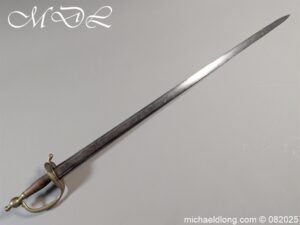
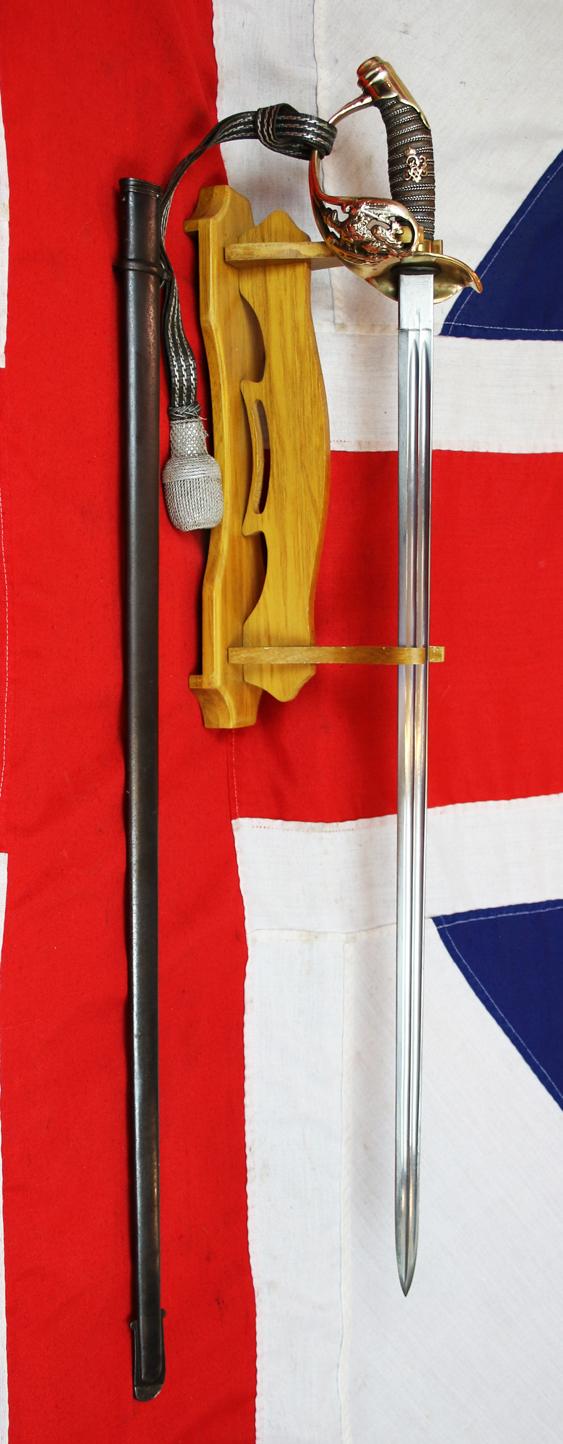
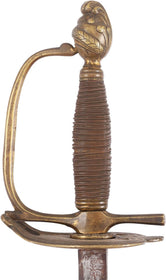
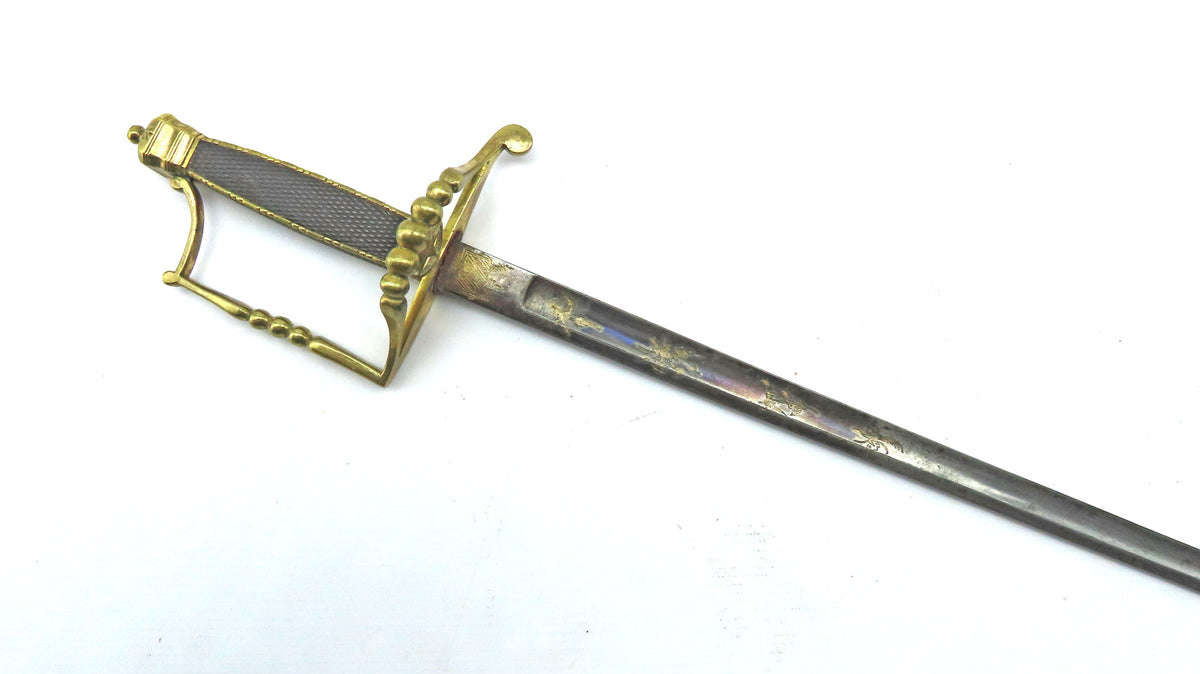
French Five Ball Hilt Spadroon. Ref X3409. A Fine French Five Ball Hilt Spadroon. 38 1/2&157; overall, 33&157; slender blue & gilt straight blade decorated with trophies of arms. Five ball gilt hilt with star in side bar, cushion pommel engraved with bay leaves & chequered ebony grip, with gilt brass edges. Lacks scabbard. Circa 1800&194;&160; &194;&160; &194;&160; &194;&160; &194;&160; &194;&160; &194;&160; &194;&160; &194;&160; &194;&160; &194;&160; &194;&160; &194;&160; &194;&160; &194;&160; &194;&160; &194;&160; &194;&160; &194;&160; &194;&160; &194;&160; &194;&160; &194;&160; &194;&160; &194;&160; &194;&160; &194;&160; &194;&160; &194;&160; &194;&160; &194;&160; &194;&160; &194;&160; &194;&160; &194;&160; &194;&160; &194;&160; &194;&160; &194;&160; &194;&160; &194;&160; &194;&160; &194;&160; &194;&160; A very attractive high quality sword in good condition, possibly for a Naval Officer. &194;&160; &194;&160; &194;&160; &194;&160; &194;&160; &194;&160; &194;&160; &194;&160; &194;&160; &194;&160; &194;&160; &194;&160; &194;&160; &194;&160; &194;&160; &194;&160; &194;&160; &194;&160; &194;&160; &194;&160; &194;&160; &194;&160; &194;&160; &194;&160; &194;&160; &194;&160; &194;&160; &194;&160; &194;&160; &194;&160; &194;&160; &194;&160; &194;&160; &194;&160; &194;&160; &194;&160; &194;&160; &194;&160; &194;&160; &194;&160; &194;&160; &194;&160; &194;&160; &194;&160; &194;&160; &194;&160; &194;&160; &194;&160; &194;&160; &194;&160; &194;&160;&194;&160; Images courtesy of West Street Antiques (https://antiquearmsandarmour.com/)
  • Nation : Spanish
  • Local Price : £895
Click and use the code >25381 to search for this item on the dealer website Very Fine, 17th Century, King ´William & Queen Mary´ Period Hangar Sword Cutlass of Senior Naval Officer´s Admirals and Captains of the Royal Navy. & Notorious Pirates ð&159;´
  • Nation : Japanese
  • Local Price : £895.00
Japanese Meiji Period 1868-1912 Wakizashi Short With Scabbard & UK Expert Assessment. Sn 22824 -. This Wakizashi has been examined by UK Japanese sword expert Bill Tagg and a copy of his assessment notes accompany the sword. In extracts of his notes he states “A Wakizashi short sword, the whole sword and mounts date from Meiji Period 1868-1912. A basically forged short sword in bright but heavily scratched condition obscuring all but a coupleof inches of notare undulating hamon temper line, difficult to see, looks a nioi crystal edge to hamon. Needs a polish to reveal workmanship. Mounted as handachi (half tachi) with all matching saya scabbard and tsuka fittings, in a copper patinated alloy with gilt edges. Typical late Meiji export mounts. Tsuka is well wrapped in black ito cotton, fish skin intact but dirty. Finished with good quality menuki in shakudo & gold showing doves sitting on plum tree branch. Hilt is original & untouched Meiji period. Tsuba is 4 lobed mokko shape in iron. Some old rust showing Samurai sitting by stream. Some copper inlays look circa 1800 possibly Nara school work. Unsigned. Habaki wrapped in thin silver foil sheet with grooves. Ko-Gatana side knife missing from Saya slot. Saya has old repairs”. In his illustrations of the blade he describes the cutting edge of blade as just over 38.5 cms. Total length 49 cms. He also describes other blade characteristics and dimensions which can be seen in the images. The price includes UK delivery. Sn 22824
  • Nation : Japanese
  • Local Price : £895.00
**ANCIENT 1700 - 1750’s BLADE**Japanese Yamato Influence Ko (Small) Wakizashi Short Sword, Iron Tsuba, Signed ‘MASA TSUGU’, Ko-Gatana Side Knife, Scabbard Padded Carry Bag & Expert Assessment. Sn 23030 -. This Wakizashi with ancient blade has been examined by UK Japanese sword expert Bill Tagg and a copy of his assessment notes accompany the sword. In his notes he states “An unsigned (small) wakizashi shortened by having nakago jiri (end) cut & blade notches (machi) moved downwards. Hard to judge age, from shape & wear to edge & patina of tang looks like around 1700–1750 made. With hamon shape looks Yamato influence. Needs a polish & see work. Has good quality double habaki blade collar in copper. Saya wood with black lacquer finish has been repainted in past. Small amounts of damage. With Ko-Gatana (side knife) late 19th century in soft metal unsigned, hilt typical design with engraved plant & silver line inlay. Tsuba is oval iron probably cast from an older copy of Omori school work (undercut waves) very scratchy signature, possibly Masa Tsugu? Dark black patina Late 19th century. Tsuka has been rebound with black ito, fish skin intact but dirty. Small plant / flower menuki in soft metal. Fuchi / Kashira in Shakudo with small flower designs and gilt edging to both. Put together for export in late 19th century”. In his illustrations of the blade he describes the cutting edge of blade as 35.5cms. Total length 46cms. He also describes other blade characteristics and dimensions which can be seen in the images. The Ko Wakizashi comes with a modern 24” Ace USA zip up soft padded material Transit Carry / Storage bag. The price includes UK delivery. Sn 23030 (on top of gun rack armoury)
  • Nation : British
  • Local Price : £895.00
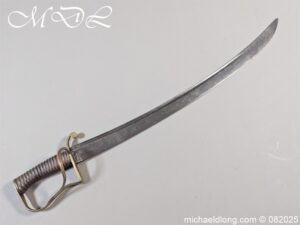
English Artillery Short Sword. English Artillery Short Sword c1800 “ 1815 brass hilt similar to a 1796 sword hilt with shield lancets and ribbed grip which is leather bound. The blade straight flat sided and single edged with the spine being 8mm in thickness at the hilt tapering down to form a spear point. Overall length 76cm the blade 64cm it is complete with matching leather scabbard with brass mount the top one with frog stud
  • Nation : British
  • Local Price : £895.00
Early 19th Century Moroccan / Arab Nimcha Sabre Sword With Etched Blade & Rare To Find Original Tooled Leather Covered Wood Scabbard. ED 3028 -. This is a nice Moroccan Arab Nimcha sabre used both in Arab countries and Morocco (see page 469 of Glossary of Construction Decoration & Use Of Arms & Armour By Stone). This example most likely made in the 19th Century has the typical, distinctive wood handle, with drooping iron quillons which have cast ball ends and iron knuckle guard with cast ball end. The wood has knocks bumps and bruises to be expected and a period applied brass plate with scalloped top edge secured by brass pins on one side. The wood is totally secure. It has a 34" curved sabre blade with fullers. The blade has no visible maker marks and has light foliate & Crescent moon & foliate etching partially visible under the blades age related staining. There is no damage to the cutting edge. The sword measures 40 ½” overall. These swords are usually found without scabbards. Our example has its original rare to find leather covered wood scabbard. The leather has a rear seam and hand tooled foliate decoration. The surface of the leather has scuffs and one old stable tear in the top section consistent with age and carry. The price includes UK delivery. ED 3028
  • Nation : British
  • Local Price : £895.00
Cape Mounted Rifles 1853 Troopers Sword. Cape Mounted Rifles 1853 Troopers Sword, regulation British cavalry trooper&#acute;s sword. Slightly curved blade with single fuller and maker marked Mole with a small crown over B over 47 Regulation iron hilt 3 bar hilt with chequered leather slab grips worn. Complete with scabbard marked C.M.R please note one ring missing and throat overall length 41.25 inch the blade 35.25 inch for reference: Swords of the British Army by Brian Robson page 12 “ 13
  • Nation : British
  • Local Price : $895.00
English Plug Bayonet, Last Quarter 17th C. The plug bayonets of England had curved blades more often than any other country. The example offered here features an unmarked slightly curved 11 1/16″ single-edged blade of wedge section, the last 4 3/4″ double-edged. Brass guard with acorn finials and brass pommel with small turned button finial. Figured walnut grip with brass base ferrule. Blade smooth and near excellent, with one tiny edge nick. Grip and guard also near excellent, appearing to have never been mounted in a gun barrel. Overall length 17″. Though probably originating around 1550, the plug bayonet had a relatively short span of use from around 1650-1720 (except in Spain where they were used into the 19th C). Their rise in popularity largely paralleled the development of standing armies in Europe, which were realizing the importance of the musketeer, while at the same time not wanting to wholly abandon the pike. In this sense the plug bayonet can be considered a transitional weapon. However, despite its use as a dagger on its own, it was soon found to be impractical since it's use prevented the musket from being fired. Countless soldiers also found great difficulties in removing a stuck plug bayonet from the muzzle, rendering the musket useless as a firearm. Many were damaged while being removed and as a result relatively few survive. For these reasons it was soon superseded by the socket bayonet, which did not affect the musket's ability to fire and could much more easily be removed.
  • Nation : British
  • Local Price : £895.00
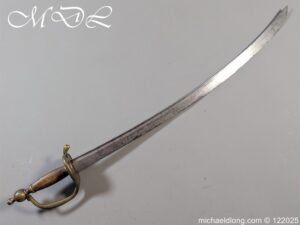
British Militia Infantry Sword c 1760. British Militia Infantry Sword c 1760 straight double edged blade with two short fullers and spear point. The hilt is brass with heart shape guard and integral knuckle guard and ovoid pommel and raised tang button. The grip is wood and assume it would have been bound in wire or leather overall length 42 inch the blade 36 inch
  • Nation : British
  • Local Price : £895.00
English Infantry Privates Hanger c 1750. English Infantry Privates Hanger c 1750, brass hilt comprising oval pommel on a stand and with a prominent tang-button, D-shaped knuckle-guard which spreads to form a heart-shaped stool around the blade, and very short rear quillon with drop-finial inclined towards the blade. Wooden grip no traces of being bound with wire, slightly curved single-edged blade with a narrow fuller almost at the back edge and stamped with crown over a 2 maker marked bates, overall length 33.75 inch the blade 28 inch
  • Nation : British
  • Local Price : £875.00
**RARE**NAPOLEONIC PENINSULAR WARS ERA, C1800 British Senior Infantry Officer’s Sword With Etched Blade & Rare To Find Scabbard. ED 2940 -. This is an original rare to find example of a C1800 British Senior Infantry Officer’s sword styled on the pattern 1796 Infantry Officer’s sword (see page 160 of World Swords by Withers). Our excellent example has the correct Georgian styling with brass shell guards with correct chased decoration. It has the correct brass knuckle bow and urn shaped pommel. The wire bound grip is very good. All wire is tight and intact. It has a 34 ¾” long fullered blade (41 ¾” overall). The blade has staining consistent with age. The lower section of both sides of the blade have light panels of foliate decoration. There are no visible maker marks. The sword comes with its rare to find original brass mounted black leather scabbard. The leather is complete. The surface of the leather has some scuffs to be expected with age and use. The price for this rare sword and scabbard includes UK delivery. ED 2940
  • Nation : British
  • Local Price : £865.00
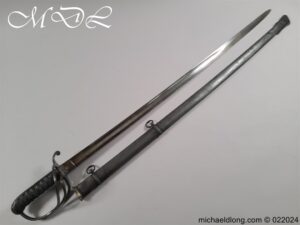
Victorian 18th Hussars 1821 Light Cavalry Officers Sword by Wilkinson. British Victorian 1821 Light Cavalry Officers Sword by Wilkinson Sword London number 21143, in good condition regulation 3 bar hilt with cheered pommel and fish skin grip. Slightly curved blade etched with Wilkinson details and owner initials, the sword is sold with a copy of Wilkinson register but very hard to confirm the name possibly Frederick T. Miles, 18th Hussars. Complete with matching steel scabbard. Overall length 104cm the blade 88.5cm for reference please see Swords of the British Army Revised Plate 78
  • Nation : British
  • Local Price : £865.00
British Army Brass Hilted Sidearm. Very similar to a British Army Hospital Corps Sword c 1861 slightly curved blade with flat back and narrow top fuller however maker marked Enfield with GR and crown. It has been indicated to me that these were initially issued for use by Coast Guard c 1800 and later re-issued to the British Army in 1861 from surplus stock, adopted as a sword to be carried by British Army Hospital Corp Privates Brass hilt with side guard and cast ribbed grip overall length 29.5 inch the blade 25 inch
  • Nation : Austrian
  • Local Price : 1200.00 USD
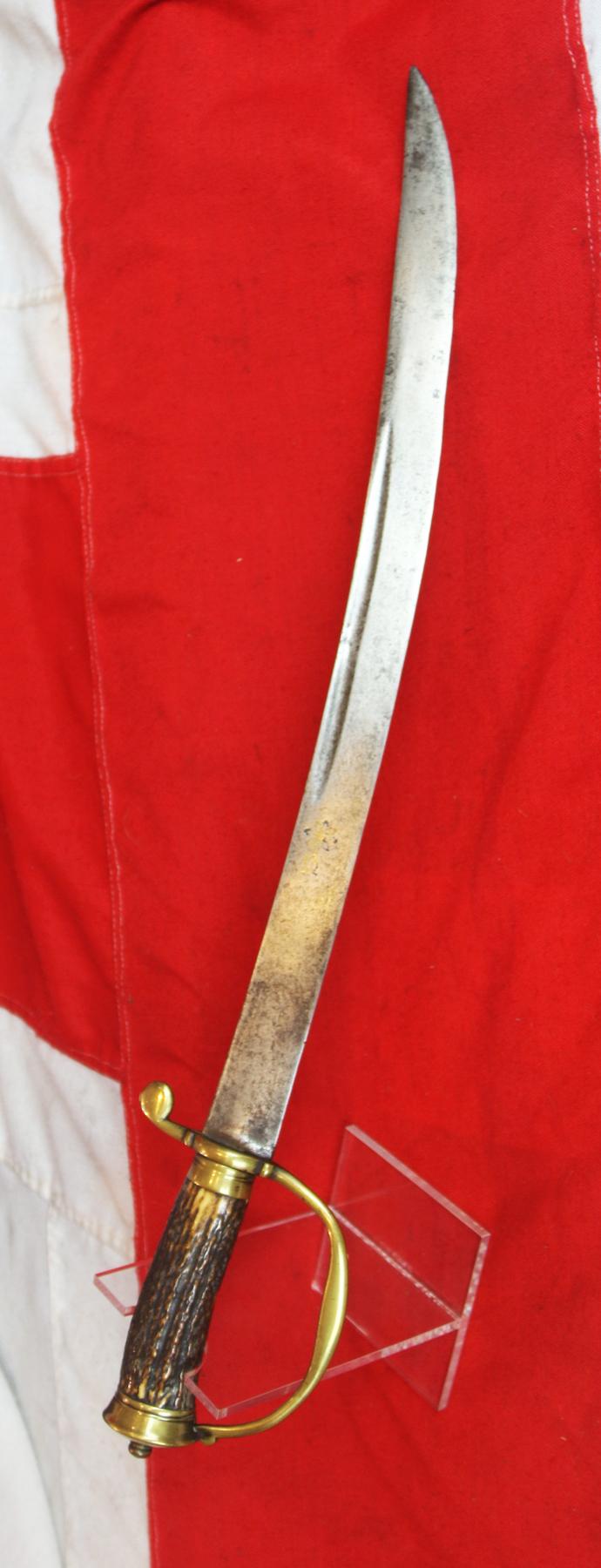
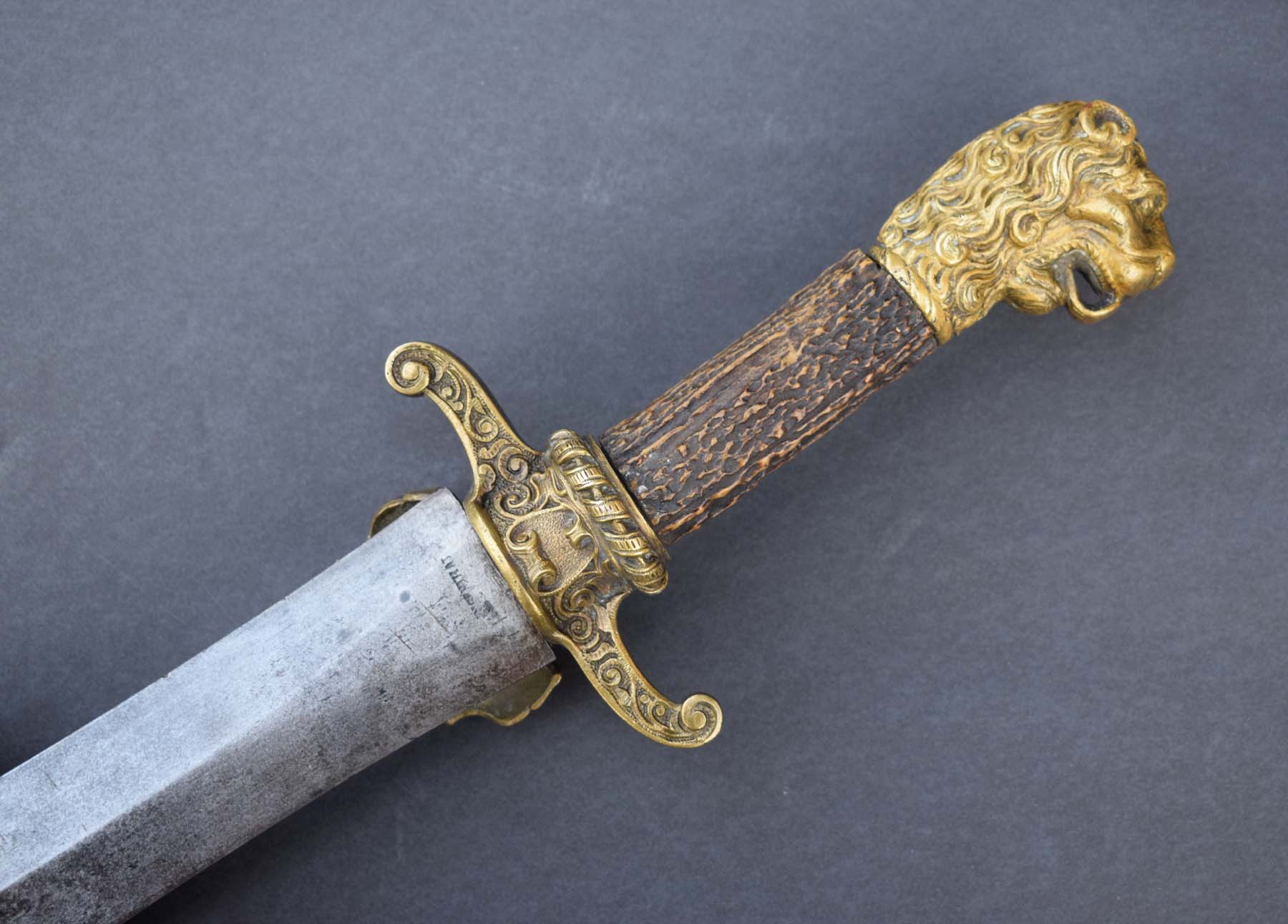
Magnificent Lion Head Austrian Hunting Sword: Double Headed Eagle!. ON SALE! ORIGINALLY $1,495. A stunning circa 1830 hunting sword with large detailed lion head (check out the detail!), stag antler grip and beautifully detailed guard displaying the Austrian Double Headed Eagle on its shell! Over length is 26 inches. The blade is stamped “KLINGENTHAL” and is the same pattern that was used on the French 1831 foot troop sword. A RARE AND MAGNIFICENT HUNTING SWORD! Price is firm. Thanks for looking!
  • Nation : British
  • Local Price : 1200.00 USD
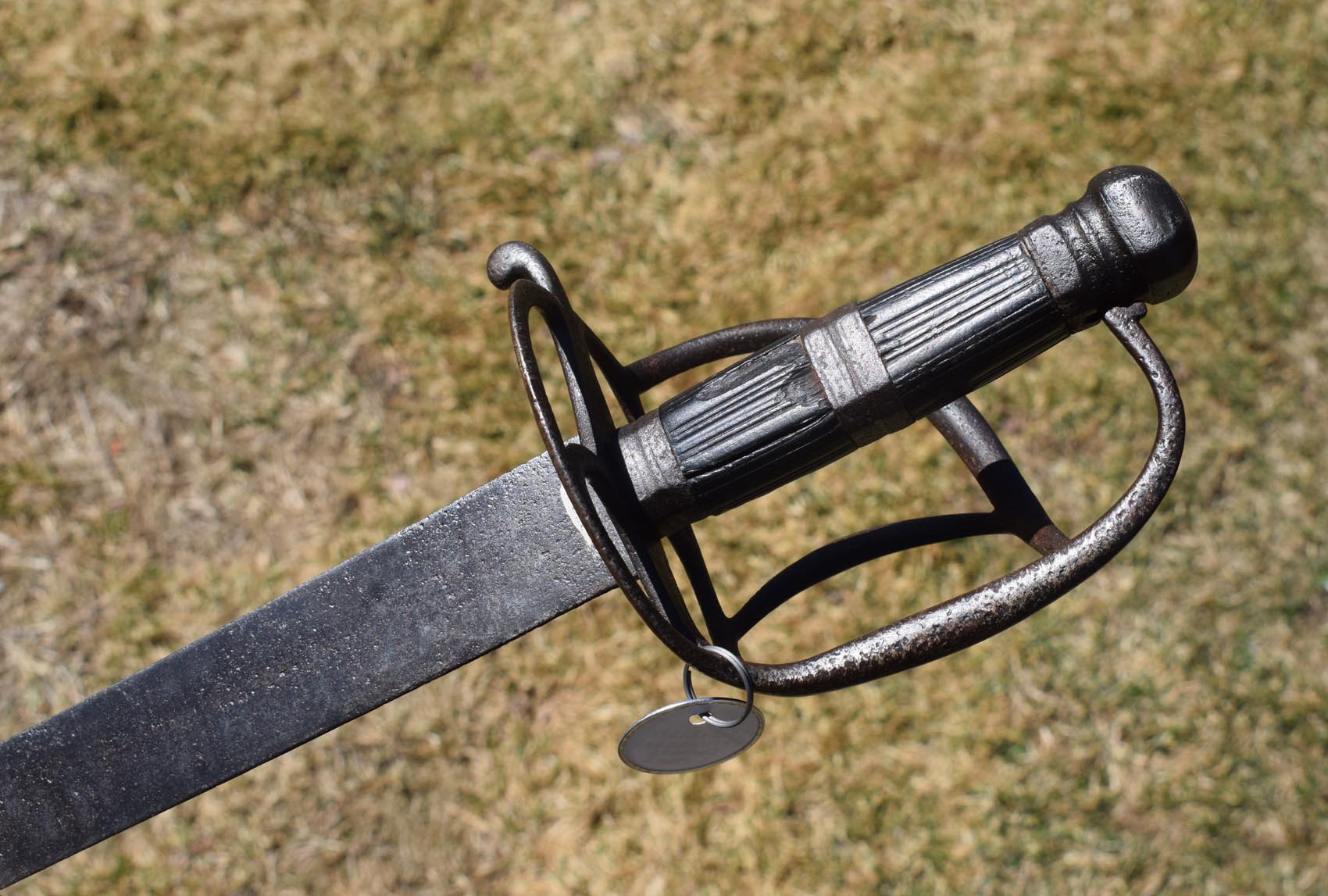
18th Century British Privateer Cutlass!. ON SALE! ORIGINALLY $1,495. A rare c 1780’s early pillow pommel, iron hilted, cutlass with a wonderful heart shaped counterguard and a wide flat blade! Excellent overall with only small chips in the ebony grip. Price is firm. Thanks for looking! Be sure to check out our other listings for more great swords, arms and armor! Our direct email address is: fineartlimited@yahoo.com
  • Nation : French
  • Local Price : £850.00
Italian 1855 Model Sabre. Designed by the Turin-based sword maker Francesco Gravier in co-operation with the royal arms factory, this sword would become an iconic sword of Italy’s unification period military. Taking influence from earlier military patterns, it would remain in service until 1888.82cm long, 94cm overall and 3cm wide at the shoulders, the double fuller extends the length of the blade and it is engraved with stands of arms and the initials D DThe sword and handle are solid with no movement, and the blade and scabbard are free from marks or pitting.
  • Nation : French
  • Local Price : £850.00
French Préval Sword. One of the rare Préval sabres inspired by Colonel Claude Antoine Préval, these swords were created to be a viable alternative to the standard cavalry sword at the time. Préval trailed this style of blade in the 1830s as he believed it made sense from a cavalry perspective, being light, strong and very stiff. Creating a sword which could function as both a sword and lance in combat. These were often used by Zouave and Chasseur d’ Afrique regiments from around 1855 onwardThe multi bar steel steel hilt has a long triangular sectioned blade with horn handleThe sword has some historical damage around the hilt, where it appears a previous break has been pinned and brazed.
  • Nation : British
  • Local Price : £850
Click and use the code >26139 to search for this item on the dealer website Very Fine 1889 Pattern Regimental Officer´s Sword WW1 Imperial Prussian Eagle Guard With Crest of Kaiser Willhelm IInd. Surrendered on the 4th of May 1945. A Few Hours Before The Official Instrument Of Surrender Was Signed at 18.30 Hours
  • Nation : British
  • Local Price : £850.00
British 1845 Pattern Naval Cutlass, Post-1859 Type B, by Chavasse. Description Slightly curved, unfullered blade, leather washer, black-painted bowl hilt and ribbed grip, both cast iron, complete with black leather scabbard with steel chape and throat piece with frog stud, black leather frog. Blade 27 inches in length, the cutlass 32 inches overall. The blade is stamped at the ricasso with the maker&#acute;s mark &#acute;Chavasse&#acute;, indicating manufacture by Chavasse & Co, Birmingham. It is stamped on the other side with a small indistinct mark, possibly a crown inspection stamp. The rear side of the frog is stamped near the belt loop with a broad arrow and &#acute;I&#acute; which is an Indian stores mark, as well as with a very small letter &#acute;V&#acute; near the bottom edge. Experiments during the early 1840s for a new naval cutlass design to replace the venerable 1804 Pattern resulted in a design by George Lovell, the Inspector of Small Arms, being accepted in 1842. A fire at the Tower of London destroyed early stocks and the design did not enter service in bulk until three years later, hence being termed the 1845 Pattern, the initial production run lasting until around 1852. In December of 1859 and January of 1860, the War Office placed new orders for 17,000 cutlasses spread across eight British manufacturers. These were 1845 Patterns but with a modified hilt, sometimes called the Type B: slightly smaller than the original, with less of a swell to the grip towards the pommel, an oval steel strengthening piece between the grip and the hilt and the back edge of the bowl hilt upturned slightly towards the blade. 3,000 of this batch were ordered from Chavasse & Co, of which this example is one. It has its original brass-mounted leather scabbard, not the new model introduced in 1862 which featured a retaining spring. The blade is the original curved 27 inches long: many 1845s of both A and B types were converted to straight 25½ inch blades in the 1870s by shortening and reforging. This process was botched by a lack of proper heat treatment after the reforging, leading to blade failures in combat, the deaths of British sailors, a public outcry and a military procurement scandal. The original, unmolested 1845 was considered very successful, however, handling well compared to its bulky predecessor the 1804 and being simpler to manufacture. The blade is bright with patches of cleaned pitting, which affects the edge in places. The very tip of the blade has rolled (<1mm). The hilt and grip retains almost all of its black paint, some very minor flaking and wear e.g. at the bowl edges. The brass fittings of the scabbard are free of dents and have an even patina. The leather of the scabbard remains flexible with some surface-level cracking and light rubbing in places, its stitching is open along most of its length. The frog has more significant cracking, some flaking, and rubbing wear at its edges. The leather retaining strap of the frog has broken at the weak point where the hole is pierced for fastening at the buckle.
  • Nation : Japanese
  • Local Price : £850.00
**1600-1800 SHINTO PERIOD BLADE MODELLED ON ANCIENT 14TH CENTURY STYLE** RESTORATION PIECE**Japanese O Wakizashi / Uchi Gatana Single Handed Sword, Scabbard & Expert Assessment. ED 3017 -. This sword has been assessed by UK Japanese sword expert Bill Tagg. A copy of his hand written notes and illustrations accompany the sword. In extracts from his notes he states “O Wakizashi or Uchi Gatana single handed sword. Interesting but difficult to date. Based on a Nambokucho 14th Century shape. Probably a big flamboyant Shinto period 1600-1800 made sword, light enough for Shinto. Would look outstanding with a new polish. Hard to put a particular school or style. Has piece of brass soft soldered to end probably done by smith to improve balance when in use. Saya is Meiji period very dark red lacquer, oblique slash marks decoration with horn kuri kata & big patinated copper top and bottom plain fittings. Good condition overall. Faded copper habaki Meiji period. Tsuba Katana size oval patinated copper with Nanako dots and incised plant / leaf decoration late Meiji period. No school stands out, un-signed. Small assembly numbers on seppa. Tsuka plain wood, no Ray skin or menuki, simple re-bind by previous owner, needs fish skin and professional re-bind. Fuchi Kashira soft metal patinated copper pair with Kingfisher & boat riverbank scene very good quality & good condition Meiji period. A restoration piece”. In his illustrations Bill measures the cutting edge as just over 51 cms, total length 68.5 cms and describes other blade and tang measurements & characteristics which can be seen in image 2. As a restoration piece. The price includes UK delivery. ED 3017
  • Nation : British
  • Local Price : £850.00
British 1796 Pattern Light Cavalry Trooper&#acute;s Sword by Runkel, 1796-1800. Description Curved single-edged blade with single fuller and hatchet point. Brown leather washer, iron stirrup P-shaped hilt with sword knot slit, comma-shaped quillon, semioval langets, smooth iron backstrap with projecting ears secured to the tang through the grip with a single rivet, and integral pommel cap. Ribbed wooden grip covered with pressed black leather. Plain steel scabbard with two bands mounted with hanging rings. Blade 32½ inches in length, the sword 37½ inches overall. The spine of the blade is stamped with the maker&#acute;s mark &#acute;J. J. Runkel Sohlingen&#acute;, indicating the firm of John Justus Runkel. The blade is stamped in the fuller at the forte on one side with a crown over &#acute;1&#acute;, an inspection stamp indicating government property. The inside of the hilt is stamped near the ferrule with &#acute;D 80&#acute;. This was probably a weapon number, e.g. sword 80 assigned to D Troop. John Justus Runkel was a prolific importer (and occasionally, smuggler) of sword blades and completed swords from Solingen, Germany, into Britain. His business, operating from 1778 to 1808, sold primarily to the sword makers and retailers of London, undercutting British-based producers. The spelling &#acute;Sohlingen&#acute; was used on Runkel&#acute;s blades until around the year 1800, when it was changed to &#acute;Solingen&#acute;, so this sword would have been made between the introduction of the Pattern in 1796 and 1800. The 1796 Patterns of cavalry sword were designed by John Gaspard le Marchant, and were a significant step forward in standardization over the more variable 1788 Patterns. Le Marchant gained first-hand experience of cavalry fighting in the Flanders campaigns of 1793-95, and decided that other forces, particularly their Austrian allies, had superior equipment and training to the British: &156;I have been busily engaged in making drawings of all the articles in the military equipages of our Allies which differ from our own¦ I have also paid particular observation to the mode of training the Austrian cavalry to the use of the sabre, in which their superiority over us is incredible.&157; Swords in particular needed to change, the existing types being in his view heavy and poorly balanced. For the heavy cavalry he recommended a near-copy of the Austrian Model 1775, while for the light cavalry, inspired by &156;the expertly used scimitar blades of the Turks, Mamelukes, Moors and Hungarians&157; Le Marchant argued for a lighter, shorter curved sword that could both cut and thrust. The design that emerged was in fact oriented to cutting: very broad bladed, more strongly curved and with a simpler profile than its predecessor the 1788. In a melee the Light pattern needed to be wielded skillfully to avoid wasting strikes on non-fatal areas, but could inflict grievous injuries, as an officer of the French Chasseurs recounted: &156;Out of every twenty blows aimed by them, nineteen missed. If, however, the edge of the blade found its mark only once, it was a terrible blow, and it was not unusual to see an arm cut clean from the body.&157; Le Marchant died in battle leading cavalry at Salamanca in 1812, but his swords carried on his legacy, in use with the regular Army until 1821 and with yeomanry units for decades longer. The 1796 Patterns were still in active use with yeomanry as of 1848, the 1821 Patterns being only very rarely introduced to them. The Prussian M1811 &#acute;Blucher&#acute; sabre was a very close replica of the Light trooper&#acute;s pattern, and in India in particular the blade was a natural fit with an existing tradition of slashing sword technique. Spare blades can be found mounted into tulwar hilts, and swords produced for Indian cavalry units as late as the 1910s used a blade modelled on that of the 1796. The sword is solid in the hand with no movement or rattle to its parts. Its blade is bright, previously repolished with polishing marks overall and a few spots of dark patination along the spine. Its edge is very sharp, with visible sharpening marks on all of it. Multiple nicks of varying size to the edge, and multiple dents to the corners of the blade&#acute;s spine. The sword&#acute;s grip has a few worm holes “ I can see two on one side, three on the other and one on the belly. Some appear to have been filled in at a later date. The leather covering of the grip is missing at its base next to the pommel, as well as in a strip next to the ferrule, the loss in each area exposing ribbed wood which has been painted black. The paint is a good colour match but matt, whereas the leather is glossy. The leather is otherwise quite sound with some handling wear to raised edges but good adhesion to the wood. The hilt, ferrule and backstrap have moderate patination and peppered light cleaned pitting. The pommel area has some scratches and spots of gouging creating small burrs. The scratches show up bright so may not be period damage. The scabbard has significant polishing marks with indented parallel lines visible across much of it “ perhaps a buffing wheel or belt was used by a previous owner, who as noted above seems to have made efforts to refurbish the sword. Some small dents to the scabbard body, particularly along its spine, and two more noticeable dents on one side, one near the midsection and one just above the chape. None of these interfere with sheathing and drawing, which is smooth. One of the screws for the throat piece remains, the other has been lost. The steel of the scabbard has areas of light staining and speckled patination.
  • Nation : British
  • Local Price : £850.00
Scottish Late Victorian 1828 Pattern Infantry Basket Hilt Broadsword, by Thurkle c1882-97. Description Straight spear-pointed blade with double central fullers and two short fullers at the ricasso. Steel pierced basket hilt, red fabric hilt liner with white leather inner and blue silk edging. Spiral grip of wood covered with shagreen bound with wire, steel ferrule and pommel cap, fringe of red silk thread. Leather scabbard with rigid band for hanging from a frog, steel throat and chape pieces, lyre shoe at the chape. No washer. Blade 32 15/16 inches (83.7cm) in length, 1.1 inches wide at the ricasso, the sword 39½ inches overall. The blade is etched on both sides with the crown and cypher of Queen Victoria and with foliate motifs incorporating thistles. On one side at the ricasso is a brass proof slug reading &#acute;PROVED T&#acute; with a small dot between the P and D, set within an etched six-pointed star. This proof slug indicates the sword was made by the company Thurkle “ they used this design of slug from around 1882 until the firm was acquired by that of J. R. Gaunt & Son in 1897 which gives us a range for this sword&#acute;s production date. There is no etched maker&#acute;s or retailer&#acute;s mark. The traditionally-styled Scottish broadsword was carried exclusively by Highland infantry regiments until 1881, when the Lowland regiments adopted Scottish dress and the broadsword along with it (with the exception of the Cameronians aka Scottish Rifles). The use of an interchangeable hilt may date back to the 1860s, but is first officially mentioned in the Dress Regulations of 1883, which authorized the Highland Light Infantry to use the basket hilt for full-dress occasions and a cross-bar hilt for all other occasions. The hilt can be changed by unscrewing the pommel nut, removing the pommel, grip and guard, then replacing the hilt with the other version (not included). The scabbard on this example is a little unusual, the shape of its chape piece suggesting it might have been intended for a staff sergeant (officer&#acute;s scabbards typically using a ball finial), although the blade is that of an officer&#acute;s model with its etched designs and lack of any official inspection or issue marks. The blade&#acute;s finish is excellent, it has a mirror polish with only a handful of tiny spots of patination, some polishing marks, the etching growing a little faint further up the blade and some tiny scratches and a couple of spots of frosting towards the tip. The blade&#acute;s edge is unsharpened and undamaged. The shagreen of the grip is all intact with very light handling wear, its wire binding is all present and tight with fractional movement to the minor loop nearest the ferrule. Very slight movement to the ferrule and hilt. The, hilt, ferrule and pommel are nickel-plated with some blistering and light wear to the plating in places. One of the forward-guard bars of the basket hilt has cracked and detached where it should join to the forward quillon of the hilt, directly beside this there is a crack where one of the blade-end saltire bars joins the forward quillon “ both of these breakages were probably from the same impact. The liner is flexible with excellent colour, its blue edging has been lost in places. The silk fringe is fragile and its strands are prone to breakage “ some will probably detach in transit to you. The leather of the scabbard has some denting and abrasions, the leather is quite thin and in places this wear leaves the wood core exposed. Its stitching is all intact. Some light patination to the scabbard fittings and a few scratches to the chape piece.
  • Nation : British
  • Local Price : £850.00
British Circa 1801 Georgian Infantry Grenadier Officer’s Sabre. Description Curved single-edged unfullered blade with hatchet point. Brown leather washer, brass P-shaped hilt with faceted knucklebow, comma-shaped quillon, semioval langets. Brass ferrule, faceted backstrap & integral pommel. Ivory grip, partly chequered. Scabbard with wood core covered with black leather, brass fittings at the throat, middle and chape, middle & throat pieces with brass hanging rings. Blade 27¾ inches in length past the washer, the sabre 32¾ inches overall pommel to tip. The blade appears to have been made as a blue & gilt piece along 2/3 of its length “ the blueing has been fully lost or patinated while some gilding remains in the etching. The substantial etched decoration remains, consisting of motifs of palm fronds, victor&#acute;s laurels, a stand of arms, the crown and &#acute;GR&#acute; cypher of King George III, an allegorical classical figure of winged Victory holding a laurel wreath and palm frond, another figure of Britannia (the personification of the United Kingdom) with her spear* and shield emblazoned with the Union flag, and the royal coat of arms including the horse of Hanover. Its tiny details are impacted by pitting but the top right quarter appears to show a lion rather than a fleur-de-lys, this would indicate the coat of arms used post-1801 Act of Union. *Modern depictions of Britannia usually show her with a trident instead “ this was first seen on coinage in 1797, its nautical symbolism celebrating British naval victories and the power of the Royal Navy. The spear is a much older motif used in Roman depictions of Britannia. One of the langets is inset with a flaming bomb, suggesting this sword was for a grenadier officer. In this period each regiment of foot contained one company of grenadiers “ these specialists had to be tall and physically strong to hurl iron spheres the size of a tennis ball far enough not to injure their own side, and brave to stand firm at the front line and light their fuses only at the right moment. Non-regulation sabres like this one became popular as fighting swords during the Georgian period among infantry officers, who had considerable latitude to purchase and carry the swords they preferred. They replaced the earlier spadroons in part due to their robustness, shorter length and strong cutting ability, but also because they were fashionable and associated with the glamorous hussar units that were trendsetters among the cavalry. Officers of the rifle regiments on colonial service appear to have begun the infantry&#acute;s sabre trend in the early 1790s, which then spread to light companies and grenadier companies of regular infantry. By 1799 officers of the grenadier and light companies were officially permitted sabres, and the 1803 Pattern infantry officer&#acute;s sword bowed to the trend with a curved, hatchet-pointed regulation sabre, albeit with a more ornate hilt that owed less to the cavalry. Even after 1803 non-regulation fighting sabres remained widespread and popular. A continuous feedback loop between officers and manufacturers led to a wide variety of interesting design features, and several regiments implemented their own bespoke sabres. The blade has some nicks and notches to its edge, not very sharp but with old sharpening marks. Areas of blade patination and pitting, some of which impact the engraving. The ivory grip has some chipping at the pommel end and next to the ferrule, but remains firm in the hand. The brass scabbard fittings have some small dents , the leather of the scabbard has some surface flaking, cracks and dents. The sword sheathes and draws smoothly. The leather washer may be a later replacement. Due to the ivory used in the grip, this sword cannot be exported from the UK. It has been declared and registered as antique ivory under the provisions of the UK Ivory Act and can therefore be sold within the UK. Please note this is a one-time registration: if you purchase this sword and wish to resell it you must register it again.
  • Nation : British
  • Local Price : £850.00
British Mameluke Sword for a Royal Equerry to Queen Victoria. Description Curved, single fullered, hatchet-pointed blade with false edge and stepped spine. Mameluke hilt cast with decorative leaves and inset with the crown and cypher of Queen Victoria. Ivory scale grips, brown leather washer. Iron scabbard with simple throat piece held by screws, two brass bands of rosette form with hanging rings. Blade 32¼ inches in length, the sword 37½ inches overall. The blade is etched on both sides with foliate motifs, and the crown & imperial cypher of Victoria &#acute;VR&#acute;. A space for a proof slug is found at the ricasso on one side (under the langet) surrounded by an etched six-pointed star, but the slug has been lost. These uncommon swords were part of the dress uniform of royal equerries “ military officers selected to serve as personal attendants and assistants to the monarch, similar to an aide-de-camp. It was considered a tiring, difficult but highly prestigious duty. The term originated from their equestrian role controlling the royal stables, but over time this became a separate job and from 1825 this was done by the &#acute;Crown Equerry&#acute; alone. Equerry&#acute;s swords are of the &#acute;mameluke&#acute; style, similar to those of staff officers or Lord Lieutenants but with the monarch&#acute;s cypher inset in the hilt to signify direct service to the sovereign. See Bonhams sale of 13 June 2016, lot 1078, for another Queen Victoria example, Olympia Auctions sale of 29 June 2022, Lot 322, for an example for King Edward VII, and Bonhams sale of 5 Dec 2012, lots 197 & 198, for two George V examples. Victoria reigned from 1837 to 1901 and would have had three equerries at any one time, with a number of &#acute;extra equerries&#acute; in reserve, usually retirees from the position. Senior royals including the Prince Consort and Victoria&#acute;s sons (once they were old enough to assume royal duties) also had one equerry each. I am unsure how many equerries Victoria ultimately had in total throughout her long reign, but it should be noted that some men were long-serving in the role: Lord Alfred Paget, for instance, served as Chief Equerry with only brief interruptions from 1846 until his death in 1888. Today equerries serve on a fixed three-year term, but at that time terms were flexible, essentially at the monarch&#acute;s pleasure. Some spots of light patination to the blade. One of the ivory grip slabs has a break at the sword knot hole “ the broken piece remains attached but can move slightly. Some patination to the scabbard. There should be a brass chape piece on the scabbard held by two screws “ this is missing and so the end of the scabbard is open. The two screw holes are visible at the chape end. Due to the ivory used in the grip this sword cannot be exported from the UK. It has been declared and registered as antique ivory under the provisions of the UK Ivory Act and therefore can be sold within the UK. Please note that this is a one-time registration: if you purchase this sword and wish to resell it you must register it again.
  • Nation : Japanese
  • Local Price : £845.00
**MINT**Late Edo Period Into 20th Century Japanese Samurai Nata Gardener’s Knife With Scabbard, Tasselled Cord & Expert Assessment. Sn 19377:6 19377:6 -. This knife has been examined by Japanese sword expert Bill tag, a copy of his assessment accompanies the knife. In his notes he describes the knife as “A very good quality example in practically mint condition. A very simple forged blade made by an artisan blacksmith with basic 2 or 3 folds to the blade, crudely polished with filed decoration in bright condition crude basic tang never signed. Wood saya & tsuka possibly cherry wood capped with stag horn (antler) and tied withsplit bamboo (decorative0. Not a peasant’s tool too expensive. Well off Samurai Lords and merchants did gardening as a hobby and carried these. This mount is pure folk art by artist in wood and bamboo not signed. Most of them sold off to foreign collectors in the late 19th century”. In his illustrations he describes total length as 13 ¾” and cutting edge as just under 8”. He describes the side knife as having “Stag horn (antler) kodjuka hilt size (of knife) overall 7” unsigned blade”. The price for this Samurai knife with expert assessment includes UK delivery. Sn 19377:6
  • Nation : British
  • Local Price : £845.00
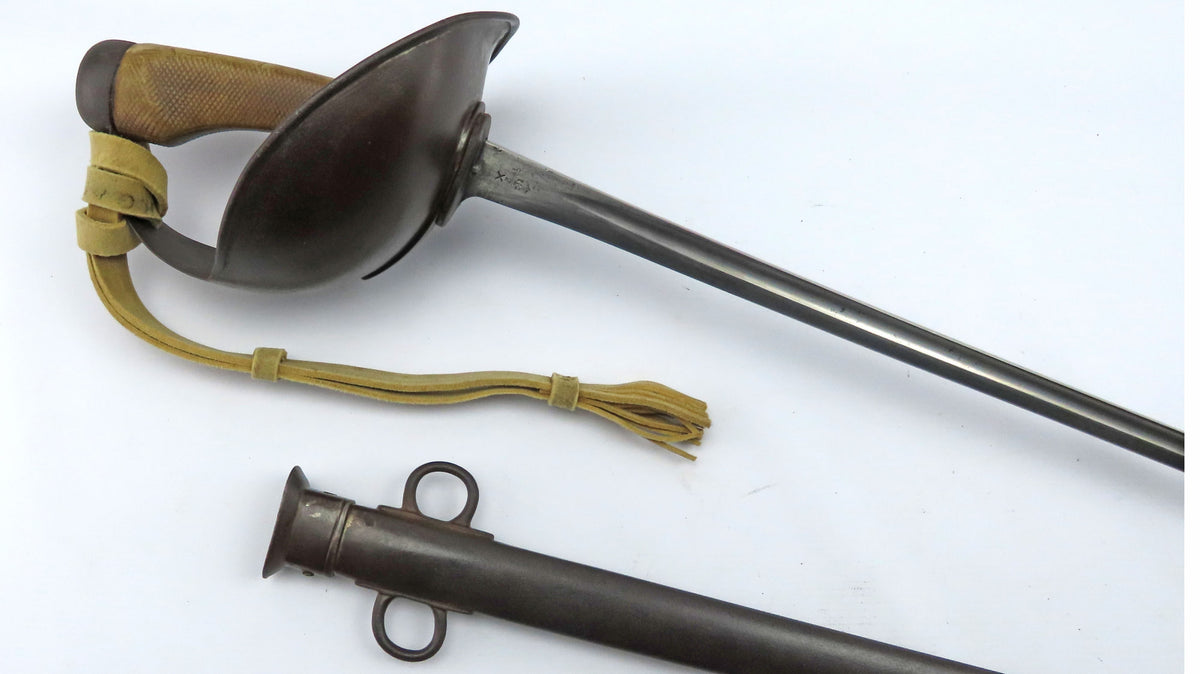
Cavalry Troopers Sword, 1908 Pattern. Ref X3385. A 1908 Pattern Cavalry Troopers Sword. 42 1/2&157; overall, 34 &194;&190;&157; straight and narrow single edged blade with fullers, stamped at the forte with numerous &194;&160;government inspector´s marks, ´EFD ´, & numerous issue and reissue stamps, and ´08´ on the back edge. Steel bowl guard, shaped composition diced grips, with correct buff sword knot. Steel scabbard &194;&160;stamped ´ MOLE´ and ´15´ with numerous issue and reissue stamps, fixed suspension rings either side. Dated 1915. In very good condition.&194;&160;Original chemical brown finish.&194;&160; &194;&160; &194;&160; &194;&160; &194;&160; &194;&160; &194;&160; &194;&160; Images courtesy of West Street Antiques (https://antiquearmsandarmour.com/)
  • Nation : British
  • Local Price : £845
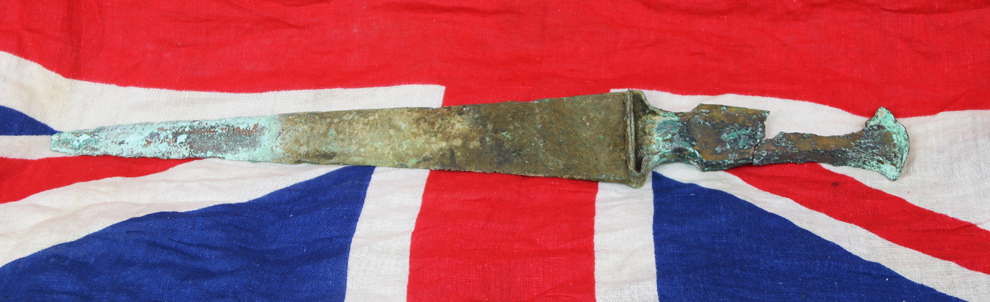
Click and use the code >23012 to search for this item on the dealer website Superb Excavated & Fragmented Bronze Age Sword 3200+ Years Old. Seige of Troy Period
  • Nation : British
  • Local Price : £845.00
WW2 Era British Royal Navy Locker To Capt Jones DSO DSC HMS Walpole Containing A Collection Of Uniform, Dress Sword With Scabbard & Foul Weather Cover, 2 Large Ensign Flags & Ephemera. Sn 19345 -. WW2 Era British Royal Navy Locker To Captain B. Jones DSO DSC HMS Walpole Containing A Collection Of Uniform, Dress Sword With Scabbard & Foul Weather Cover, 2 Large Ensign Flags, Cigarette Lighter, Smoking Pipe, Original Photographs Of Naval Officer’s & Of HMS Walpole. Sn 19345 HMS Walpole was a W-class destroyer of the Royal Navy. The ship was built under the 1916–17 programme in the 10th Destroyer order. Walpole was assigned to the 13th Destroyer Flotilla in the Grand Fleet after completion. she was assigned to the 11th Destroyer Flotilla in September 1939 and served until almost the end of the Second World War. Her role was mostly convoy escort duties, but she took part in two combined arms operations (Operations Amsterdam and Jubilee) and the D-day landings (Operation Neptune). She hit a mine on 6 January 1945 and was subsequently declared a constructive total loss and broken up at Thos. W. Ward Grays, Essex in March 1945. This is a collection of British Naval officer’s dress uniform consisting of dress jacket, trousers & duffle Coat, dress sword, 2 large Ensign flags, cigarette lighter smoking pipe & contemporary original photographs all contained in a Transit locker marked to Captain B. Jones DSO DSC Who Captained HMS Walpole Circa early 1938 – 22 Nov, 1938. The silk lined dress jacket has bullion insignia and all original brass Kings crown fouled anchor buttons. The lining has tears and service wear and minor old stable mothing. It is approx. UK size 38” chest. There are no labels or markings on the jacket. The dress trousers have no tears and are clean. They are approx. UK size 31” leg 38” waist. There are no labels or markings on the trousers. The hooded duffle coat is excellent made of heavy serge material it has a large hood, all of its wood toggle fasteners and neck strap secured by buttons. The inside of the jacket has 2 cloth labels 1 in good condition ‘Bentalls’ a retailer or manufacturer and remnants of another label marked ‘showerproof’ and ‘Medium’ (size approx. UK size 38” chest). The 2 large period RN ensign flags measure approx. 63” x 32”. They both have staining and minor holes consistent with being flown and stored. Their hems have original rope cords with hanging rings. The photographs consist of an original group photo of RN Officers in uniform with some original indistinct ink signatures, a portrait photo of an RN Officer who features in the front centre of the group photo with indistinct ink signature (we do not know if Captain Bond features in either of the photos), a small photo of a seated woman in contemporary dress most likely a wife or relative of one of the Officers & a contemporary photo of HMS Walpole mounted on card. There is also a used wooden smoking pipe and a Novelty gas lighter in the form of a lifebuoy ring with central Dolphin devices. The lever operated lighter has no gas and we have not fuelled it to test it. The RN dress sword has a clean single edged straight blade which is 31½” in length with central fuller (37 ½” overall). The blade is crisply etched with Naval fouled anchor & foliate panels on both sides together with King’s crown The riccaso is marked on one side by the manufacturer or retailer Whittaker (illustrated), the reverse has the ordnance acceptance proof star with inlaid roundel. It has a gilt brass Lion’s head with mane pommel and grip strap & full knuckle guard with the Royal Navy Kings Crown and fouled anchor motif. The sword’s fish skin grip with bullion wire binding is undamaged. The guard has a folding langet which has an indistinct engraved stylised monogram, the langet functions as it should, holding the sword securely in the scabbard. Attached to the guard is its bullion cord and portepee. The sword is complete with its black leather scabbard which has brass mounts and 2 hanging rings. The sword is accompanied by its original black patent leather cover which is worn & has shrunk with age. All are contained in the original Naval officer’s painted pine wood transit locker. The locker with a hinged lid and lock (key absent). The left and right aspects have heavy duty iron carry handles. The top of the lid has white paint lettering ‘Capt B. Jones RN’ and remnants of an original indistinct transit label. Due to size & weight delivery will be by arrangement and at cost. Sn 19345 (on floor under shelves storeroom near bells)
  • Nation : -
  • Local Price : 1,175.00 USD
RARE, PROBABLY UNIQUE, EXPERIMENTAL HEAVY CAVALRY SWORD C.1820. Produced for one of the major powers, perhaps Saxony, during the rearming after the Napoleonic Wars. During that period, virtually all of the major world powers analyzed their weapons based on performance during the past war and sought to modernize them based on their experience. Many drew directly on French models and adopted them as standard. This example responds directly to the controversy over the use of heavy cavalry which resulted in renewed popularity of lancers. Cavalry swords, including our own through the Civil War, were used as concussion weapons, able to inflict traumatic wounds cracking bones and flesh without cutting as such. The closing velocity of the cavalry charge approached 60 miles per hour and a sword which cut would be embedded in its victim and lost to its owner. This example attempts to improve on the first impact while preserving the ability to counter strike, by reversing the section of the blade. It has a 35 ½” curved blade with forward (convex) back edge (thick) and the inner curve sharp. The tip is clipped in the Eastern European/Ottoman taste. The faces are slightly concave section and the root is struck with a crisp ordnance mark verifying that it was made in a military arsenal. The hilt is substantial, but quite simple, similar to Starr production and the wood grip scales snap into the grips, probably originally covered in oil cloth or leather. Very rarely, including some Swedish officer's swords, are curved double edged blades encountered. This is the only curved inner edged blade we have ever seen. The ordnance mark is crisp and clear and should allow for identification to the country of its origin.
  • Nation : French
  • Local Price : 1,175.00 USD
FRENCH NAVAL OFFICER'S SWORD, C.1800-10. Revolution period C.1800-10. See Swords for Sea Service, pl.98. Brass hilt with Liberty cap pommel, flattened knuckle bow and cross guard, and broad beaded edge flattened boat form guard. Copper wire wrapped grip, twisted spiral flanked by straight filler wires, complete and original. Hilt shows good patina with considerable evidence of gold in protected areas. 28 1/4" straight broad fullered blade etched first third with foliage motifs, the base with owner's or maker's initials. Shows smooth gray patina, the etching crisp with some gold inlay remaining. Some small areas of gold wash to the forte.  
  • Nation : ?
  • Local Price : 850.00
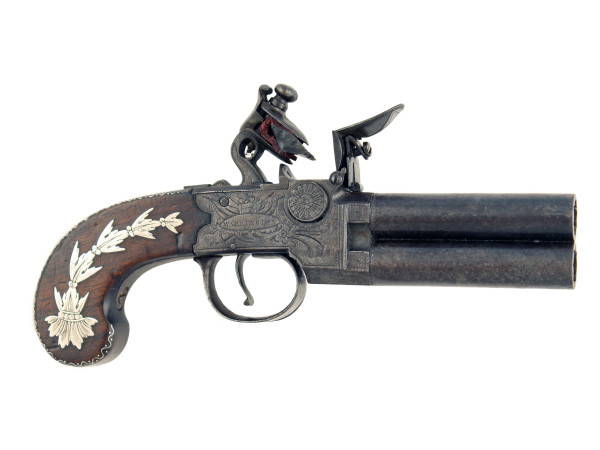
. A Silver Mounted Flintlock Tap Action by T. Barker. With turn-off barrels cut for key at the muzzle, profusely engraved action, signed within an oval, 'T. BARKER' surrounded by stands of arms and foliage to the left and signed ‘WARRINGTON' within an oval to the right, cock decorated en suite, damaged sliding safety catch, tap-action replaced, slab sided walnut butt inlaid with silver wire and the butt decorated with silver inlays depicting foliage. T. BARKER Dimensions: Bore: 50 Bore Barrel Length: 2.75 Inches (6.98 cm) Overall Length: 7.5 Inches (19.05 cm)
  • Nation : American
  • Local Price : 1,150.00 USD
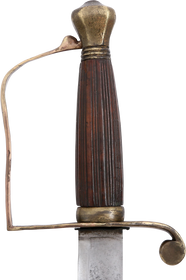
AMERICAN NON COMMISSIONED OFFICER’S SWORD C.1790-1810. This pattern identified in The American Sword (Peterson) as #5 was carried by sergeants immediately after the Revolution and during the War of 1812. The brass hilt has a variation of the “pillow pommel” popular at the time. The grip is reeded American walnut. The blade is 26 ¾” long, broad fullered and retains its original blade seat. The specifications of the General Orders of March 30 and September 22, 1800, set out the specifications for this sword, making it arguably, the first standard pattern US sword.
Page 16 of 40

The following items match your search but are currently listed on Ebay. We take no responsibility for any aspect of the listings or their accuracy.


Sorry, there is not any matching items.