
(You must register and have a linked account first)
View Privacy Policy


OR

Show


Forgot your password?

Error message here!

Error message here!

Error message here!

Error message here!

Show Error message here!

Show Error message here!


Lost your password? Please enter your email address. You will receive a link to create a new password.

Error message here!

Back to log-in

Close

For Sale

The following items are listed by for sale by users of the site and dealers. They are in no way endorsed or guaranteed by www.oldswords.com

Add a Classified Item
to

Clicking on the sword will take you through to the relevant classified item or dealer site.
Don't miss out! - Do you want to be kept informed weekly of new aditions? Just join our weekly update list.

You can also receive regular email notifcations when items match your keywords. To recieve them just register or logon at the top right of this page.
Page 31 of 40
  • Nation : -
  • Local Price : 375.00 USD
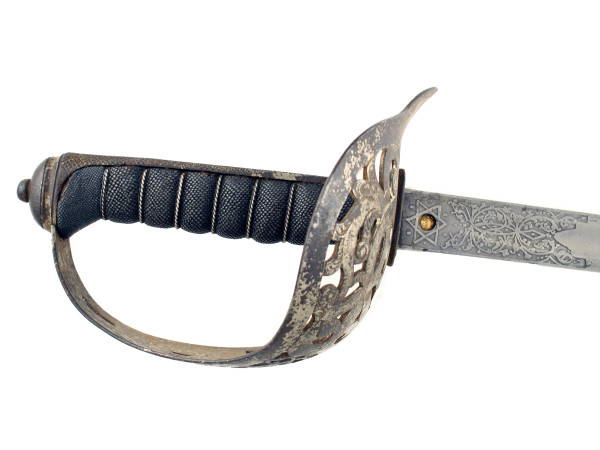
US 1902 PATTERN OFFICER’S SWORD. See The American Sword, Peterson #77 and pattern still in current use for most officer's other than Naval. This example is early, probably WWI, with 32” curved broad fullered blade marked Desmonds Los Ang Calif on the ricasso. US, eagle, and foliage decoration to over half of the blade. Finger stall composition grip. Blade a little smooth gray at the root, otherwise crisp and bright. Hilt and scabbard with wear to the plating from use.
  • Nation : -
  • Local Price : 3,400 kr
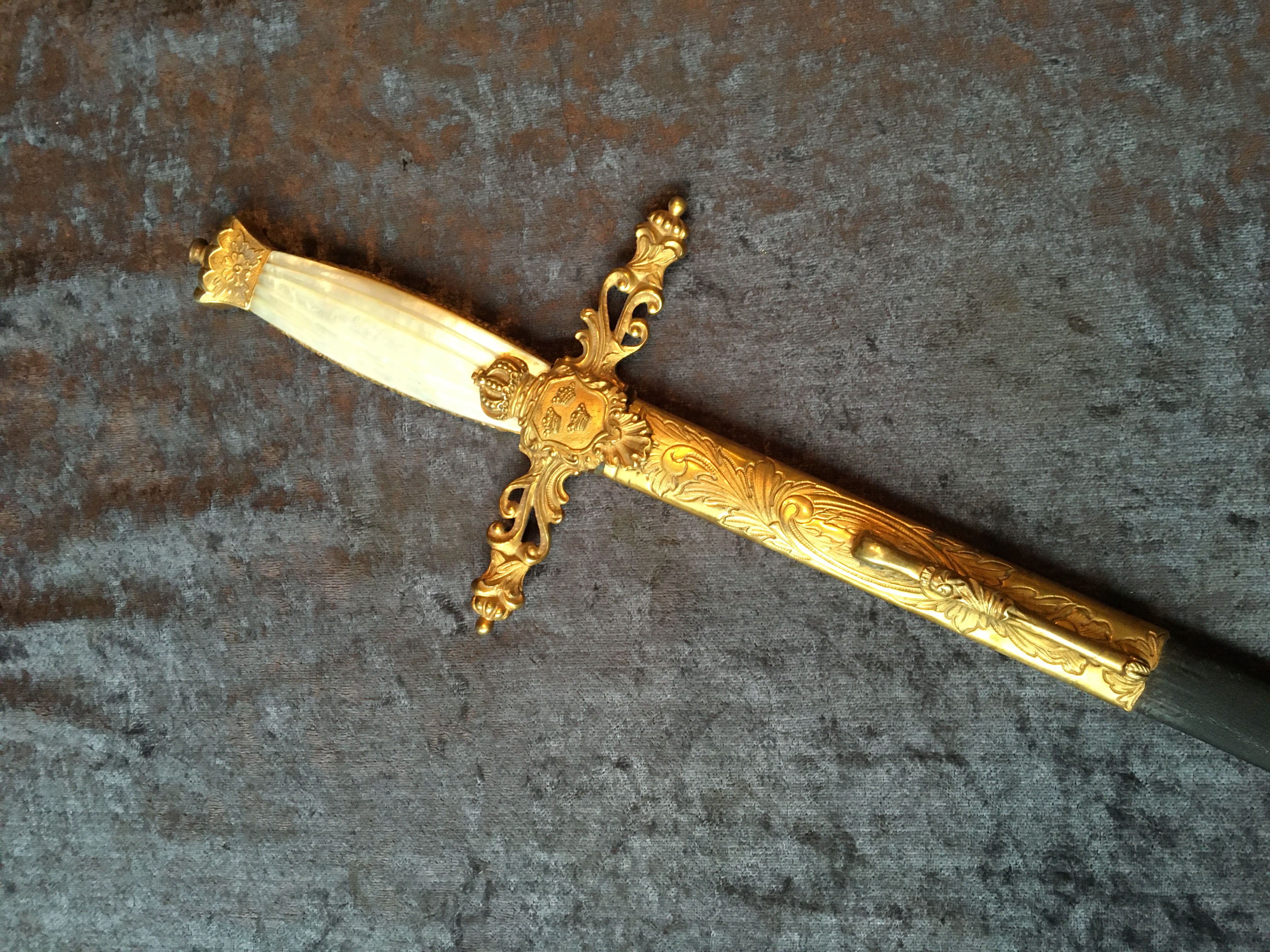
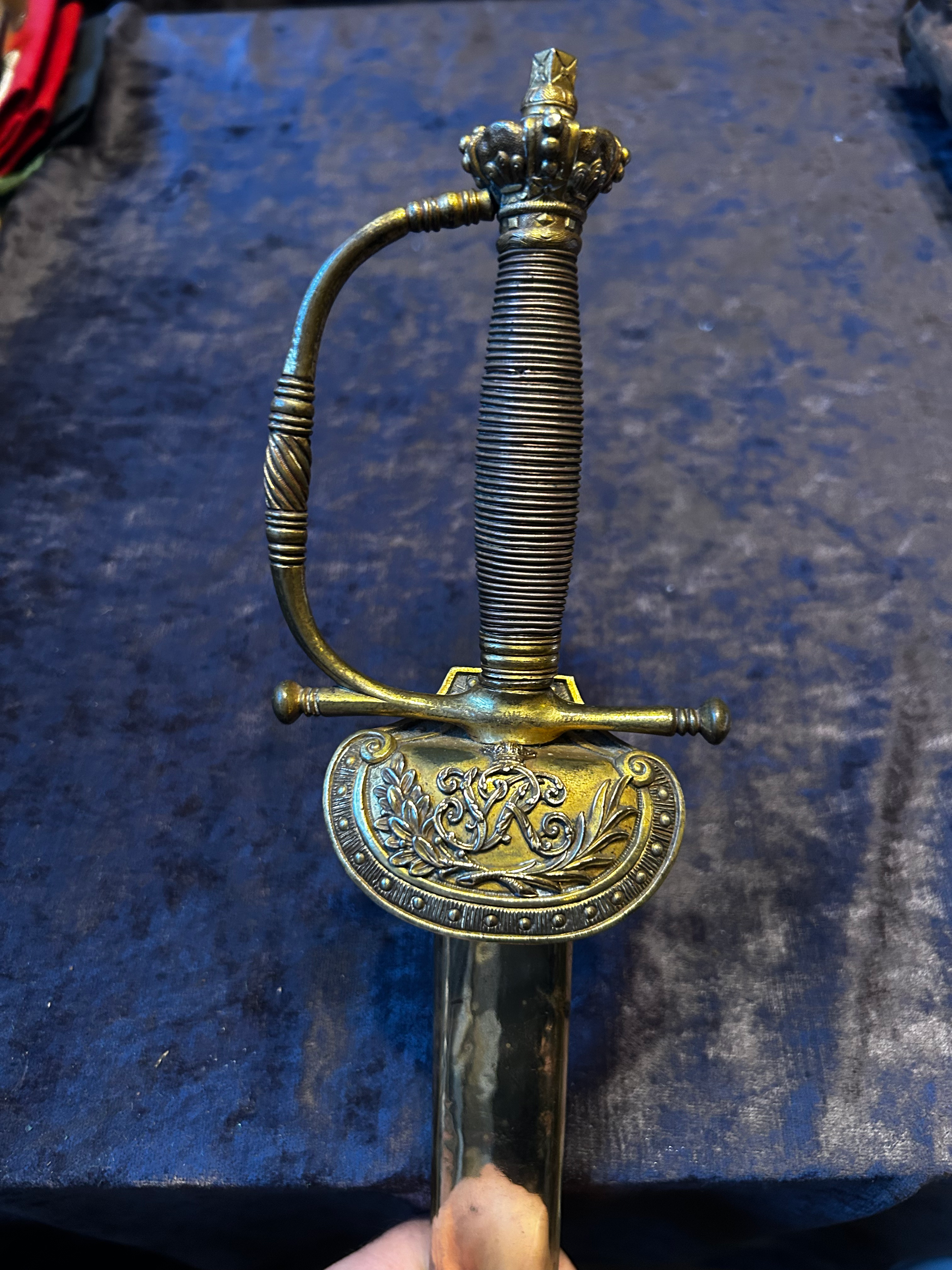
Sv ämbetsmannavärja ca:1890-1900.
  • Nation : -
  • Local Price : 3,400 kr
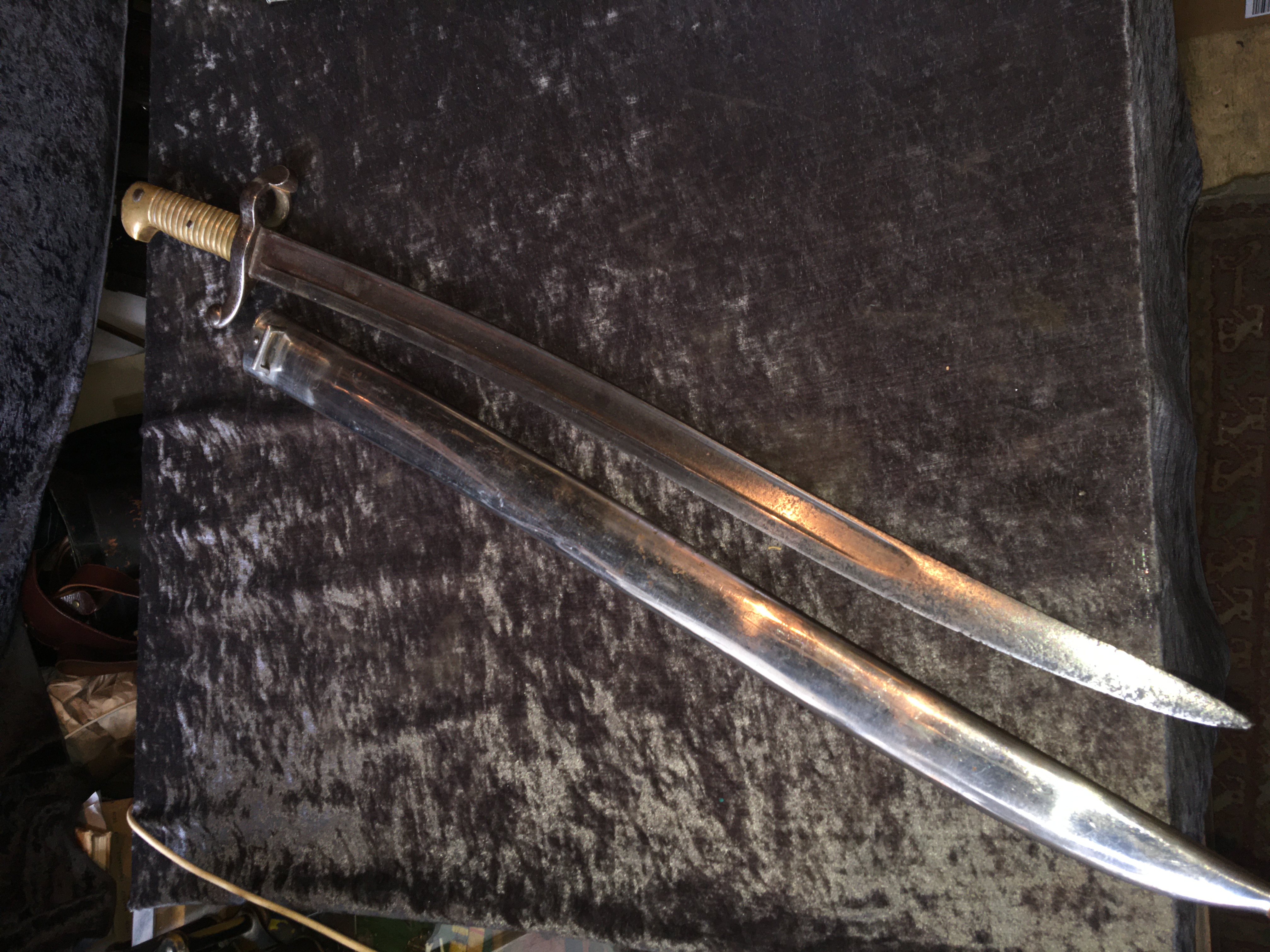
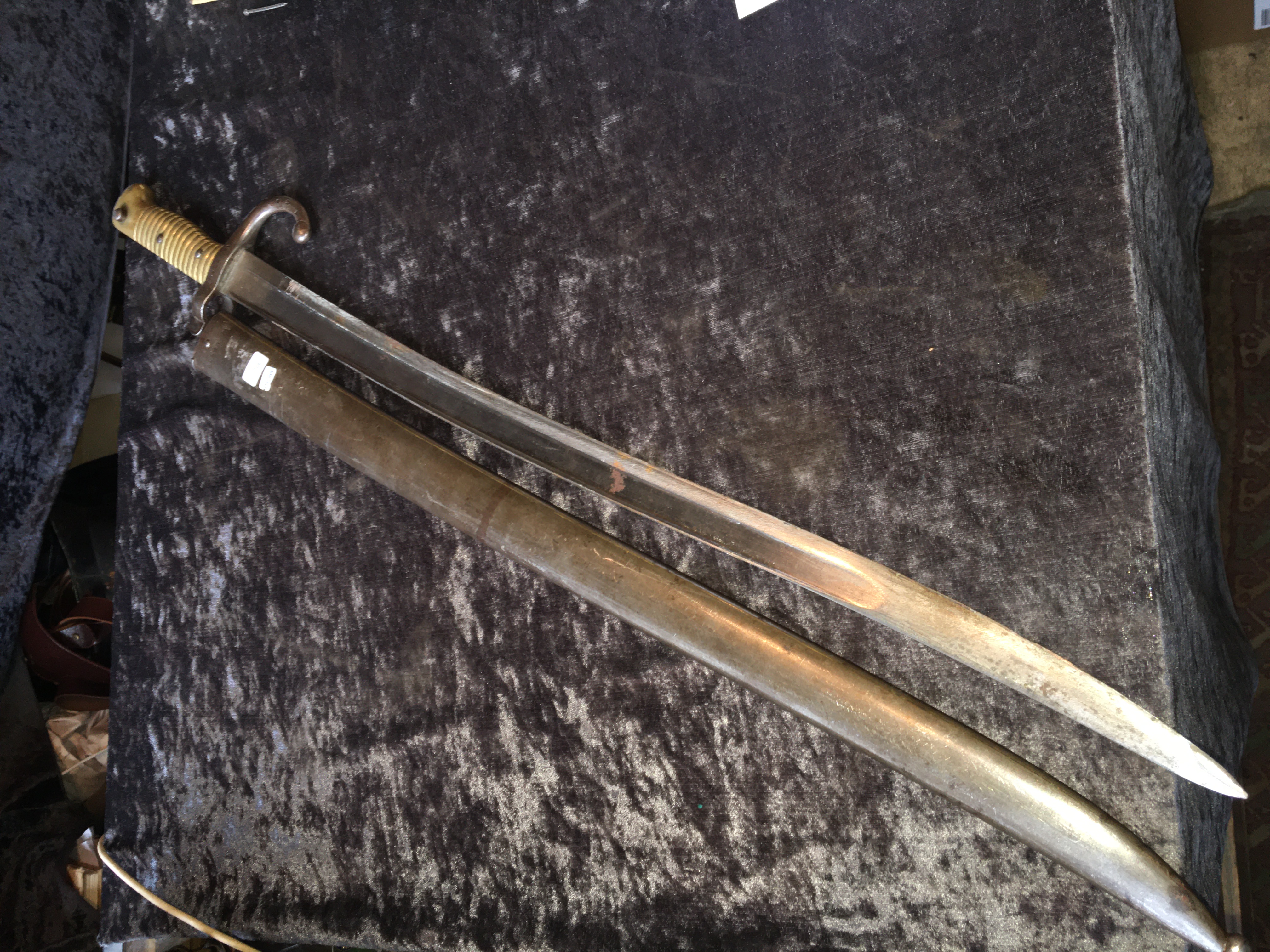
Fransk sabelbajonett m/1842-59.
  • Nation : Swedish
  • Local Price : 3,400 kr
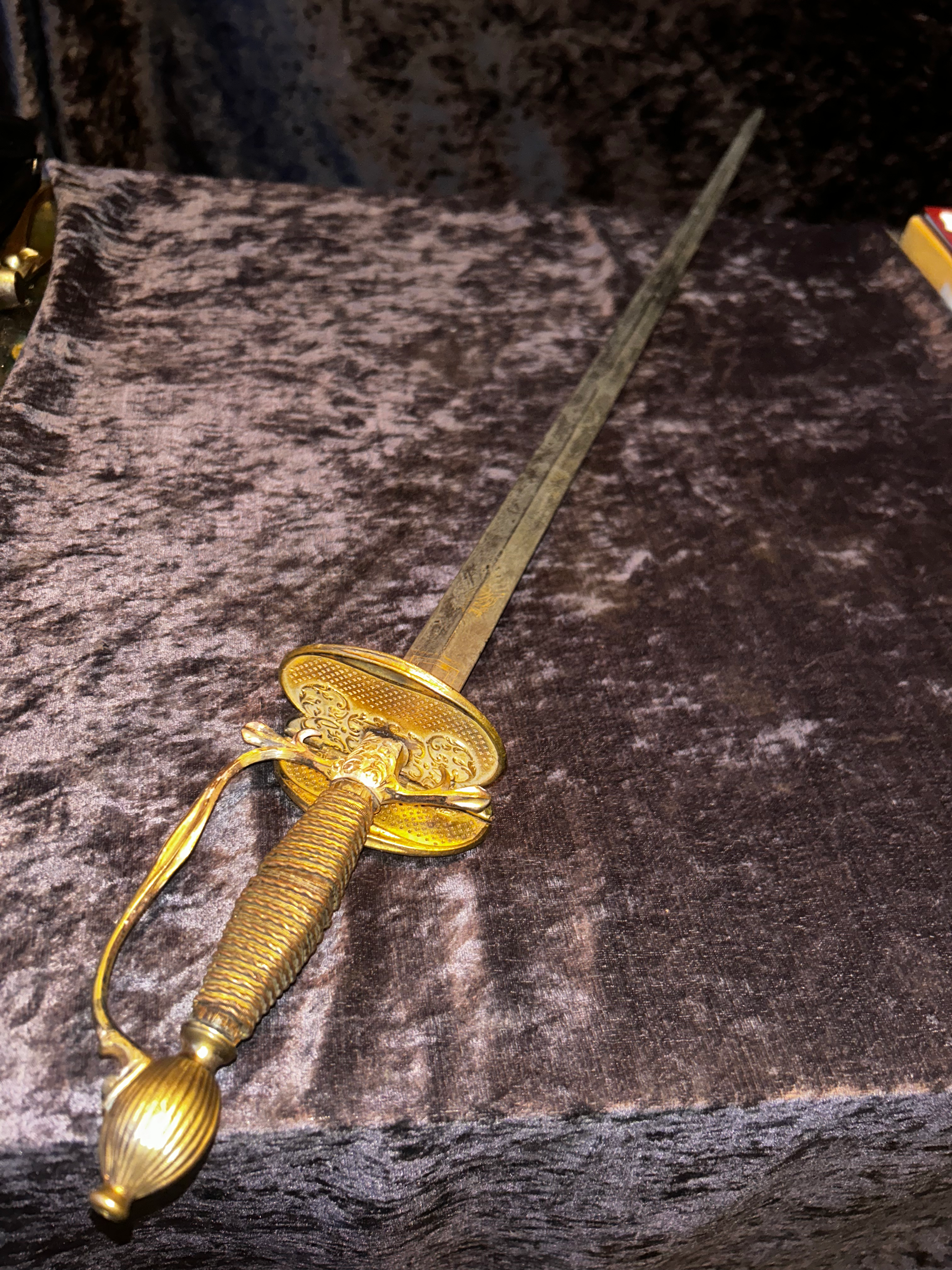
Swedish officer sword.
  • Nation : -
  • Local Price : 370.00 USD
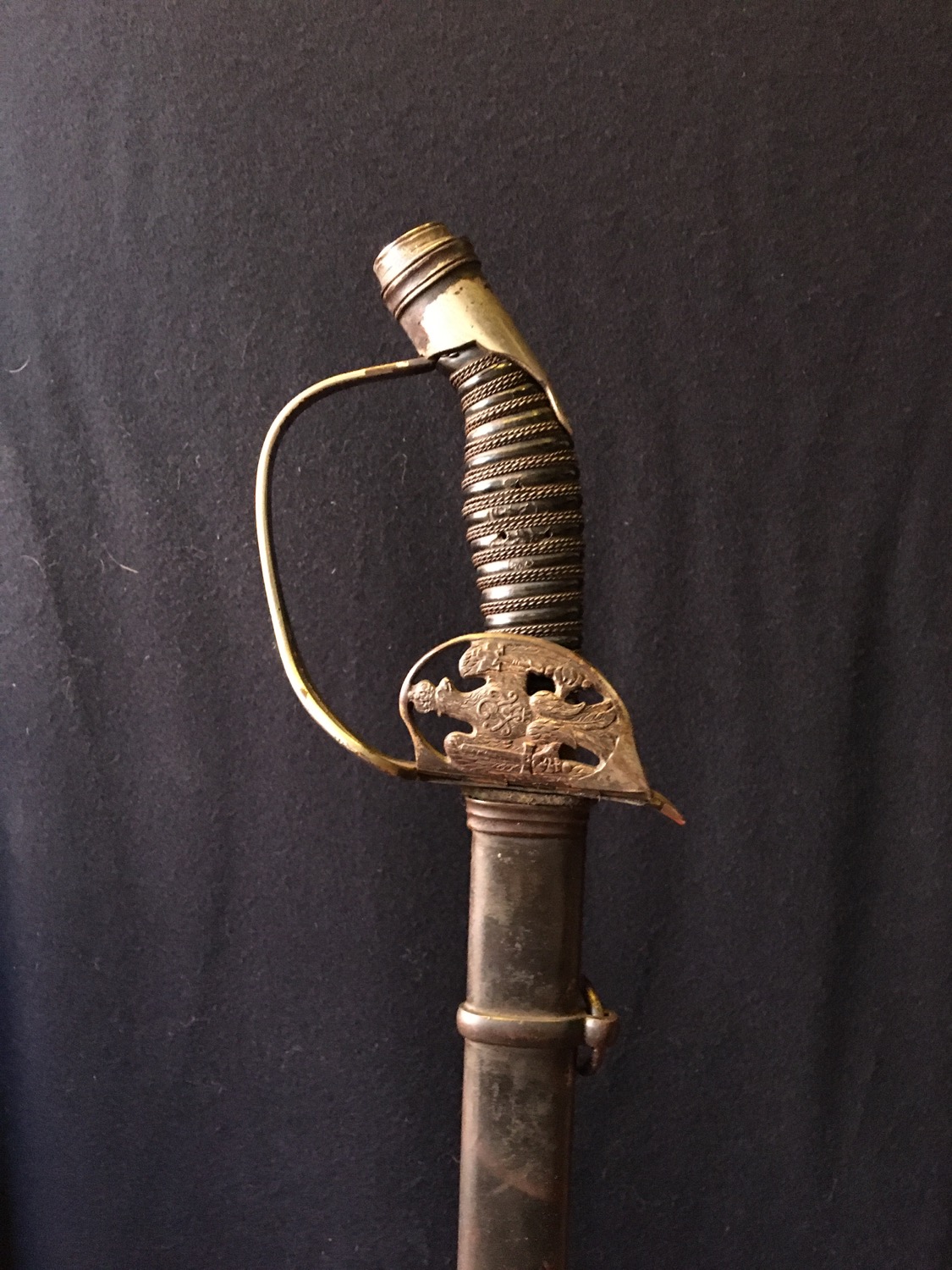
UNITED STATES MARINE CORP OFFICER’S SWORD. Gilt bronze hilt with pierced floral guard. Just remnants of the gold from polishing. Wire wrapped leather covered grip. 32” curved broad fullered blade decorated first half both sides with foliage, flag, Marines logo and United States Marines. The forte with maker's logo, GERMANY and initials over stamped. Few flakes to the grip, otherwise excellent plus.
  • Nation : African
  • Local Price : £265
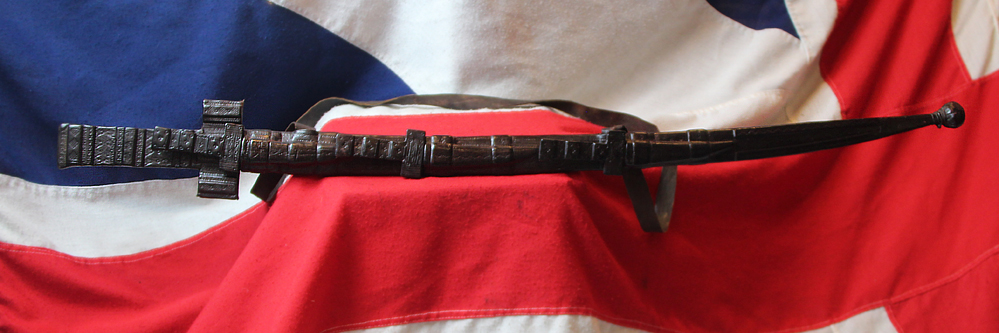
Click and use the code >22536 to search for this item on the dealer website Good And Most Interesting Tuareg Nomadic Berber Sword From The Western African Regions To North Africa
  • Nation : Spanish
  • Local Price : 365.00 USD
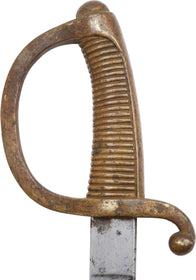
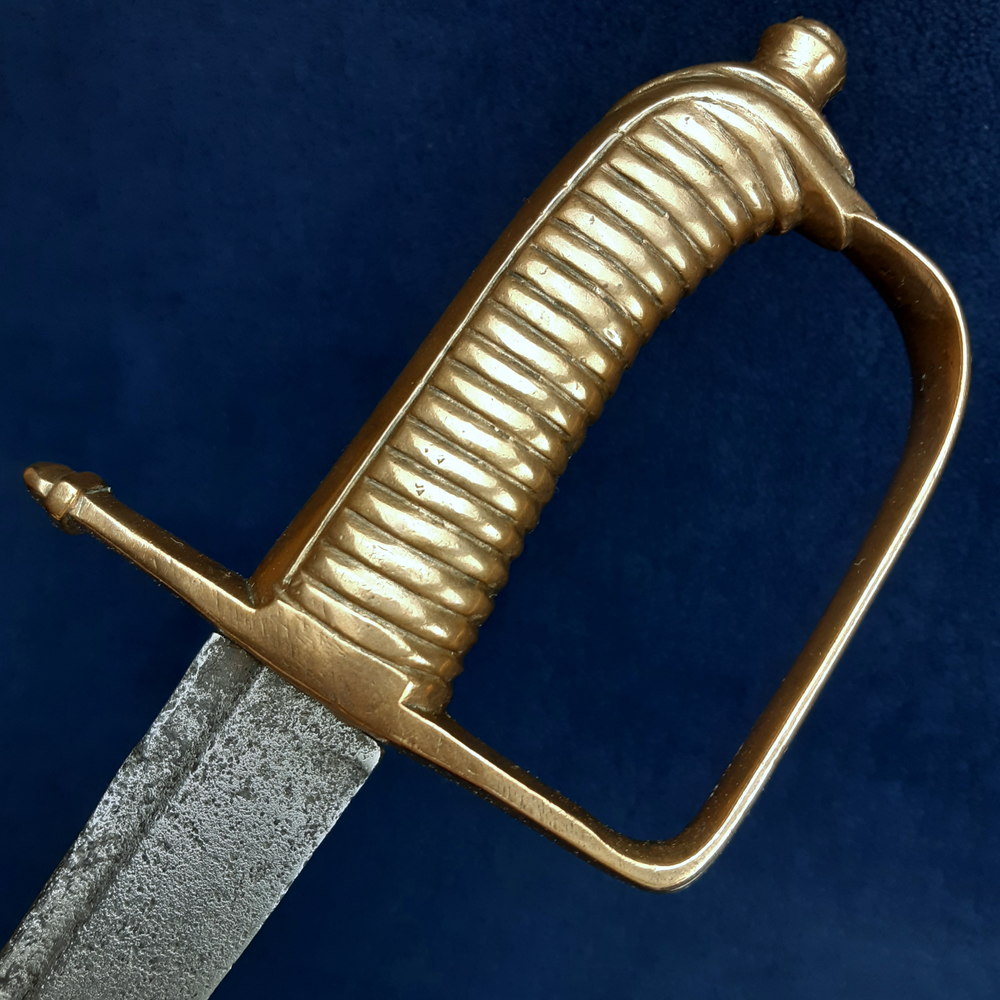
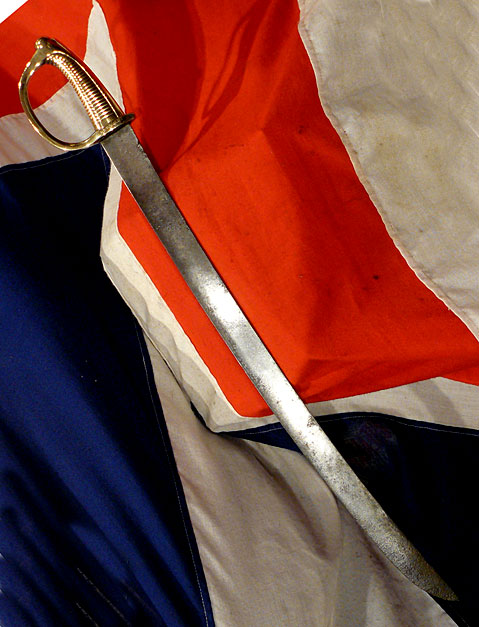
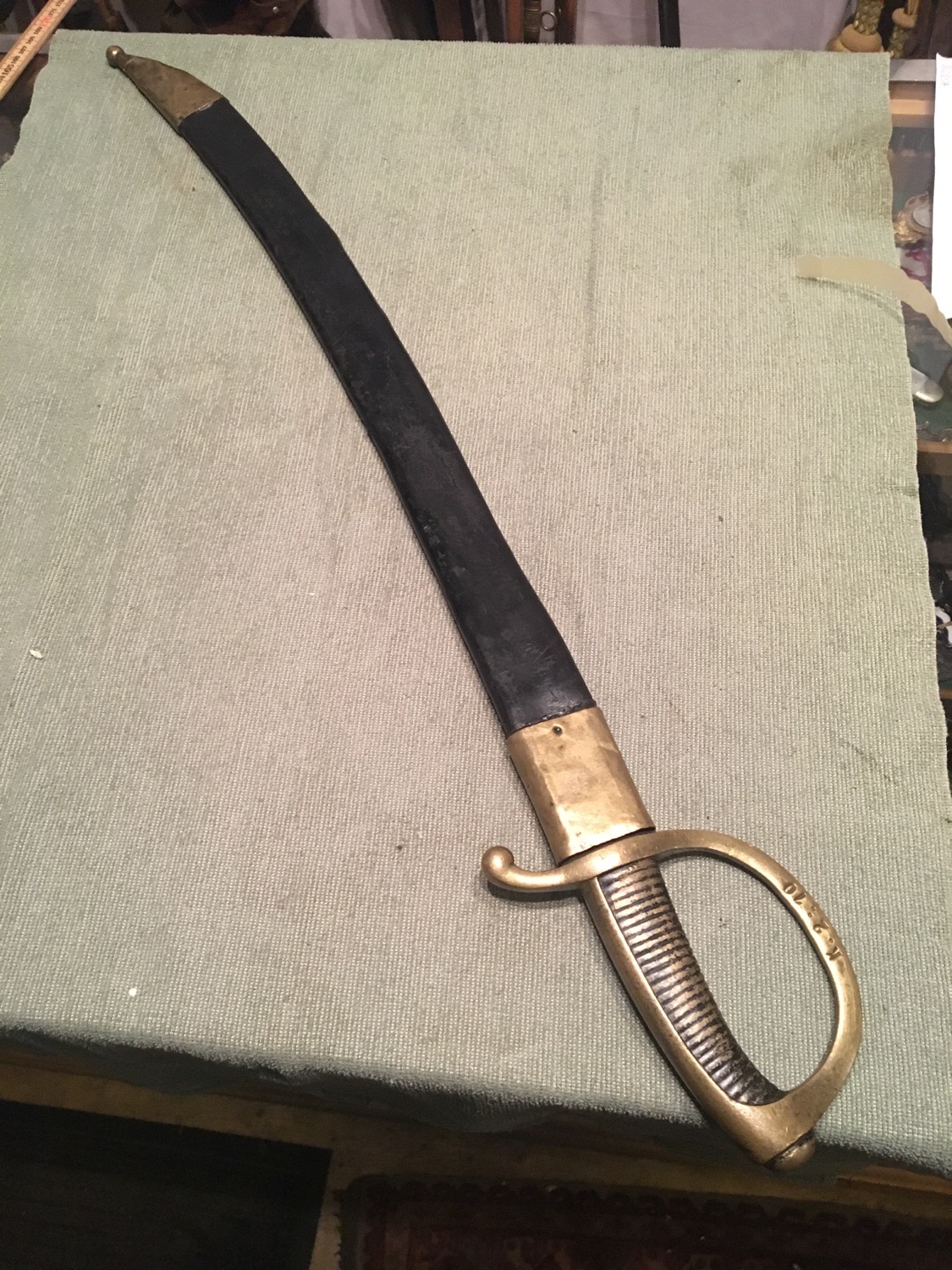
SPANISH ENLISTED MAN’S SWORD 1872. Pattern worn by infantry as well as artillery. Bronze one piece hilt of French styling, with ribbed grip. 27" slightly curved s.e. blade, the right side marked FBA DE TOLEDO 1872. Unrest in Spanish colonies led to the Cuban Revolution of 1868 resulting in the Ten Years War followed by an uneasy peace from the Pact of Zanjón in 1878, the Little War of 1879-80 and the Spanish-American War of 1898 which was fought in Cuba, Puerto Rico and other Caribbean Spanish holdings as well as the Pacific, largely the Philippines. This sword dates to the very onset of the wars and surely served in the Spanish-American War during which the majority of surviving examples of this pattern were captured. The blade fairly crisp with scattered old black oxidation, mostly smooth with minimal pitting.
  • Nation : American
  • Local Price : 365.00 USD
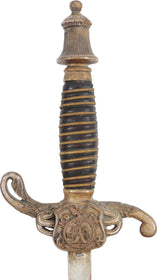
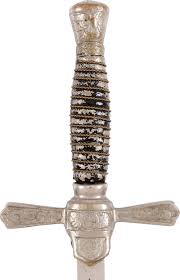
AMERICAN SECRET SOCIETY SWORD. Knights of the Maccabees, founded in London ontario and prominent in Michigan. Well modeled hilt with Turkish tent for pommel.and tape wrapped leather grip. 28" blade decorated with foliage, Knights of the Maccabees and owner's name. Blade plated over copper with s little freckling. Plated iron scabbard with three fine high relief mounts.
  • Nation : British
  • Local Price : £260.00
British WW1 1888 Pattern Bayonet, 6th Battalion The Welsh Regiment (Glamorgan Battalion). Description Unfullered spear pointed blade, wood scale grips with two brass rivets. Steel pommel and hilt with short quillon and muzzle ring. Black leather Land Mk II pattern scabbard with steel throat and leather chape. The blade is stamped on one side of the ricasso with a (faint) crown over &#acute;VR&#acute;, the production date of &#acute;9 &#acute;97&#acute;, meaning September 1897, and the maker&#acute;s mark &#acute;Wilkinson London&#acute;. On the other side it is stamped with a broad arrow meaning War Department property, a crown inspection mark with &#acute;W&#acute; for Wilkinson and an &#acute;X&#acute; which indicates that the blade passed a manufacturer&#acute;s bending test. The spine of the blade is stamped with two further crown inspection marks with &#acute;W&#acute;. The pommel is stamped with the unit mark &#acute;6. WEL&#acute;, indicating the Queen&#acute;s Royal Regiment (West Surrey) and the number &#acute;735&#acute;. The exposed tang is stamped with &#acute;2&#acute;. The throat of the scabbard is stamped on each side of the mouth with a broad arrow, and with the serial number &#acute;160&#acute;. The scabbard leather is stamped next to the seam on one side with a broad arrow, the production date &#acute;03 and indistinct marks, probably a crown inspection mark. The 3rd Glamorganshire Rifle Volunteer Corps (Swansea Rifles) was formed in 1859, as part of the widespread Volunteer Movement of the period. As a Volunteer unit it went through many administrative changes but no deployment until the Second Boer War, when it contributed a detachment of volunteers to serve overseas. These men earned the unit&#acute;s first battle honour &#acute;South Africa 1900“1902&#acute;. In 1908 the Haldane Reforms brought Volunteer units into the new Territorial Force and linked them to regular regiments “ the Swansea Rifles therefore became the 6th (Glamorgan) Battalion of the Welsh Regiment, still headquartered at Swansea and forming part of the Territorial Force&#acute;s South Wales Brigade. The Welsh Regiment had been formed in 1881 as part of the Childers Reforms, amalgamating the 41st (Welch) and 69th (South Lincolnshire) Regiments of Foot. On the outbreak of WW1 the battalion volunteered for overseas service and landed in France in October 1914. Territorial battalions were typically deployed still carrying the Lee Metford rifle and 1888 Pattern bayonet, supplies of the Lee Enfield being limited. The 6th Battalion initially served on the lines of communication rather than on the front lines, but attrition caused Territorial battalions to be used in 1915 to reinforce regular brigades. The 6th Battalion (technically the 1/6th by this stage as a replacement 2/6th Battalion was formed as a second line unit in December 1914) therefore joined the 84th Brigade (28th Division), reinforcing the 1st Battalion Welsh Regiment, with which it fought in the Battle of Loos. In 1916 the 6th was moved to the 1st Division, serving as their Pioneer Battalion. In this role it would contribute working parties to assist the division&#acute;s complement of Royal Engineers with their various field tasks, but retained a supporting combat role and would take part in offensives. 1st Division took part in many further actions until the end of the war including the Battle of the Somme, Third Battle of Ypres and the Hundred Days Offensive. The 6th Battalion reformed after WW1 as a Territorial Army unit, absorbing the 7th Battalion. With a growing emphasis on air warfare, the battalion became the 67th Searchlight Regiment in 1938. During WW2 it defended the industrial areas of South Wales against early small-scale Luftwaffe bombing raids, then deployed to protect Cardiff against much larger raids during the Blitz. In 1940 searchlight units were brought under the Royal Artillery, and the battalion remained with the Artillery even after the war. After several amalgamations, the lineage of the original Glamorgan Battalion is today maintained by 211 (South Wales) Battery of 104th Regiment Royal Artillery (The Welsh and Borderer Gunners), an Army Reserve light artillery unit. The blade has some light speckled patination. The tip of the blade has been shortened, possibly by breakage while in use, and has been reshaped and resharpened, with visible grinding marks. There are some minor nicks to the edge and the faint crown mark suggests that the blade may have been repolished above the shoulder.  The wood grips have some light dents. The hilt and pommel have some patination and pitting. The throat piece of the scabbard has pitting and patches of dark patination. The leather of the scabbard has some rubbing and denting, one small spot of green paint, and one notch on the reverse side. The chape end of the scabbard is slightly kinked, but does not interfere with sheathing and drawing.
  • Nation : German
  • Local Price : 3,300 kr
German saber m /1889.
  • Nation : ?
  • Local Price : 265.00
. An 1895 Pattern VR&I Infantry Sword. With straight single edged blade, cut with a long central fuller beautifully etched blade, decorated with scrolling foliage and Royal cypher, with makers name, ‘ROB T MOLE & SONS, Birmingham Makers to the WAR & INDIA OFFICES' Numbered, ‘M2678' along the back-strap, regulation steel hilt with chequered back-strap, wire bound fish skin grip, in original steel scabbard with two suspension rings. Notes: VR & I indicates the officer was serving in India. Dimensions: Blade Length: 31.5 Inches (80 cm) Overall Length: 38 Inches (96.5 cm)
  • Nation : American
  • Local Price : 355.00 USD
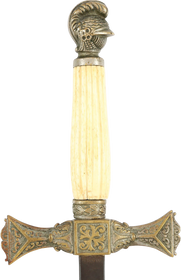
US MILITIA OFFICER’S SWORD C1870’s-80’s. Frontier Period, C1870's-80's.Basic pattern as used from about the 1840s on, (see Peterson #115) with later construction details. 29” diamond section blade with maker's mark and Germany at the forte. Well detailed brass hilt with helmet form pommel and bow tie guard. Fine swelled base reeded bon grip. Blade wit glossy dark patina and some nicks from use. Hilt excellent. Small chips to the grip base. A type which served Throughout the West, Indian Wars and Spanish American War
  • Nation : Japanese
  • Local Price : 3,250 kr
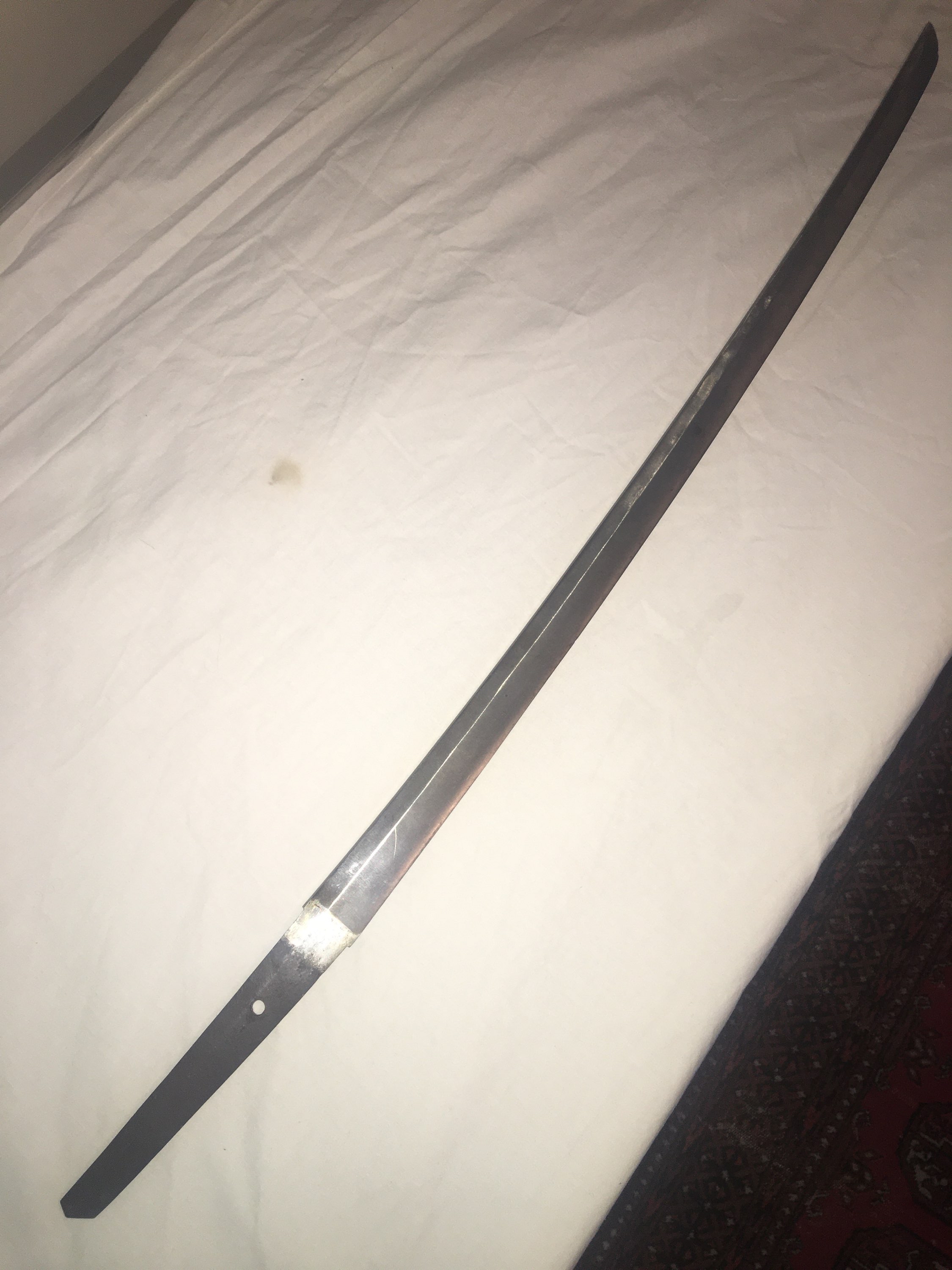
Blade for Japanese Shinto Katana.
  • Nation : British
  • Local Price : £250.00
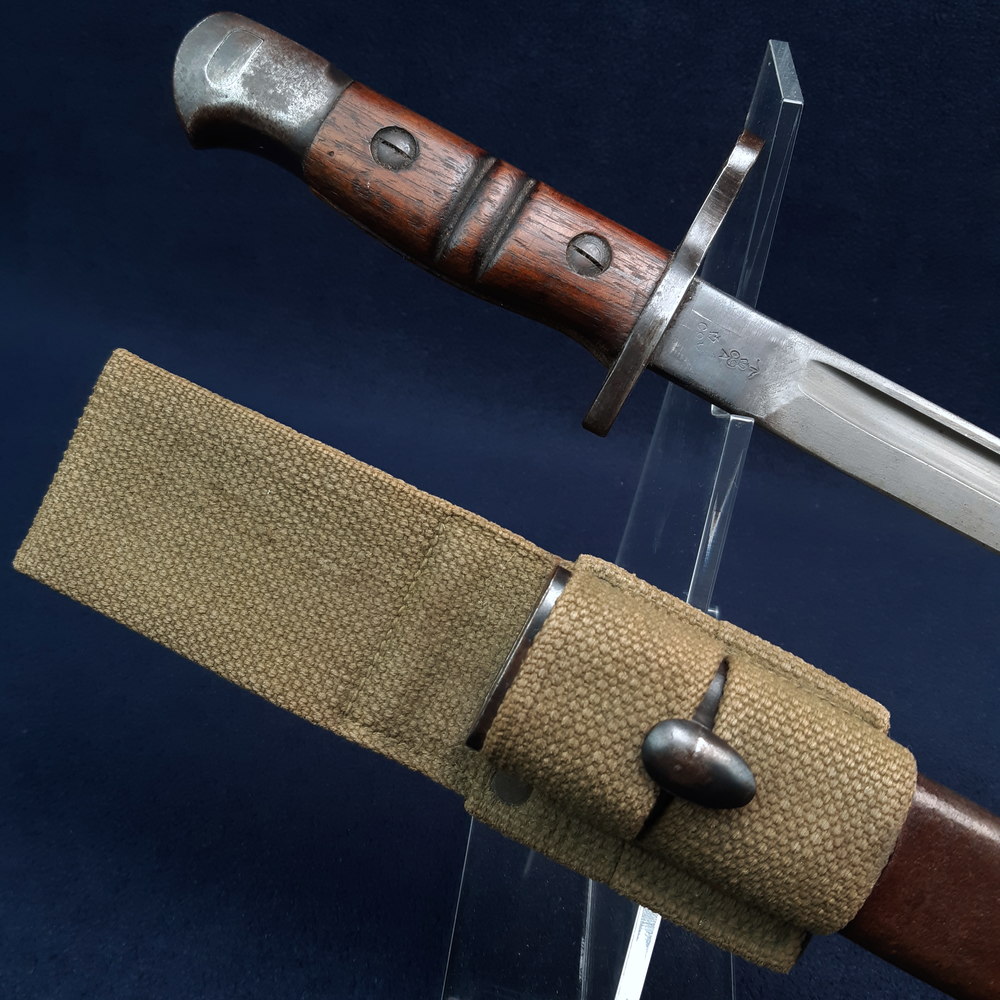
British WW1 1913 Pattern Bayonet, Dated 1917 by Remington. Description Straight single-fullered knife blade, steel hilt with muzzle ring, wood slab grips with characteristic pair of cut grooves on each slab, secured by two screws. Steel beaked pommel and locking button. Brown leather scabbard with steel locket & chape piece, the locket with teardrop frog stud. Olive green 1908 Pattern canvas frog, slightly shorter than standard at 7.5 inches long rather than 8.25 (a known variant - see example 123, p31, Bayonet Belt Frogs Part I by Carter). The ricasso is stamped on one side with &#acute;1913 1 17&#acute;, indicating that it is the 1913 Pattern, manufactured in January 1917, and the maker&#acute;s mark &#acute;Remington&#acute; within a circle. On the other side it is stamped with a &#acute;broad arrow&#acute; War Department stores mark, two crown inspection marks with &#acute;A&#acute; for America and an &#acute;X&#acute; indicating that the blade passed a manufacturer&#acute;s bending test. The leather section of the scabbard is stamped next to the seam with another broad arrow and the manufacture date &#acute;14. The throat piece of the scabbard is stamped at the mouth with &#acute;218&#acute;. The chape piece of the scabbard is stamped with a broad arrow, &#acute;EFD&#acute; for the Royal Small Arms Factory at Enfield and &#acute;48&#acute;. Inspired by the German Mauser M98 rifle, the experimental Pattern 1913 Enfield was intended to be the next generation British infantry rifle, firing the new .276 cartridge. The outbreak of war curtailed its development and the well-established SMLE was retained in service instead. However with an urgent need for rifles the government opted to redesign the 1913 to take the existing .303 cartridge, calling this new rifle the Pattern 1914 (NB: the bayonet&#acute;s design did not require modifications, therefore it remained the &#acute;1913 Pattern&#acute; bayonet). The production of these rifles and their bayonets was contracted to American manufacturers “ an early handful were made by Vickers but it was clear that British plants were best left to make the SMLE. Remington was the largest manufacturer of the 1914 Pattern and its associated bayonet, producing 1,243,000 of the bayonets between 1916 and 1917. The 1914&#acute;s design was vindicated in that it proved to be more accurate than its predecessor and it was deployed principally as a sniper rifle, the Winchester-made rifles in particular thought to be of high quality, suitable for fitting with telescopic sights. It saw service again during WW2 as rear echelon equipment, e.g. with the British Home Guard, although some were again used in a sniper configuration. The 1913 Pattern should not be confused with the M1917 Enfield, also known as the &#acute;American Enfield&#acute;, which was essentially the same rifle design, this time adopted by the Americans and rechambered in their own .30-06 Springfield cartridge. Its bayonet was also essentially the same as the British model, but with US service marks and a &#acute;1917&#acute; pattern stamp. The blade is sharp with no edge damage. It retains its original grey parkerised finish and blued area at the ricasso, with only a few small spots of patination. The hilt, exposed tang and pommel have a blued finish with some rubbing at raised edges revealing bright steel. The wood grips are very good with only a couple of small dents. The scabbard fittings are likewise blued and retain nearly all of this finish, with rubbing only at the tip of the chape and a little on the frog stud, exposing bright steel. The leather body of the scabbard has only some very small dents and spots of abrasion, all of its stitching is intact. The canvas frog has no fray and is free of staining. Its rivets, which I think are brass, have dulled. It is well fitted to the scabbard and I have not removed it to look underneath at the throat piece.
  • Nation : Japanese
  • Local Price : £250.00 GBP
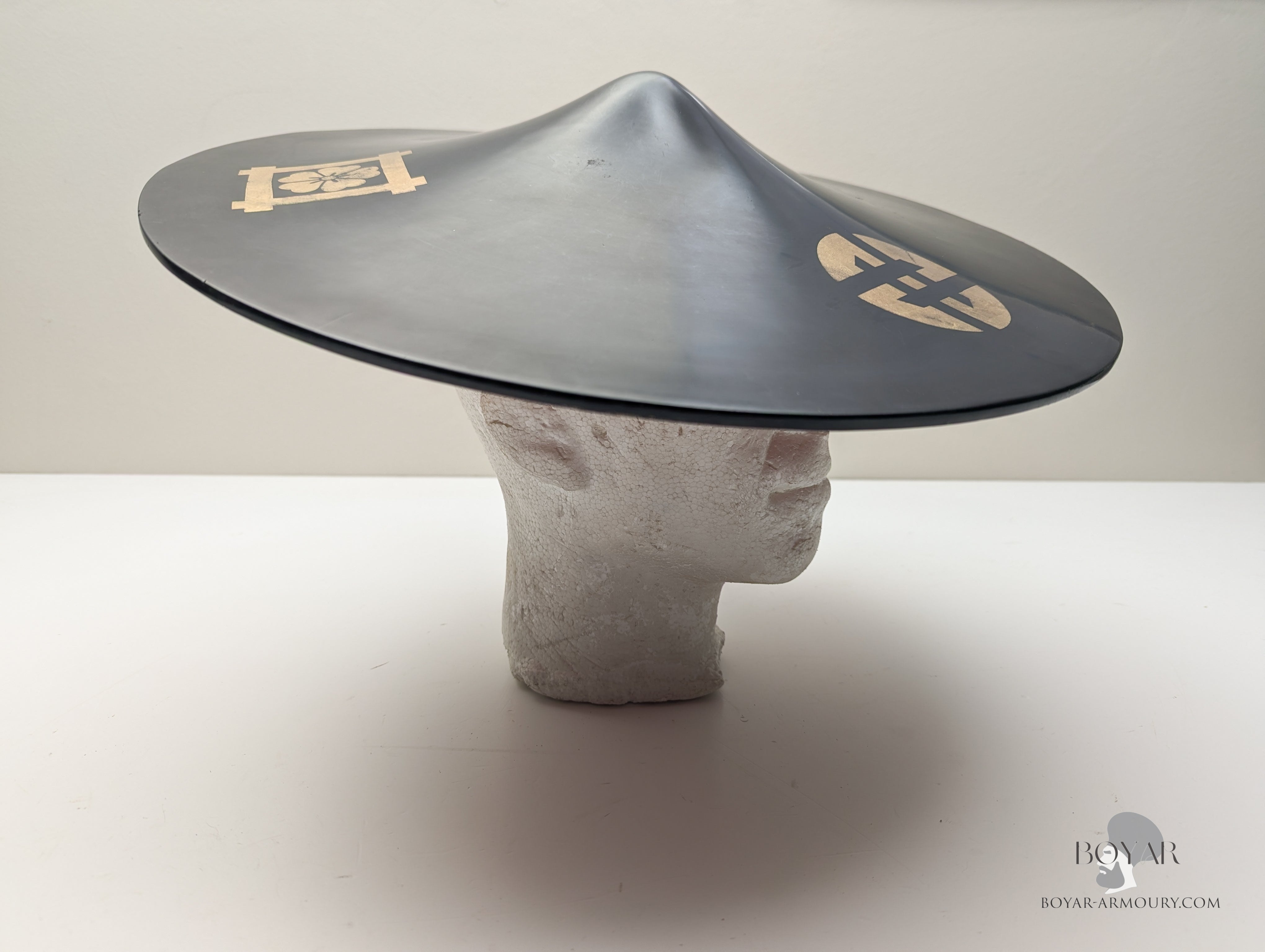
Japanese Jingasa "War Hat". The typical headgear of lower-ranking soldiers (ashigaru) who could not afford a helmet. During the Edo period more complex and high-quality specimens were also made for samurai who on less formal occasions and while travelling wished to wear something light and still protect them from the sun or rain. This example is "
  • Nation : German
  • Local Price : £250.00
Bavarian M1794 Fusilier Trooper&#acute;s Sword. Description Single-edged hanger blade with narrow fuller running close to the spine and hatchet point. Solid cast brass hilt with ribbed grip, smooth backstrap, quillon with band next to the rounded finial, knucklebow hilt and tang button. No scabbard. Blade ~24¼ inches (62.6cm) in length, the sword ~29¾ inches (75.4cm) overall. The blade has some patination and speckled light pitting overall, with patches of heavier pitting towards the tip and at the shoulder. Some nicks to the edge near the tip, the edge is sharp. The brass hilt has a coppery tone and light, even patina, with a few tiny dents.
  • Nation : Dutch
  • Local Price : £250
Click and use the code >15097 to search for this item on the dealer website Scarce Swiss 1842 Briquet Man´s Sword of The Guard Regt´s. Used in the Italian Uprising of 1848
  • Nation : German
  • Local Price : £250.00
German WW2 Army NCO&#acute;s Sword &#acute;Extrasäbel&#acute; by Paul Seilheimer, Solingen.
  • Nation : British
  • Local Price : £245.00
Collection Of 3 Boxed Mint Condition Miniature Swords: A British Royal Navy Officer’s By Nauticalia, A British Royal Air Force Officer’s Sword By Wilkinson & A British Royal Air Force Officer’s Sword By Nauticalia Each With Original Informa. A nice collection Of 3 Boxed Miniature Swords, from top to bottom in the images: A British Royal Navy Officer’s Sword By Nauticalia, A British Royal Air Force Officer’s Sword By Wilkinson & A British Royal Air Force Officer’s Sword By Nauticalia Each With Original Information Leaflets. The swords are complete with their original presentation boxes. Each sword is under 12” overall length and are true representations of their full size counterparts. The swords are all in mint condition and have all of their original gilt finish. Each box contains its original manufacturer’s information leaflet This is a nice boxed collection of miniature swords, the price includes all 3 boxed swords & UK delivery. Sn 22803:1 (presentation daggers box)
  • Nation : French
  • Local Price : £245.00
French M1892 Chromed Mannlicher Berthier 1st Pattern Bayonet. Description Single-fullered straight blade, riveted black composition grips (meaning that this is the 1st pattern, the 2nd pattern having wood grips). The blade has notches near the hilt which engage with a mechanism locking the blade into the scabbard. Steel scabbard, black leather frog. Hilt with muzzle ring overlapping the grip and a hooked quillon. Many M1892 bayonets had the quillon removed during WW1 “ this example remains intact and original. Bayonet and scabbard are both numbered but are non-matching, indicating a replacement or swap during its service life. No other markings. All metal parts on this example have been chromed for parade use, with black grips, scabbard and frog for a two-tone effect. The chrome finish is excellent, with a line of wear on the blade where it rubs against the scabbard retaining spring. The scabbard was painted black over its original blueing “ this has worn with use with only small areas of gloss black paint remaining, some wear also to the blueing and areas of light pitting. The leather frog has only very light rubbing and no loss of stitching.
  • Nation : German
  • Local Price : £245.00
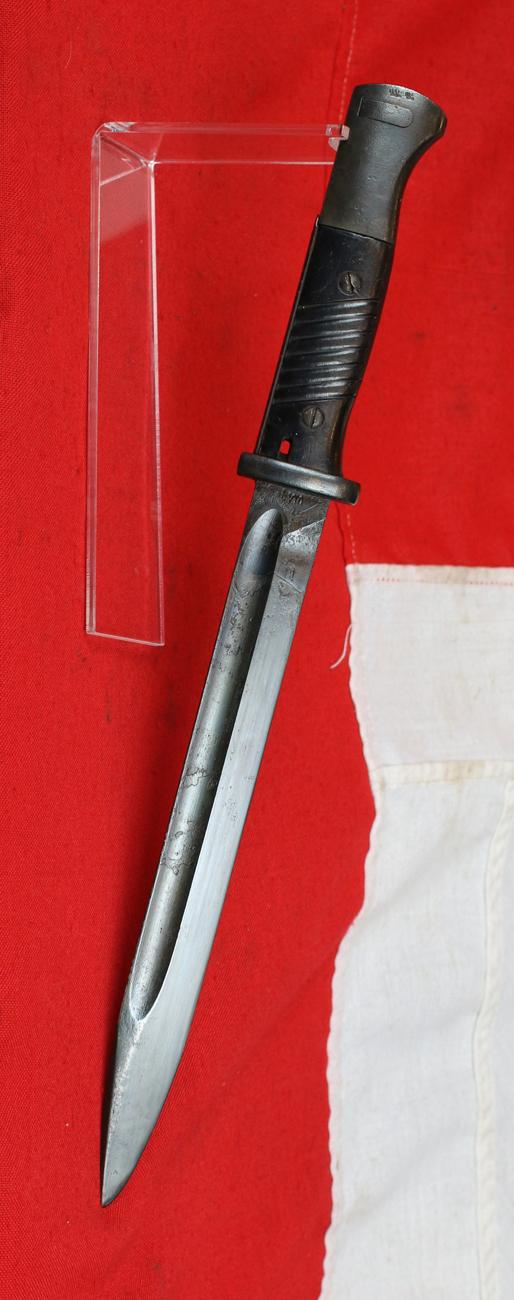
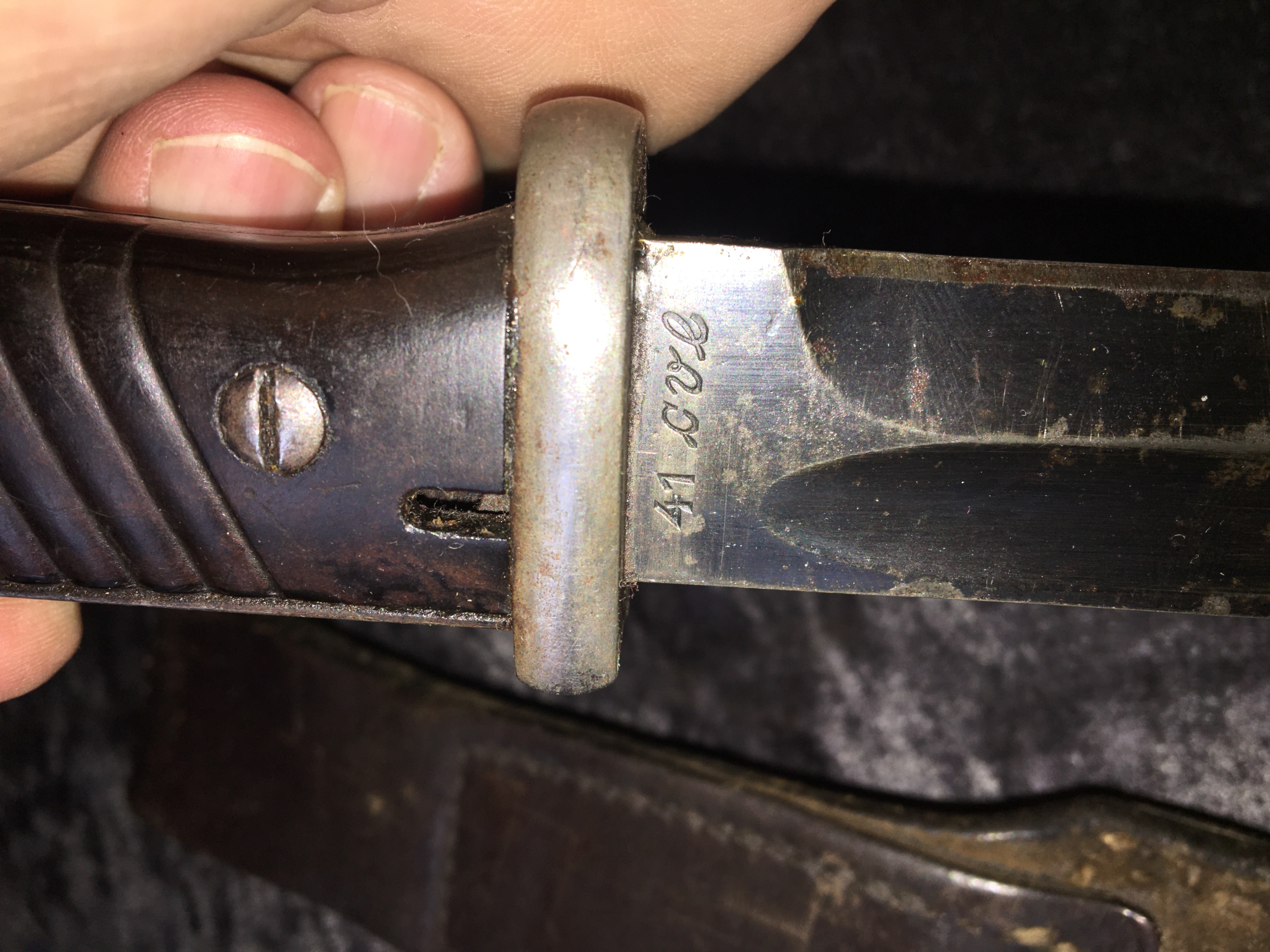
German WW2 M84/98 Mauser K98 Bayonet, Dated 1939 by Ernst Pack & Söhne.
  • Nation : French
  • Local Price : 3,100 kr
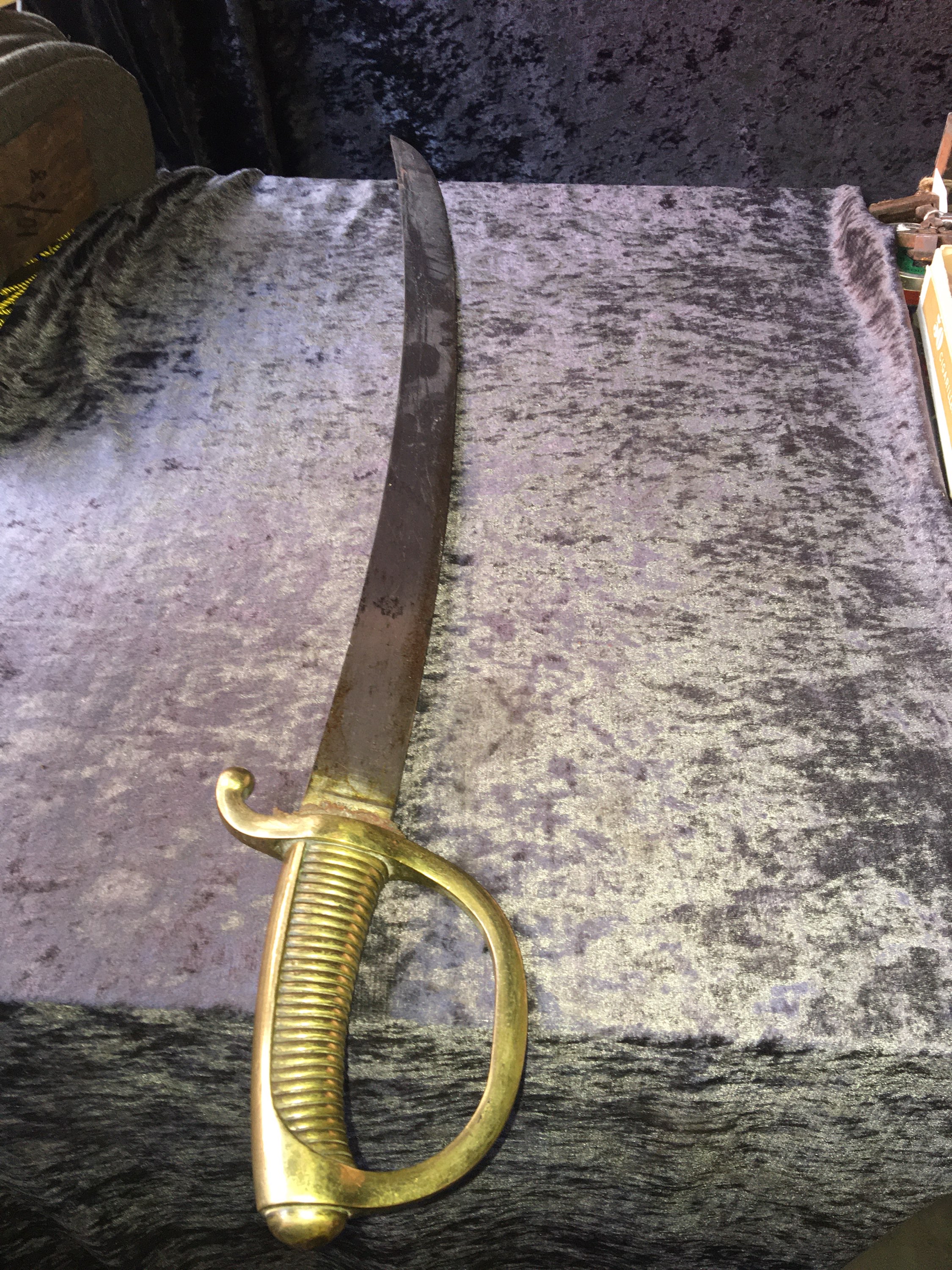
French briquette cutlass type 1816.
  • Nation : -
  • Local Price : 3,100 kr
Brittisk hovvärja med namnchiffer för drottning Viktoria.
  • Nation : -
  • Local Price : 3,100 kr
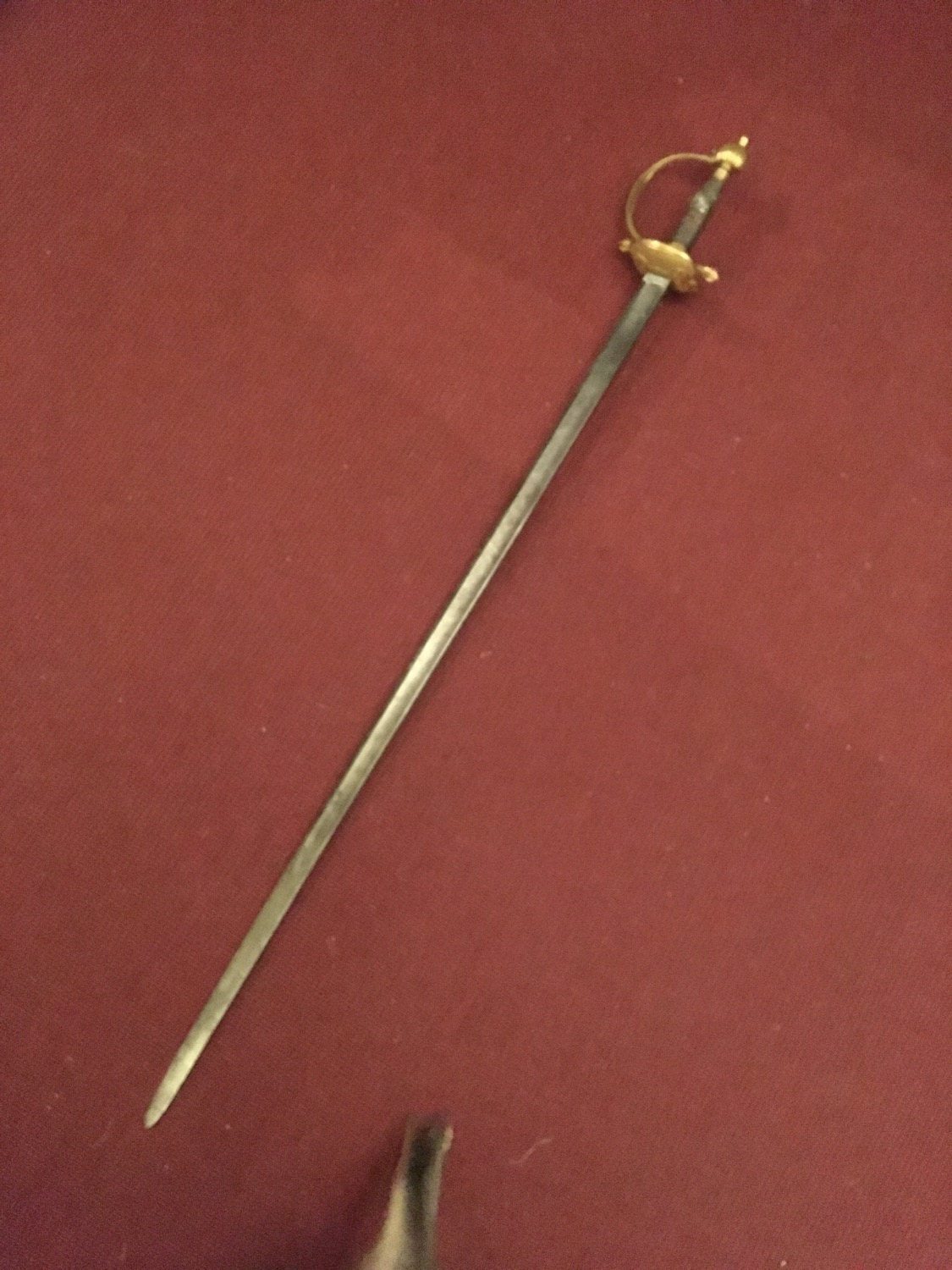
Sv infanteriofficersvärja 1820-1830.
  • Nation : American
  • Local Price : 335.00 USD
US MILITIA NCO SWORD C.1870-80. Indian Wars Period C.1870-80. Two piece plated brass hilt. The pommel of 1860s regulation form integral with the black japanned spirally fluted grip. Brass wire wrap. Decorated “bow tie” form guard. 28 1/2” d.e blade, plated, unmarked and excellent. Hilt plating worn through on the pommel high spots. The black grip coating mostly flaked off. Classic post-Civil War example as served the Westward Expansion.
  • Nation : German
  • Local Price : £240
Click and use the code >25992 to search for this item on the dealer website Good German Third Reich Issue Karabinier Kurz Mauser K98k Seitengewehr 84/98. German Kar98k Rifle Bayonet. Fully Blued Finish
  • Nation : British
  • Local Price : £240.00
British 1855 Pattern Land Transport Corps Sword by Kirschbaum. Description Straight unfullered single-edged blade. Ribbed solid brass hilt with cross guard, symmetrical round finials and oval pommel. No scabbard. The ricasso of the blade is stamped on one side with a knight&#acute;s helm, this mark signifies the maker as C F Kirschbaum of Solingen. Imported German blades are not uncommon on British swords of the period, even those produced for the government. English firms would often buy in German blades then hilt and finish them. On the other side it is stamped with a crown inspection mark. Sidearms with the form of a neoclassical &#acute;gladius&#acute; appear to have originated with Napoleon&#acute;s love for all things Roman, and the French 1771 &#acute;Eagle Head&#acute; Artillery sword. A series of very similar-looking short swords were subsequently designed, including the French 1816 & 1831 Artillery, the US Model 1832 Foot Artillery, the Swiss 1842 Pioneer&#acute;s, the Russian 1848 Pioneer&#acute;s and the British 1855 Land Transport. They were not particularly useful for combat (the gladius having become obsolete for good reasons) so remained either ceremonial items or in the role of a machete for various field tasks such as clearing brush. The Land Transport Corps was formed in great haste in 1855, in the midst of the Crimean War: the British Army&#acute;s disorganized transport had resulted in disastrous supply breakdowns during the harsh winter of 1854, and a rapid response was required. Officers of the new unit carried the 1822 Light Cavalry sword while other ranks were armed with the 1855: a near replica of the French 1831 Artillery sidearm, making this the only British sword to follow the Continental gladius trend. A few dents to the brass hilt as expected for its age. The tip of the blade is very slightly bent.
  • Nation : Indian
  • Local Price : $450.00  CAD
INDIAN TULWAR. INDIAN TULWAR: Circa 1840-1850. Maker’s stamp under right langet. The 30 inch blade has some light to medium pitting. The ENGRAVED HILT IS SILVER PLATED. Much of the silver plating is still present. From the Indian Mutiny period. TIRRI page 327. VG $450.00
  • Nation : British
  • Local Price : $450.00 CAD
BRITISH PRACTICE SWORD. BRITISH PRACTICE SWORD: Circa 1880’s. Maker: WILKINSON. Cartouche on right side of the blade is etched “PRACTICE BLADE WILKINSON PALL MALL LONDON” 32 ½ inch blade. Leather covered wood grip. This is quite a rare sword. $450.00
  • Nation : -
  • Local Price : 3,000 kr
Fransk Chassepo bajonett m/1866 nr-lik..
  • Nation : -
  • Local Price : 3,000 kr
Tysk nr-lik K-98 (84-98) bajonett med bärläder.
  • Nation : French
  • Local Price : 3,000 kr
French cuttlas briquette m/1804-16.
Page 31 of 40

The following items match your search but are currently listed on Ebay. We take no responsibility for any aspect of the listings or their accuracy.


Sorry, there is not any matching items.